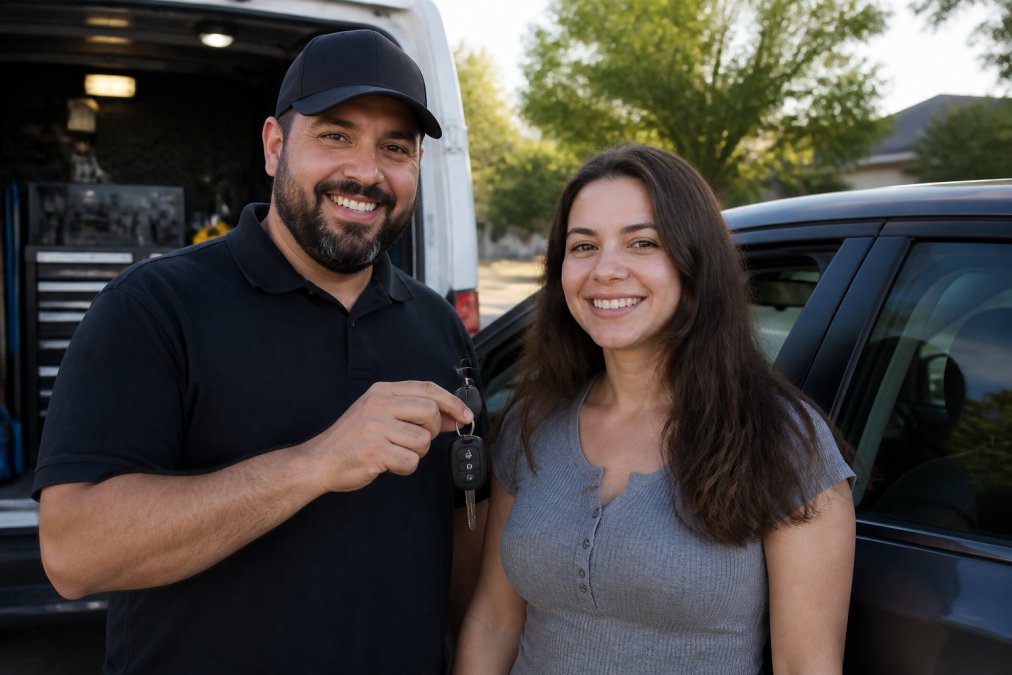
A key that suddenly will not turn can stop your entire day, especially when you are parked away from home or trying to get to work. Knowing how to fix broken ignition key problems starts with one rule: do not force the key. Pressure can snap a worn key blade, damage the ignition cylinder, or leave you with a more expensive repair than the original issue.
Sometimes the problem is the key itself. Other times, the ignition cylinder, steering wheel lock, battery, or vehicle transmission position is preventing the car from starting. A calm, careful check can help you decide whether there is a safe temporary step to try or whether it is time for on-site locksmith service.
First, Identify What “Broken” Means
A broken ignition key can describe several different situations. The key may be bent, cracked, worn smooth, stuck in the ignition, or snapped with part of it still inside. In other cases, the key looks fine but will not rotate, or it turns but does not start the vehicle.
Those are different problems with different solutions. Trying to treat them all the same – especially by twisting harder or using pliers – can damage the ignition housing and make key extraction more difficult.
If the key is visibly bent, cracked near the head, or missing teeth along the blade, stop using it. If it still comes out of the ignition, keep it as a reference for making a replacement key. Do not try to straighten a bent car key and put it back in the ignition. Metal fatigue can cause it to break inside the cylinder.
How to Fix a Broken Ignition Key Without Making It Worse
Before attempting anything, turn off the vehicle, place it in Park, and set the parking brake. If you have a manual transmission, make sure it is fully in neutral. Keep your movements controlled and avoid applying side pressure to the key.
If the Key Will Not Turn
A locked steering wheel is one of the most common reasons a key will not rotate. It can happen when the wheel was turned after the vehicle was shut off. Hold the steering wheel in the direction where it has a little movement, then gently turn the key at the same time. Do not jerk the wheel or crank the key.
Next, check the transmission position. An automatic vehicle may not allow the ignition to turn or start unless it recognizes Park or Neutral. Press the brake pedal, move the shifter firmly into Park, and try again. If that does not work, try Neutral while holding the brake.
If the key still will not turn, inspect it under good lighting. A worn key may no longer lift the ignition pins correctly. Avoid using oil, household lubricants, or glue in the keyway. These products can attract dirt, gum up internal parts, and interfere with a professional repair. A locksmith can assess whether a proper lock lubricant, a new key, or ignition service is needed.
If the Key Is Stuck in the Ignition
Do not pull hard on a stuck key. First, confirm the vehicle is completely in Park. Many vehicles will hold the key in place when the shifter is not fully seated or when the ignition is not fully returned to the Lock position.
Gently move the steering wheel side to side while carefully turning the key back toward Lock. You can also press the brake and move the shifter through its positions, then return it firmly to Park. If the key releases, do not continue driving with it if it was difficult to remove. That resistance is a warning that the key or ignition needs attention.
A key that remains stuck may point to a worn ignition cylinder, damaged steering-column components, or a shift-interlock issue. Forcing it can bend the blade or break the key head off in your hand.
If the Key Snapped Inside the Ignition
This is the point where most do-it-yourself attempts create additional damage. Do not insert another key, screwdriver, wire, tweezers, or adhesive into the ignition. Anything that pushes the broken piece deeper or scratches the internal pins can turn a straightforward extraction into ignition replacement.
If a large portion of the broken key is clearly exposed, you may be tempted to pull it out. Unless it slides out with virtually no resistance, stop. The fragment may be caught on an internal component. A professional uses purpose-built extraction tools to remove the piece without damaging the cylinder, then can cut and program a replacement key if your vehicle requires it.
When the Ignition, Not the Key, Is the Problem
A new or spare key that also sticks, turns roughly, or fails to start the vehicle often points to the ignition cylinder rather than a damaged key. Over time, the small pins and springs inside an ignition wear down. Heavy key rings, frequent use, debris, and a key that has been copied from a worn original can speed up the process.
Signs of ignition trouble include a key that only works in one position, a key that must be jiggled to turn, repeated sticking, or a key that turns but does not engage the ignition properly. On newer vehicles, electronic faults can also be involved. A transponder key, smart key, or push-button start system may need diagnostic attention in addition to mechanical repair.
The practical trade-off is simple: replacing only the key may cost less if the key is worn, but it will not solve a failing ignition. Replacing an ignition unnecessarily, however, can add cost and may require rekeying so one key still works for the doors and ignition. An experienced automotive locksmith can inspect the problem on site and recommend the least invasive repair that will reliably get you back on the road.
Avoid These Common Mistakes
When you are stuck in a parking lot or driveway, quick fixes can feel tempting. These approaches commonly make ignition problems worse:
- Twisting the key harder when it resists
- Using pliers to pull or turn the key
- Spraying household oil or glue into the ignition
- Trying to start the vehicle with a cracked or bent key
- Pushing a broken key fragment farther into the cylinder
If your car key has a remote, transponder chip, or smart-key electronics, a broken shell can create a separate issue. The metal blade may turn the ignition, but the vehicle may not start if the chip is missing, damaged, or too far from the ignition reader. A properly programmed replacement is often the safer answer.
When to Call a Mobile Automotive Locksmith
Call for professional help when the key is broken in the ignition, the ignition will not turn with a good spare key, the key is stuck, or you are stranded and need service where the vehicle sits. Towing a vehicle simply to address a key or ignition problem is often avoidable.
A mobile automotive locksmith can come to your location, extract a broken key, create a replacement, program many transponder or smart keys, repair certain ignition issues, or replace an ignition when repair is not practical. For San Jose and South Bay drivers, BDS Locksmith provides on-site support designed to avoid the extra delay and expense of a shop visit or tow.
Before authorizing work, ask for a clear estimate and confirm what the service includes. The right professional should explain whether the issue is a worn key, a damaged ignition, an electronic key problem, or a combination of those concerns. Licensed, bonded, and insured service gives you added confidence when someone is working on your vehicle’s locks, keys, and ignition system.
Prevent the Next Ignition Key Problem
Once the immediate problem is solved, keep a working spare key in a safe place rather than on the same key ring as your daily key. If your current key shows wear, replace it before it becomes an emergency. For older metal keys, a copy made from the vehicle’s key code or a clean original is usually more accurate than repeatedly copying an already worn key.
It also helps to reduce the weight hanging from the ignition. A large cluster of keys and accessories can place constant stress on the ignition cylinder while you drive. If your key begins sticking, address it early. A small warning today is far easier to handle than a snapped key when you are late, parked far from home, or unable to start your car.