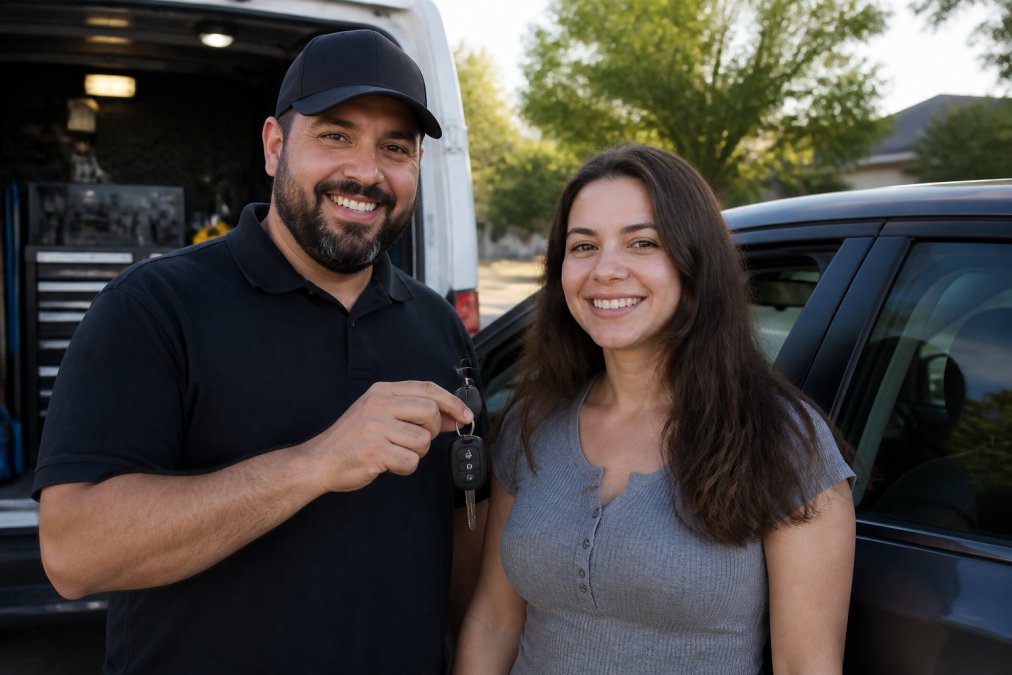
A trunk problem has a way of happening at the worst possible moment: groceries melting in the parking lot, luggage needed before a flight, or work equipment stuck inside after the key fob stops responding. The search for “unlock locked car trunk” is common, but forcing the lid or trying random online tricks can turn a simple access issue into damaged paint, a broken latch, or an expensive repair.
The safest approach depends on why the trunk will not open. A dead key fob battery, a disabled valet setting, a jammed latch, a failed actuator, or keys left inside can all look like the same problem from the outside. Start with the simple checks, protect your vehicle from damage, and call a qualified mobile locksmith when the issue needs professional tools or vehicle-specific knowledge.
First, make sure there is no immediate danger
If a child, pet, or person is trapped inside the vehicle or trunk, call 911 immediately. Do not spend time troubleshooting the remote, looking for a spare key, or waiting for roadside assistance in a life-threatening situation.
For a standard lockout with no immediate danger, move to a safe, well-lit place if possible. Keep your registration and photo ID available. A legitimate locksmith will need to confirm that you own or are authorized to access the vehicle before providing service.
Safe checks before calling for help
Many locked trunks open with a simple correction, especially on newer vehicles with electronic releases. Take a minute to check the following without pulling, prying, or striking the trunk lid.
Try the mechanical key in your fob
Most smart key fobs contain a hidden metal emergency key. Look for a release tab or small sliding latch on the fob, then remove the key blade. Some vehicles have an exterior trunk lock cylinder hidden behind a badge, trim cover, or small cap near the license plate area.
Use only the proper key and light pressure. If the key will not turn, do not twist it harder. A stuck lock cylinder may need lubrication, repair, or professional attention. Breaking the key inside the cylinder creates a second problem and can delay access.
Check the cabin trunk release and rear seats
If you can enter the vehicle, test the interior trunk-release button. In many sedans, the rear seats can also fold forward to provide access to the trunk area. The release may be in the cabin, near the seatback, or accessible from inside the trunk depending on the vehicle.
This is not universal. Some models lock the rear-seat release from inside the trunk, and others require the vehicle to be unlocked or shifted into park before the trunk button works. Check the owner’s manual if you have access to it rather than forcing a seat mechanism.
Replace the key fob battery if the fob is weak
A remote that works only intermittently, has reduced range, or no longer lights up may have a weak battery. Replacing the battery can restore the trunk button and door-lock functions quickly. If the fob battery is new and neither the doors nor trunk respond, the issue may be the vehicle battery, a blown fuse, a programming issue, or a failed fob.
Look for valet mode or a trunk lockout setting
Some cars have a valet switch, glove-box lock, infotainment setting, or fob setting that disables trunk access. This feature is designed to keep valet attendants or other drivers out of the cargo area. If the doors open normally but the trunk will not respond to any button, valet mode is worth checking.
Why a car trunk stays locked
A trunk is not just a lid and a latch. Modern vehicles often rely on electronic actuators, body-control modules, wiring, release buttons, fuses, and programmed keys. The symptoms can point to the likely cause.
If the remote works for the doors but not the trunk, the trunk release button, actuator, wiring, valet setting, or latch may be at fault. If nothing electronic works, a dead vehicle battery or electrical fault is more likely. If the trunk opens sometimes but not every time, a worn latch or failing actuator can be the cause.
Physical issues matter too. A trunk that was slammed hard, hit from behind, overloaded, or exposed to corrosion can have a jammed latch. In those cases, repeated button presses rarely fix the problem. The lid may need to be relieved of pressure while a trained technician accesses and evaluates the mechanism.
What not to do when you cannot open the trunk
Avoid using screwdrivers, coat hangers, pry bars, wedges, or improvised lock-picking tools. These methods can bend the trunk lid, scratch paint, damage weather stripping, trigger side-curtain components, or harm electronic wiring. They can also create an opening that is not secure afterward.
Do not drill the lock or break a window to reach a release unless emergency responders direct you to do so because there is an immediate threat to life. Replacing glass, repairing damaged trim, and restoring a drilled lock often costs far more than professional vehicle entry.
It is also wise to avoid repeated jump-start attempts when you are unsure of the battery issue. Modern vehicles can be sensitive to incorrect connection points or improper procedures. If the car has a dead battery and the trunk contains the battery or jump terminals, a locksmith or roadside professional can assess the safest access method for that model.
When a mobile locksmith is the right call
A mobile automotive locksmith is a practical choice when your keys are locked in the trunk, the fob has failed, the mechanical key is missing, the latch will not release, or you need entry at your current location. Unlike a tow to a dealership or repair shop, mobile service brings the needed tools and key equipment to the vehicle.
For many vehicles, a qualified locksmith can gain non-destructive entry, retrieve keys, cut and program a replacement key, diagnose certain lockout-related issues, and help restore access on site. The exact solution depends on the make, model, year, key system, and condition of the lock or latch.
BDS Locksmith serves San Jose and surrounding South Bay locations with mobile automotive locksmith service for vehicle lockouts, replacement keys, smart keys, transponder keys, and ignition-related concerns. Before work begins, ask for a clear estimate and confirm what the service includes. Transparent pricing matters, particularly during an urgent call when you need a fast answer without surprises.
How to prepare for the locksmith’s arrival
Have the vehicle’s make, model, year, and current location ready. Explain whether the doors are open, whether the key is inside the trunk, whether the remote works, and whether the car battery appears dead. These details help the technician arrive prepared for the most likely solution.
Keep your ID and proof of ownership nearby if available. If the registration is in the trunk, tell the technician before service begins. In a parking garage, gated community, or workplace lot, share access instructions and the vehicle’s exact level or space number so time is not lost locating you.
Prevent the next trunk lockout
Once access is restored, take a few simple precautions. Replace weak fob batteries before they fail completely, test the mechanical key occasionally, and keep a spare key in a secure location away from the vehicle. If your trunk latch has been sticking or the release works inconsistently, arrange repair before it becomes a full lockout.
For drivers who rely on a single smart key, a programmed spare can save a stressful call later. It is especially useful for families sharing a vehicle, commuters, and business owners who carry tools or equipment in the trunk. A small preventive step now can keep a routine errand from becoming a long wait in a parking lot.