A deadbolt can look substantial on the door and still be the weakest part of a home or business entry. This high security deadbolt review focuses on what holds up under real-world pressure: forced entry resistance, cylinder protection, key control, and correct installation. For San Jose property owners, the best choice is rarely just the most expensive lock on the shelf.
What Makes a Deadbolt High Security?
A standard deadbolt is designed to secure a door. A high-security deadbolt adds protection against common attack methods that target the lock itself, including picking, bumping, drilling, prying, and unauthorized key duplication. The goal is to make entry more difficult, noisier, and slower while keeping daily use reliable for the people who belong inside.
The first detail to check is the lock’s ANSI/BHMA grade. Grade 1 is generally the strongest residential classification and is a sensible starting point for exterior doors, rental properties, and small business entrances. Grade 2 can work for lower-risk residential applications, while Grade 3 is better suited to light-duty interior use than a primary entry door.
A grade is useful, but it is not the whole story. It tests the lock body and bolt assembly, not every vulnerability around it. A Grade 1 deadbolt installed in a weak wood frame with short strike-plate screws can still fail far sooner than the lock rating suggests.
The cylinder deserves close attention
The cylinder is where the key enters, and it is often the feature that separates an ordinary deadbolt from a serious security upgrade. Better cylinders may include hardened steel inserts that resist drilling, tighter machining that makes manipulation harder, and pin designs intended to resist bump keys and basic picking attempts.
No mechanical lock is impossible to defeat. A dependable deadbolt is one that raises the time, skill, and noise required to compromise it. That matters because most attempted forced entries depend on speed and low visibility.
Key control is another major advantage. Some high-security systems use restricted keyways, meaning keys can only be duplicated through authorized channels. This is especially valuable after employee turnover, tenant changes, contractor access, or a lost key. If anyone can copy a key at a hardware store without your knowledge, you have less control than you may think.
High Security Deadbolt Review: Features That Matter Most
When comparing deadbolts, look past packaging terms such as “maximum security.” A few concrete features tell you much more about the protection you are buying.
A solid bolt with a one-inch throw is common on quality deadbolts. The bolt should extend fully into a properly installed strike plate and reinforced door frame. A reinforced strike plate secured with long screws that reach the wall stud helps protect against kick-in attempts. This upgrade is often as valuable as replacing the deadbolt itself.
Look for a hardened bolt or hardened steel anti-drill components around the cylinder. These materials are designed to resist drill bits used in forced-entry attempts. A reinforced collar around the cylinder can also help resist twisting or pulling attacks.
For homes with glass panels near the lock, consider the thumb-turn side of the deadbolt. A standard single-cylinder deadbolt has a key outside and a thumb turn inside, which is convenient for emergency exit. A double-cylinder deadbolt requires a key from both sides, which can reduce the risk of someone breaking glass and reaching the thumb turn. However, double-cylinder locks can create a fire-safety concern if occupants cannot quickly locate and use the key. Local code requirements and the door’s emergency exit role should guide that decision.
For most occupied homes, a single-cylinder Grade 1 deadbolt paired with a reinforced strike and frame is the practical choice. For commercial spaces, vacant properties, or doors with unusual exposure, the right setup may be different. A locksmith can assess the door, frame, glass, hinges, and existing hardware instead of treating the deadbolt as an isolated item.
Mechanical vs. Smart High-Security Deadbolts
A mechanical high-security deadbolt is often the strongest option for customers who want dependable physical protection without batteries, apps, or electronic parts. It is simple, familiar, and especially useful for side doors, detached garages, storage areas, and business doors where reliable key control is the priority.
Smart deadbolts add convenience through keypad codes, mobile access, temporary user codes, and activity records. They can be useful for property managers, vacation rentals, busy families, and offices that need to add or remove access without rekeying after every staff change.
The trade-off is that smart features do not automatically make a lock physically stronger. Some electronic locks use an ordinary key cylinder and may have a bolt or strike that performs similarly to a standard residential lock. If you choose a smart deadbolt, evaluate the mechanical build, lock grade, backup keyway, battery alerts, and the quality of the door reinforcement. Convenience should not replace basic physical security.
For a rental or office, a keypad lock with a well-installed Grade 1 deadbolt can be a practical combination. For a front door used by family members of all ages, simplicity may be more valuable than app-based access. The right lock depends on who uses the door, how often codes change, and what happens if power or batteries fail.
Installation Can Make or Break the Upgrade
Even an excellent deadbolt will not perform as designed if the door is misaligned or the strike plate is poorly secured. This is one reason homeowners sometimes replace a lock and still find that the door feels loose, sticks, or shows daylight around the frame.
The bolt should enter the strike cleanly without needing to lift, push, or pull the door. If it drags on the strike, the lock and frame are under stress each time the door is used. Over time, that can affect operation and encourage people to leave the door unlocked because it is inconvenient.
Door material also matters. A solid-core wood door, quality metal door, or properly reinforced fiberglass door gives a deadbolt a better foundation than a damaged hollow-core door. Check the condition of the jamb, the gap between door and frame, hinge screws, and any signs of splitting wood. On outward-swinging doors, hinge protection deserves attention as well.
A professional installation is particularly worthwhile when the new deadbolt requires a different bore size, backset, strike placement, or reinforcement plate. It is also useful when you are rekeying multiple locks to one key, changing access after a move, or correcting damage from a previous break-in attempt.
When a High-Security Deadbolt Is Worth the Cost
A high-security deadbolt makes the most sense when there is a clear access-control or forced-entry concern. That may include a recent lost key, a former tenant or employee who may still have access, repeated package theft near an exposed entry, a side gate leading to a garage, or a business that stores equipment after hours.
It is also a sound investment after moving into a new home. Rekeying or replacing locks removes uncertainty about who may have copies of the old keys. For a property manager, restricted key control can reduce the recurring problem of untracked duplicates between tenants and maintenance vendors.
Not every door requires the same level of hardware. A front entry, rear entry, garage-to-home door, and exterior office door deserve stronger protection than an interior closet or bedroom door. Spending more on the lock while leaving the frame, strike, or door condition unaddressed is not a balanced security plan.
A Practical Buying Decision
Start with a Grade 1 deadbolt from a reputable lock manufacturer, then consider cylinder protection and key control based on your risk. Add a reinforced strike plate with long mounting screws, and make sure the door closes and latches without force. If you need flexible access for tenants, guests, or staff, compare smart-lock features only after confirming the physical hardware is suitable.
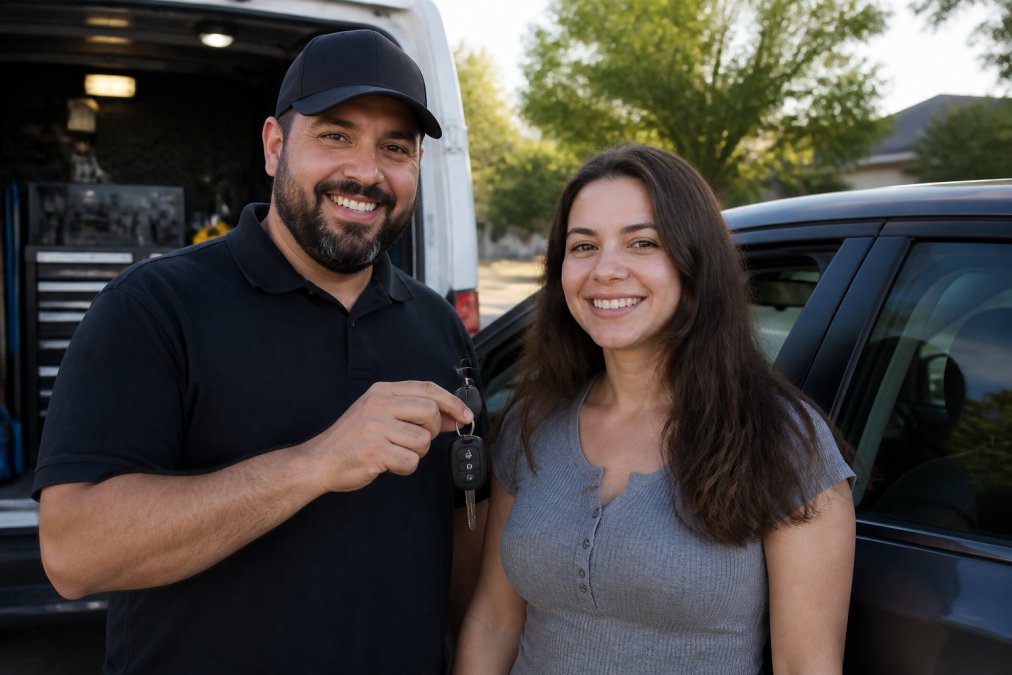
BDS Locksmith can inspect and install deadbolts on site for homeowners, renters, property managers, and local businesses throughout San Jose and the South Bay. A clear assessment of the door and frame helps avoid paying for security features that do not fit the property or the way the entrance is used.
If your current deadbolt is loose, difficult to turn, damaged, or tied to keys you can no longer account for, do not wait for a lockout or break-in to deal with it. A properly matched deadbolt and a reinforced doorway provide more than a new piece of hardware – they give you a door that is ready to do its job when it matters.