Table of Contents
- What Mobile Key Replacement Services Actually Deliver
- Mobile Car Key Replacement Cost: What You’ll Actually Pay
- Mobile Locksmith vs. Dealership: Which Option Makes Sense
- Transponder Key Programming: How Mobile Locksmiths Handle It
- Response Time and Availability: What to Expect
- Mobile Locksmith Reviews: How to Spot a Trustworthy Service
- Credentials, Insurance, and Your Protection
- The Quote and Booking Checklist
- Frequently Asked Questions
Last Updated: October 11, 2026
What Mobile Key Replacement Services Actually Deliver
Mobile key replacement services bring a locksmith directly to your vehicle, home, or business to cut, program, and install keys on-site. Unlike visiting a dealership or waiting for a traditional locksmith to open their shop, a mobile locksmith arrives with specialized equipment and completes the work where your vehicle sits. This convenience defines the entire category, but what you’re actually paying for varies significantly between providers.
The core service includes key cutting for standard keys, transponder key programming for modern vehicles, and key fob replacement. Many mobile locksmiths also handle ignition repair, lock rekeying, and emergency lockout assistance. At BDS Locksmith, we arrive equipped to handle automotive, residential, and commercial key needs without requiring you to transport your vehicle or wait for business hours.
What separates a reliable mobile key replacement service from a problematic one comes down to three factors: response time, technical capability, and transparent pricing. A service that quotes you accurately over the phone and arrives within the promised window builds trust immediately. A service that arrives late, performs work carelessly, or charges dramatically more than the initial quote destroys it.
Mobile Car Key Replacement Cost: What You’ll Actually Pay
Cost for mobile key replacement depends on the key type, your vehicle’s year and make, and whether you need programming. But generic price ranges are useless without context. Here’s how to break down what you’ll actually pay and compare quotes accurately.
Cost by Key Type
Standard mechanical keys (residential or older vehicle locks): $15-$50 per key. These require only cutting; no programming or specialized equipment. A mobile locksmith can typically cut these in under 10 minutes.
Transponder keys (most vehicles 1995 and newer): $100-$300 per key. This includes the physical key blank, cutting, and programming to your vehicle’s immobilizer system. The programming step adds complexity and time, typically 15-30 minutes per key.
Smart keys and proximity fobs (luxury vehicles, keyless entry): $200-$500 per key. These require advanced diagnostic equipment and may need multiple programming attempts. Some vehicles require a dealership visit for final activation.
Key fob replacement (remote without the physical key blade): $75-$250. If you only need the fob reprogrammed (not a new one cut), costs drop to $50-$150.
Additional Fees to Expect
Call-out or service fee: $50-$150. Many mobile locksmiths charge this whether or not they complete the job. Ask upfront whether this fee is waived if you proceed with the service.
After-hours or emergency fee: $25-$100 additional. Late-night, weekend, or holiday calls typically incur a surcharge beyond the standard service fee.
Travel fee: $0-$75 depending on distance from the locksmith’s service area. Some locksmiths include travel in their service fee; others charge separately for locations outside their primary zone.
Rekeying or lock repair: $75-$200. If your lock is damaged or you need additional work beyond key replacement, costs increase accordingly.
Mobile Locksmith vs. Dealership Pricing
Dealerships typically charge 40-60% more than independent mobile locksmiths for identical key types on the same vehicle. A dealership transponder key might cost $250-$400; a mobile locksmith might charge $120-$200 for the same work. The dealership premium reflects OEM parts, manufacturer-backed programming, and warranty coverage.
However, the comparison only works if both are providing the same service. A dealership using an OEM key blank with a manufacturer warranty is not the same as a mobile locksmith using a compatible aftermarket blank with a service guarantee. Before comparing prices, confirm you’re comparing identical parts and guarantees.
How to Get an Accurate Quote
When you call a mobile locksmith, have this information ready:
- Vehicle year, make, model, and trim level
- Whether you need one key or multiple keys
- Whether the key needs programming or is a simple mechanical cut
- Your location and whether it’s within their service area
- Whether you need the service today or can wait for a standard appointment
A professional locksmith provides a specific quote for your situation, not a range. If they say “somewhere between $100 and $300,” they haven’t gathered enough information. A legitimate quote sounds like: “For your 2022 Honda Civic, a transponder key with programming is $165 plus a $60 service fee, total $225.”
Request the quote in writing or ask them to repeat it back to you. This prevents the common complaint where a phone quote of $50 becomes $400 on-site because the locksmith discovers additional work or charges surprise fees.
Red Flags in Pricing
If a locksmith quotes significantly lower than others (more than 30% below market), ask why. They may be using lower-quality blanks, lack proper equipment for programming, or plan to upsell you on-site. If a locksmith refuses to give a quote over the phone and insists on charging a diagnostic fee before discussing price, that’s a sign they’re not confident in transparent pricing.
Always confirm what’s included in the quote: the key blank, cutting, programming, service fee, and any travel charges. A complete quote eliminates surprises when the technician arrives.
Mobile Locksmith vs. Dealership: Which Option Makes Sense
Dealerships offer manufacturer expertise and OEM parts. They program keys using factory systems and provide warranties backed by the vehicle manufacturer. For luxury vehicles, high-security systems, or situations where you need absolute certainty the key will work perfectly, a dealership is the reliable choice, even at premium cost.
Mobile locksmiths offer speed and convenience. You don’t drive anywhere. The service arrives at your home, office, or roadside location. For many vehicle types, a qualified mobile locksmith produces identical results to a dealership at a fraction of the cost. The trade-off is verification: you need to confirm the mobile locksmith is licensed, insured, and experienced with your specific vehicle model.
The dealership approach makes sense if your vehicle is under warranty, you need manufacturer-backed parts, or you’re working with an exotic or high-security system. The mobile locksmith approach makes sense if you need the service quickly, prefer not to transport your vehicle, and want competitive pricing from a licensed professional.
BDS Locksmith is licensed, bonded, and insured, which means if something goes wrong, you have recourse. That protection matters more than people realize until they need it.
Transponder Key Programming: How Mobile Locksmiths Handle It
Transponder keys contain a microchip that communicates with your vehicle’s immobilizer system. Without proper programming, the key won’t start the engine, even if the physical cut is perfect. This is why you can’t simply have any locksmith cut a transponder key and expect it to work. The programming step requires specialized equipment and knowledge of your vehicle’s specific system.
Mobile locksmiths program transponder keys using diagnostic equipment that connects to your vehicle’s onboard computer. The process takes 15-30 minutes depending on the vehicle and the locksmith’s familiarity with that make and model. Some vehicles allow mobile programming. Others require a trip to the dealership because the security system demands manufacturer-level access.
A trustworthy mobile locksmith will tell you upfront whether your vehicle can be programmed on-site or whether you’ll need to visit a dealership. They won’t pretend they can program a key if they can’t, and they won’t charge you for an attempt that fails. This honesty separates professionals from operators who take your money and leave you stranded.
The key question is whether the mobile locksmith has the right equipment for your vehicle. Not all diagnostic tools work on all vehicles. A locksmith with 20 years of experience on domestic vehicles might struggle with a 2024 hybrid or electric vehicle. Ask specifically whether they’ve programmed keys for your vehicle model before booking.
Response Time and Availability: What to Expect
A common customer objection is legitimate: “How do I know you’ll show up in 30-60 minutes like you say, or am I going to be locked out for hours?” This question reflects real bad experiences. Some locksmiths quote aggressive response times they can’t deliver, leaving customers frustrated and still stranded.
Professional mobile locksmiths maintain service areas and dispatch systems designed to meet promised response times. BDS Locksmith operates throughout the South Bay Area with same-day availability and 24/7 emergency services. That means if you’re locked out at 2 a.m. on a Sunday, we can still dispatch someone to your location.
Response time depends on your location, current demand, and time of day. Urban areas with multiple technicians typically see faster responses than rural areas served by one or two locksmiths. Weekend and late-night calls may take longer than business-hours requests. A realistic estimate is 30-60 minutes in most cases, with longer waits possible during peak demand.
The way to verify response time is simple: call and ask. Don’t accept vague promises. Ask for a specific time window. If the locksmith can’t give you one, that’s information too. Reliable services commit to timeframes because they’ve built systems to meet them.
Mobile Locksmith Reviews: How to Spot a Trustworthy Service
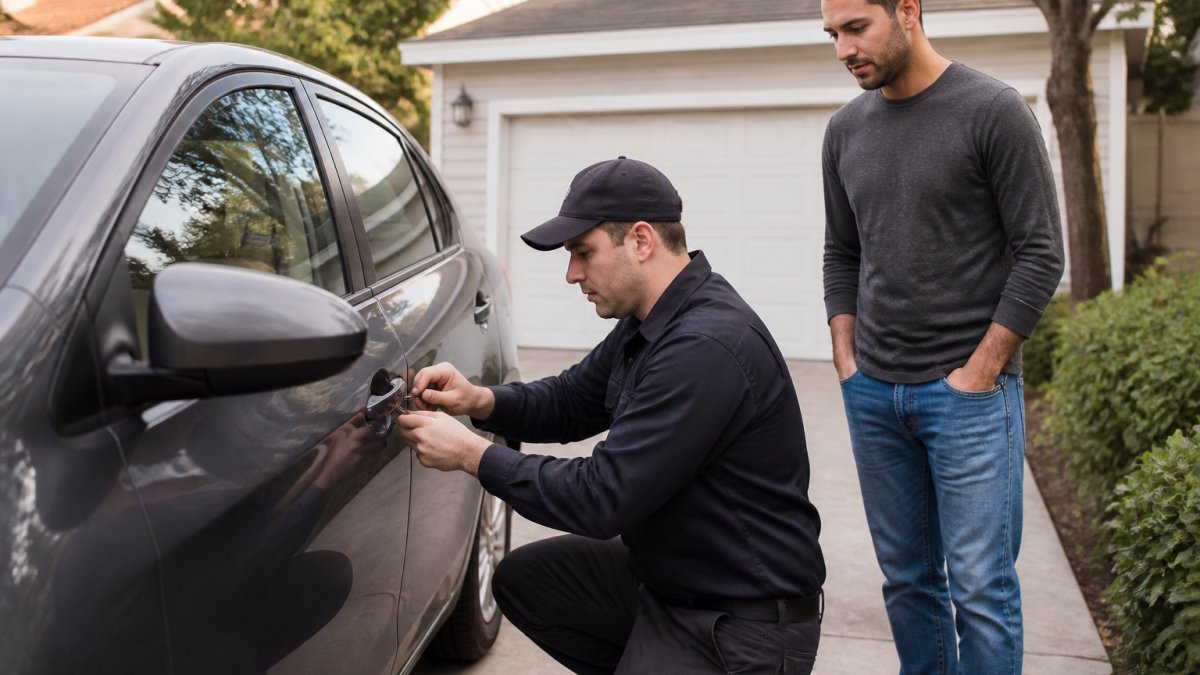
Not all reviews are equal. Some are genuine customer experiences; others are fabricated, incentivized, or filtered. Here’s how to evaluate reviews systematically so you can trust what you’re reading.
Where to Find Legitimate Reviews
Google Reviews are the most reliable because they’re tied to verified Google accounts and Google filters out obvious fake reviews. A locksmith with 50+ reviews and a 4.5+ rating on Google has survived algorithmic scrutiny. Look at the review distribution: if all reviews are 5 stars, that’s suspicious. A realistic profile includes some 4-star and occasional 3-star reviews from customers with legitimate complaints.
Yelp requires account verification and cross-references user behavior. Yelp’s algorithm flags suspicious review patterns (sudden spikes, reviews from new accounts, reviews that match competitors’ language). A locksmith with a strong Yelp presence has passed this filtering.
Better Business Bureau (BBB) ratings reflect complaint history and resolution. A locksmith with an A+ rating has either few complaints or has resolved them professionally. The BBB profile also shows how long the business has been accredited, which indicates stability.
Local Facebook reviews and community group discussions (neighborhood forums, local Facebook groups) often contain unfiltered feedback. These reviews are less polished but sometimes more honest because they’re from neighbors who know each other.
Avoid review aggregators that don’t verify ownership or reviews, and be skeptical of reviews on the locksmith’s own website, these are self-curated and not independently verified.
How to Spot Fake or Incentivized Reviews
Generic praise without specifics: “Great service!” or “Highly recommend!” with no details is a red flag. Real customers describe what happened: “They arrived in 35 minutes and programmed my key on the first try.”
Identical language across multiple reviews: If three reviews use the same phrases or structure, they may be written by the same person. Genuine customers use different words and focus on different aspects.
New accounts with immediate 5-star reviews: A brand-new Google account that leaves a glowing review for a locksmith the same day is suspicious. Legitimate reviews come from established accounts with review history.
Reviews that mention the competitor negatively: “Unlike [competitor name], this locksmith actually showed up.” Real customers focus on their own experience, not on attacking competitors.
Timing clusters: If a locksmith suddenly receives 10 new 5-star reviews in one week after months of silence, that’s a sign they may have incentivized reviews or used a review-generation service.
What to Look For in Legitimate Reviews
Specific outcomes: “They arrived in 45 minutes, programmed my 2019 Toyota key on the first attempt, and charged exactly $185 as quoted.” This level of detail indicates a real experience.
Mentioned trade-offs: “Professional and knowledgeable, but they took longer than expected because my vehicle’s system was more complex.” Real customers acknowledge nuance. Fake reviews are uniformly positive.
Negative reviews that are resolved: A locksmith with one or two negative reviews that the business owner responds to professionally (“We’re sorry this happened; here’s how we fixed it”) is more trustworthy than one with no negative reviews at all.
Reviewer credibility signals: Reviews from people with established profiles (multiple reviews over time, profile photo, detailed history) carry more weight than anonymous one-off reviews.
Verification Checklist Before Booking
Before you call a locksmith, use this framework to evaluate their reviews:
- Check Google Reviews first; confirm 50+ reviews and 4.0+ rating
- Read the 3- and 4-star reviews, not just the 5-star ones
- Look for reviews mentioning your vehicle type or key type
- Check the BBB profile for complaint history and resolution
- Search the locksmith’s name + “scam” or “complaint” to see if negative patterns emerge
- Verify the business address and phone number match across Google, BBB, and their website
- Look for reviews mentioning response time, pricing accuracy, and professionalism
- Check whether negative reviews receive professional responses from the business
How the Business Responds to Criticism
A professional locksmith acknowledges complaints and explains how they’ll prevent similar issues. If a review says “They arrived 2 hours late,” a good response is: “We apologize for the delay. We’ve since added another technician to our South Bay area to improve response times. Please contact us directly so we can make this right.”
A locksmith that ignores criticism, responds defensively (“This customer is lying”), or deletes negative reviews is signaling that they don’t take accountability seriously. Avoid these services.
Industry Credentials as a Verification Signal
Beyond reviews, check for professional credentials:
NASTF (National Association of Specialists in Theft and Fidelity) certification indicates the locksmith meets professional standards, carries appropriate insurance, and has passed background checks. Not all locksmiths are NASTF-certified, but those who are have met a higher bar.
State licensing (where required) shows the locksmith has passed background checks and training. Licensing requirements vary by state, but in states that require it, a licensed locksmith is verifiable through the state licensing board.
Bonding and insurance are verifiable through the locksmith’s business profile or by asking for proof. A bonded locksmith has posted a financial guarantee; if they commit fraud or fail to complete work, you’re protected.
Combine review analysis with credential verification, and you have a complete picture of whether a locksmith is trustworthy.
Credentials, Insurance, and Your Protection
This is where many customers get burned. A locksmith without proper licensing or insurance can damage your property, fail to complete the work, and disappear. You’re left with the damage and no recourse. A licensed, bonded, and insured locksmith carries protection that covers exactly these scenarios.
Licensing requirements vary by state and locality. Some states require extensive training and testing. Others have minimal requirements. Regardless of your location, ask whether the locksmith is licensed and request proof. A legitimate business provides this information without hesitation. If a locksmith avoids the question or gets defensive, that’s a warning sign.
Insurance matters as much as licensing. A locksmith can be licensed but uninsured. If they damage your door while picking a lock, or scratch your vehicle while programming a key, you have no protection without insurance. BDS Locksmith is licensed, bonded, and insured, which means if something goes wrong, you’re covered.
Bonding is the third layer. A bonded locksmith has posted a financial guarantee with a bonding company. If the locksmith commits fraud or fails to complete contracted work, the bonding company compensates you. This protects you against the worst-case scenarios: a locksmith who takes your money and doesn’t show up, or who damages your property and refuses to pay.
Ask for proof of all three: license, insurance, and bonding. Any legitimate mobile locksmith provides this immediately. If they hesitate or claim it’s “not necessary,” find another service.
The Quote and Booking Checklist
Before booking a mobile locksmith, use this checklist to ensure you’re making an informed decision:
- Confirm the locksmith is licensed, bonded, and insured
- Request a free estimate for your specific situation (not a generic price range)
- Verify they have experience with your vehicle make, model, and year
- Ask for a specific response time window and confirm they can meet it
- Confirm whether the service can be completed on-site or requires a dealership visit
- Ask about warranty or guarantee on the work performed
- Request the technician’s name and estimated arrival time before they dispatch
- Confirm what happens if the key doesn’t work after programming
- Ask whether they accept your preferred payment method
- Verify their service area includes your location
This checklist prevents surprises. A professional locksmith answers all these questions clearly. A locksmith who rushes through or dodges questions is signaling that something’s off.
When you call BDS Locksmith, we walk through your specific situation. We give you an accurate quote before dispatch. We confirm our technician’s arrival time. We stand behind the work with a commitment to your satisfaction. This approach takes a few extra minutes on the phone but saves hours of frustration later.
Finding a trustworthy mobile key replacement service comes down to verification. You need a provider who’s licensed and insured, quotes transparently, and delivers on promises. The difference between a service that solves your problem and one that creates new ones is often just one phone call to the right locksmith. BDS Locksmith provides licensed, bonded, and insured mobile key replacement with free estimates, same-day availability, and a 100% satisfaction commitment. Call (408) 300-4369 to get started.
Frequently Asked Questions
How much does mobile key replacement cost?
Mobile key replacement pricing depends on your vehicle type, key complexity (standard, transponder, or key fob), and whether programming is required. A basic key cut costs less than a programmed transponder or smart key fob. For accurate pricing specific to your vehicle, contact a licensed mobile locksmith for a free estimate. Many services offer upfront quotes before arrival to avoid surprise charges.
Is mobile locksmith service cheaper than going to a dealership?
Mobile locksmiths typically cost less than dealerships for key replacement and programming, especially for older vehicles. Dealerships charge premium prices for the same service. However, cost varies by vehicle make and key type. Request quotes from both a mobile locksmith and your dealership to compare directly. A mobile locksmith’s on-site service also saves you towing time and inconvenience.
Can a mobile locksmith program a transponder key or key fob?
Yes, licensed mobile locksmiths can program transponder keys and key fobs for most vehicles without requiring a dealership visit. They bring specialized equipment to your location and complete the job on-site. Some newer vehicles have restrictions, so confirm compatibility when you request service. A reputable locksmith will verify your vehicle’s make and model before quoting to ensure they can handle your specific key type.
How do I know if a mobile locksmith is reputable?
Verify that the locksmith is licensed, bonded, and insured before hiring. Check customer reviews on Google and independent platforms for consistent feedback about response time, professionalism, and pricing accuracy. Ask for proof of credentials before they start work. Avoid locksmiths who quote extremely low prices over the phone or refuse to provide estimates upfront, these are warning signs of bait-and-switch tactics.