Table of Contents
- 1. Keep a Spare Key in a Secure, Accessible Location
- 2. Where to Hide a Spare Key Without Compromising Security
- 3. Make Extra Copies of House Keys and Track Them
- 4. Use a Departure Checklist to Double-Check for Keys
- 5. Create a Consistent Key-Storage Routine for Everyone
- 6. Share Spare-Key Access with Trusted Household Members
- 7. Maintain Existing Locks to Prevent Sticking and Failures
- 8. Smart Lock Benefits and Backup Access for Home Lockouts
- 9. What to Do When Locked Out of Your House
- 10. Build a Household Plan for Kids, Older Adults, Renters, and Guests
- Frequently Asked Questions
Last Updated: October 18, 2026
1. Keep a Spare Key in a Secure, Accessible Location
Preventing home lockouts starts with one simple habit: always having a backup key that you can actually reach. Most lockouts we see at BDS Locksmith come down to the same story. Someone stepped out to grab the mail, the door clicked shut, and the spare key was either nonexistent or locked inside.
A spare key only helps if it lives somewhere you can get to without breaking in.
Here is what that looks like in practice:
- Keep one spare key outside your home in a fixed, known spot
- Tell only the people who live with you where it is
- Never leave the spare inside the house “for emergencies”
- Check the spot every few months to confirm the key is still there
The goal is simple. If your main key is ever lost, stuck, or left on the kitchen counter, you have a working backup within reach.
A spare key is the single most effective defense against home lockouts. Set one up before you need it, and check it twice a year.
2. Where to Hide a Spare Key Without Compromising Security
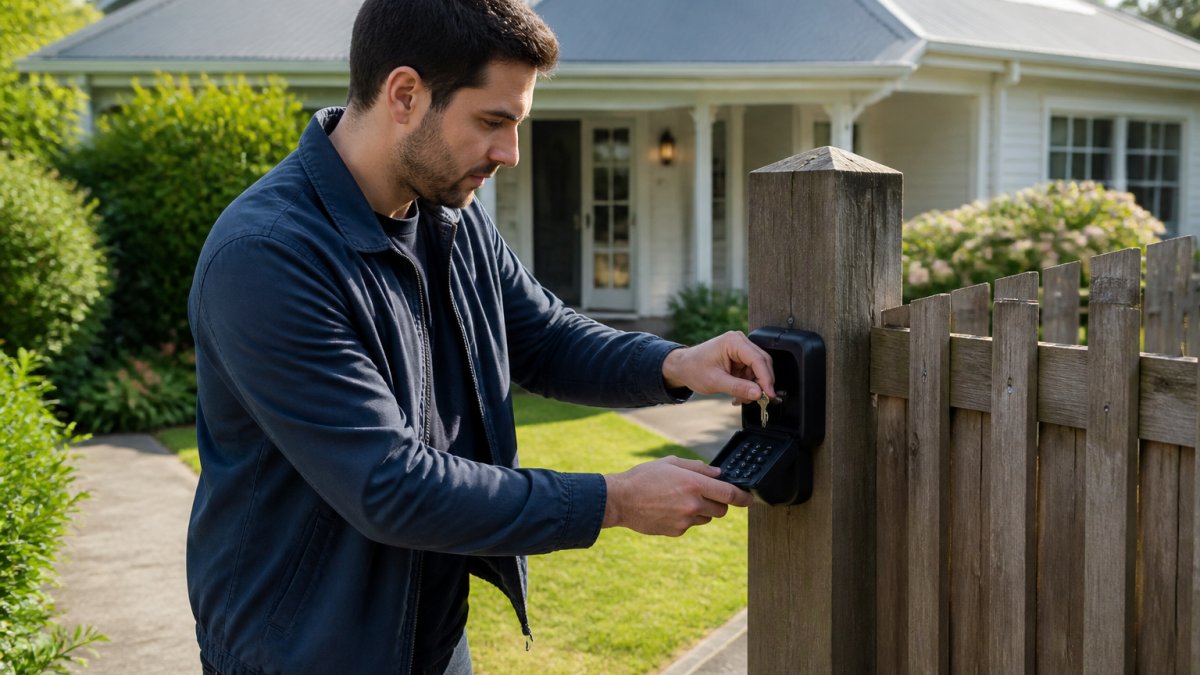
The best place to hide a spare key is a locked key safe or lockbox, not a fake rock or a spot under the mat. Those classic hiding spots are the first places an intruder checks.
A lockbox with a combination code gives you backup access without handing a key to anyone who walks up. Mount it somewhere out of street view, like a side gate or a back fence post. Make sure the spot is well-lit at night so you can open it in the dark.
Avoid these common mistakes:
- Under the doormat, flowerpot, or a fake rock
- Taped to the back of a mailbox
- Hanging on a nail behind a shrub
- Anywhere visible from the sidewalk
A hidden key in an obvious spot is a security risk, not a backup plan. If you would not leave your wallet there, do not leave your key there.
3. Make Extra Copies of House Keys and Track Them
Every household member should have their own key, and you should keep one extra copy that stays put. A common mistake is relying on a single key that gets passed around or borrowed.
Get a key copy made for each person who lives with you. Then label or color-code them so nobody mixes them up. Keep a master list of who has which key and where the spare lives.
A simple tracking routine:
- One key per household member, plus one spare
- A written list of who holds a key
- A note of where the spare copy is stored
- A reminder to re-check the list when someone moves in or out
When keys are accounted for, home lockouts drop fast. When they are not, you end up calling a locksmith at the worst possible time.
4. Use a Departure Checklist to Double-Check for Keys
A departure checklist is the simplest way to stop a lockout before it happens. Most lockouts are not dramatic. They happen because someone rushed out and forgot the key.
Build a short routine you run every time you leave:
- Keys in hand or pocket
- Door locked behind you
- Spare key confirmed in its hiding spot
- Phone charged in case you need to call for help
Pause for three seconds at the door. Pat your pocket. Confirm the key is there. That tiny habit prevents a huge share of residential lockouts.
Keep your keys in the same place every time you walk in the door. A hook by the entry beats a junk drawer every time, and it makes the departure check almost automatic.
5. Create a Consistent Key-Storage Routine for Everyone
A key-storage routine means every key has a home, and everyone in the house knows where that home is. This is where most households fall apart. One person drops keys on the counter, another leaves them in a coat pocket, and nobody can find them when it matters.
Set one spot near the door for keys. A hook, a small tray, or a bowl works fine. The rule is simple: keys go there the moment you walk in.
Then make sure everyone follows it:
- Agree on one storage spot
- Return keys there every time
- Remind guests and family to do the same
- Check the spot before anyone leaves
A consistent routine turns key hunting into a two-second glance. It also makes it obvious when a key is missing, so you can act before you are stuck outside.
6. Share Spare-Key Access with Trusted Household Members
Sharing spare-key access with a trusted neighbor or family member gives you a real safety net. This is different from hiding a key outdoors. It means someone you trust holds a copy and can help when you are locked out.
Choose people carefully. A trusted neighbor, a nearby relative, or a close friend works well. Give them a key and make sure they know how to reach you.
Keep it organized:
- Pick one or two trusted people, not a crowd
- Tell them where the key is and when to use it
- Update them if locks change
- Return the favor when they need it
This approach protects your home security because the key is not sitting outside for anyone to find. It is in the hands of someone accountable.
7. Maintain Existing Locks to Prevent Sticking and Failures
A sticking lock is a warning sign, not a minor annoyance. If your key grinds, catches, or needs a wiggle to turn, the lock is telling you something is wrong. Ignore it long enough and you get locked out of your own house.
Basic lock maintenance goes a long way:
- Lubricate the keyhole with a graphite or silicone spray once or twice a year
- Check that the deadbolt lines up with the strike plate
- Tighten loose screws on handles and plates
- Clear dirt and debris from the keyway
If a lock keeps jamming, do not force it. A worn lock or a bent key can snap off inside the cylinder, which turns a small problem into a real lockout. In that case, call a licensed locksmith for lock repair or replacement. BDS Locksmith handles residential lock service on-site, and a quick fix now beats an emergency call later.
8. Smart Lock Benefits and Backup Access for Home Lockouts
Smart lock benefits are real, but only if you plan for the day the battery dies. A smart lock lets you unlock with a code, a phone, or a key fob, so you are not stuck if you forget your keys. That convenience is why more homeowners are upgrading to keyless entry.
The catch is reliability. Smart locks run on batteries, and batteries fail. If the lock dies while you are out, you need a backup way in.
Plan for it:
- Keep a physical key as backup, even with a smart lock
- Replace batteries on a set schedule, not when they die
- Enable a low-battery alert if the lock supports it
- Know the manual override method before you need it
A smart lock with a dead battery and no backup key can leave you locked out just like a traditional lock. Test the manual override every few months so you know it works.
For added security, pair a smart lock with a home security system, security camera, or motion light. These extras deter intruders and give you peace of mind.
9. What to Do When Locked Out of Your House
When you are locked out, stay calm and work through your options in order. The first thing to do is check every exterior door and window. Sometimes a back door is unlocked, or a sliding door was left open.
Next, call your spare-key holder. If a trusted neighbor or family member has a copy, this is the fastest, cheapest fix.
If no spare is available, here is what to do:
- Confirm you are actually locked out, not just dealing with a stuck lock
- Check for an open window or secondary door
- Call a licensed, insured locksmith for emergency access
- Avoid breaking a window or forcing the door yourself
Do not try to pick the lock or kick the door in. You risk damage, injury, and a much bigger repair bill. A professional locksmith opens the door without damage.
At BDS Locksmith, we offer 24/7 emergency service and same-day availability. Our team is licensed, bonded, and insured, and we provide free estimates before any work begins. That means no surprise charges when we arrive. We also offer a 5% military discount for those who serve.
Save a locksmith’s number in your phone before you ever need it. Searching for one while standing outside in the rain is a bad time to start comparing options.
10. Build a Household Plan for Kids, Older Adults, Renters, and Guests
Different households face different lockout risks, so the plan should match the people in the home. A family with young kids needs a different routine than a renter or a household with an older adult.
Here is how to tailor it:
- Children: Teach them the key routine early. Keep a spare with a trusted adult, and make sure kids know who to call if they get locked out.
- Older adults: Set up a lockbox with a simple combination, and check that locks are easy to turn. Stiff locks are a real problem for weaker hands.
- Renters: Confirm your lease rules before changing locks. A re-key or deadbolt install keeps your place secure, and BDS Locksmith handles small residential jobs like these.
- Guests: Give visitors a temporary code or a loaner key, and collect it when they leave.
A household plan turns lockout prevention into a shared habit. Everyone knows the routine, the spare location, and who to call. That is how you keep home lockouts rare instead of routine.
| Household Type | Main Lockout Risk | Best Backup Method |
|---|---|---|
| Family with kids | Kids forget or lose keys | Spare with trusted adult |
| Older adults | Stiff locks, memory slips | Lockbox with simple code |
| Renters | No spare, lease limits | Re-key plus lockbox |
| Guests | No key at all | Temporary code or loaner |
Frequently Asked Questions
How can I prevent getting locked out of my house?
Preventing home lockouts starts with a consistent key routine. Always double-check for your keys before closing the door, and keep a spare key in a secure location such as a combination lockbox. Make extra copies for trusted household members, and consider upgrading to a smart lock with backup access. Regular lock maintenance also reduces the chance of a key breaking or a lock jamming, which can leave you stranded outside.
Where should I keep a spare house key?
A combination lockbox mounted in a discreet spot is one of the safest places to hide a spare key. Avoid obvious hiding spots like under the doormat, above the doorframe, or in a fake rock. If you have a trusted neighbor, giving them a key is another reliable option. For renters, check with your landlord first. Never leave a key in an unsecured outdoor location that could be easily found by someone unfamiliar with your home.
Is it safe to hide a spare key outside?
Hiding a key outside can be safe if you use a secure method. A combination lockbox is far safer than leaving a key under a mat or in a planter. Burglars know common hiding spots, so choose a location that is not visible from the street and keep the lockbox out of plain sight. Avoid hiding keys in mailboxes or near windows. If you are unsure, a smart lock or giving a key to a trusted neighbor is a better choice.
What should I do if I get locked out of my house?
First, check all doors and windows to make sure one is not unlocked. If you have a spare key with a neighbor or in a lockbox, retrieve it. If not, call a licensed locksmith who can provide emergency home lockout help. Avoid attempting to break in yourself, as this can damage your door or lock. Keep the number of a trusted locksmith saved in your phone so you can act quickly. BDS Locksmith offers 24/7 emergency service in the South Bay Area.
Home lockouts are preventable, but only if you set up the habits and backups before you need them. A spare key, a lockbox, a solid routine, and a maintained lock cover most of the risk. When a lock fails or a key goes missing, BDS Locksmith is here to help. We offer mobile service, 24/7 emergency response, free estimates, and licensed, bonded, and insured work backed by a 100% customer satisfaction promise. Call (408) 300-4369 to get started and keep your home secure.