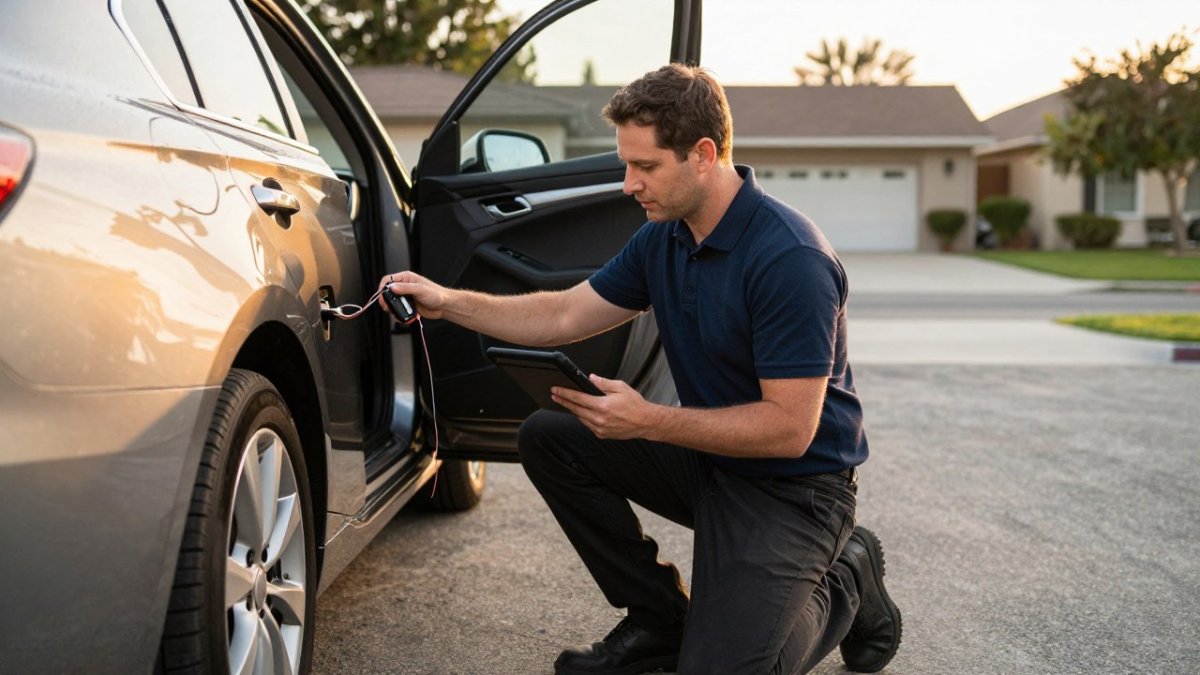
A key that suddenly will not turn can stop an ordinary San Jose commute in seconds. The right repair versus replace ignition decision is not always obvious, especially when the vehicle will not start, the key feels stuck, or you are stranded away from home. The good news is that many ignition problems can be diagnosed at your location, and not every issue requires an expensive full replacement.
An ignition system has several parts that can fail in different ways. The key may be worn, the lock cylinder may have damaged internal pins, the ignition switch may have an electrical fault, or the vehicle may have an issue outside the ignition altogether. A professional diagnosis helps separate a repairable problem from a situation where replacement is the safer, more reliable choice.
Repair Versus Replace Ignition: Start With the Actual Fault
Drivers often call every starting problem an “ignition problem.” Sometimes that is accurate. Other times, the ignition is working normally and the concern involves the battery, starter, steering-column components, key chip, or another vehicle system. Replacing parts before identifying the cause can add cost without solving the problem.
A locksmith can inspect the key and mechanical lock cylinder, test how the key operates, and look for signs of wear, blockage, or damage. If the key enters but will not turn, turns only after repeated attempts, or gets stuck in the cylinder, the lock itself may need attention. If the key turns normally but the dash lights do not come on or the vehicle does not crank, an electrical issue may be involved.
This distinction matters because mechanical ignition repairs and electrical ignition-switch work are not the same service. A qualified technician should explain what has failed, what can reasonably be repaired, and what replacement would involve before work begins.
When Ignition Repair Makes Sense
Repair is often the practical option when the problem is limited, the existing cylinder can be restored safely, and the repair will provide dependable daily use. It may also allow you to keep using the same key, which is convenient when the vehicle has one key for the doors and ignition.
A worn key is one of the most common causes of ignition trouble. Over years of use, key cuts become rounded and no longer lift the internal pins correctly. The driver may need to jiggle the key, use a certain angle, or try several times before it turns. In some cases, making a properly cut replacement key resolves the problem without any ignition repair at all.
Debris or a damaged internal component can also interfere with the cylinder. A technician may be able to service or rebuild the ignition cylinder if the housing and related components are still in good condition. This approach can be less disruptive than replacing the full assembly.
Repair is generally worth considering when:
- The key is worn, bent, or poorly copied, but the ignition cylinder is otherwise sound.
- The key works inconsistently and the cylinder has serviceable internal wear.
- A foreign object, broken key fragment, or buildup is preventing normal operation.
- The vehicle uses a mechanical cylinder that can be repaired without compromising reliability.
The deciding factor is not simply the lowest immediate price. A repair should leave you with an ignition that operates smoothly and consistently, not one that is likely to bind again next week.
Do not force a sticking key
Forcing the key can turn a manageable repair into a larger problem. Excess pressure can break the key inside the cylinder, damage the key blade, or harm components in the steering column. Avoid pliers, improvised lubricants, and repeated hard twisting.
If the steering wheel is locked, gently relieve pressure on the wheel while turning the key. If it still will not move, stop before the key bends or breaks. Mobile locksmith service can often address mechanical key and cylinder concerns where the vehicle is parked, avoiding a tow for a problem that may be resolved on site.
When Replacing an Ignition Is the Better Choice
Replacement becomes the better long-term solution when the ignition cylinder is severely damaged, its internal parts are excessively worn, or a previous repair will not provide reliable operation. It may also be required after an attempted theft, vandalism, or a broken key that has damaged the cylinder beyond serviceable condition.
Common signs replacement may be needed include a key that spins freely without engaging, a cylinder that is physically loose, visible damage around the keyway, or a key that cannot be removed because of internal failure. A cylinder that repeatedly jams after prior repairs may also be at the end of its useful life.
Replacement can be more involved on newer vehicles. Many late-model cars use transponder keys, smart keys, immobilizer systems, or electronic steering locks. Installing a new ignition component may require key cutting, key programming, matching the new cylinder to existing door locks, or coordination with an automotive repair facility for electrical concerns.
There is also a convenience trade-off. Depending on the vehicle and available parts, an ignition replacement may result in a different key for the ignition than for the doors. In other cases, a technician may be able to configure the replacement so one key continues to operate both. Ask about this before authorizing work so there are no surprises.
What Affects the Cost of Repair or Replacement?
The make, model, year, damage level, and type of key all affect the final cost. A straightforward mechanical key issue is usually different from a damaged ignition on a push-button-start vehicle with an immobilizer system. Parts availability can matter as well, particularly for older vehicles, specialty models, and vehicles with dealer-restricted components.
The location and urgency of the service can also affect the job. A mobile technician brings the tools needed to inspect the issue and complete many services where the vehicle sits. That can reduce the inconvenience of arranging a tow and waiting at a shop, but an accurate estimate still depends on the diagnosis and parts required.
Look for clear pricing communication. Before work begins, you should understand whether the recommendation is a key replacement, cylinder repair, full ignition replacement, programming service, or a referral for an electrical repair. A trustworthy provider will explain the reason for the recommendation rather than treating every no-start situation as a replacement job.
A Simple Way to Decide What to Do
Start by noticing exactly what happens when you use the key. Does it fail to enter, enter but not turn, turn but not start the vehicle, or get trapped in the ignition? Those details help narrow down the problem quickly.
Next, consider whether you have a spare key. If the spare works, the original key is likely the issue. Do not assume a spare that has never been used is perfect, but it can provide a useful comparison. If neither key works, the cylinder or a related vehicle component is more likely involved.
Finally, choose the option that restores dependable operation rather than only getting the car started once. A minor repair can be the smart value when the ignition is structurally sound. Replacement is usually the better investment when damage is substantial or recurring failures have made the existing cylinder unreliable.
Get On-Site Help Without Guesswork
Being unable to turn your key is stressful enough without trying to diagnose the vehicle from a parking lot. BDS Locksmith provides mobile automotive locksmith service for drivers in San Jose and the South Bay, including ignition concerns, broken key extraction, car key replacement, and transponder key services. A trained technician can assess the mechanical key and ignition components at your location, explain the available options, and provide clear next steps.
If your key is sticking or the ignition is acting differently than usual, address it before it becomes a complete lockout. A prompt inspection can protect the key, prevent further damage, and help you get back to your day with a solution that fits your vehicle and your budget.