Quick Summary
The best emergency tools for car lockouts are inflatable air wedges, long-reach unlock tools, and plastic shims, which open a door without damaging paint or wiring. Choose tools that match your vehicle’s lock type, avoid metal pry bars, and call a professional when a non-destructive method fails.
- Inflatable air wedges create the gap you need, and should be inserted at the top corner of the door.
- Plastic shims and inflatable tools protect paint and trim, unlike metal pry bars.
- Modern keyless and electronic locks may need a tool aimed at the interior unlock mechanism.
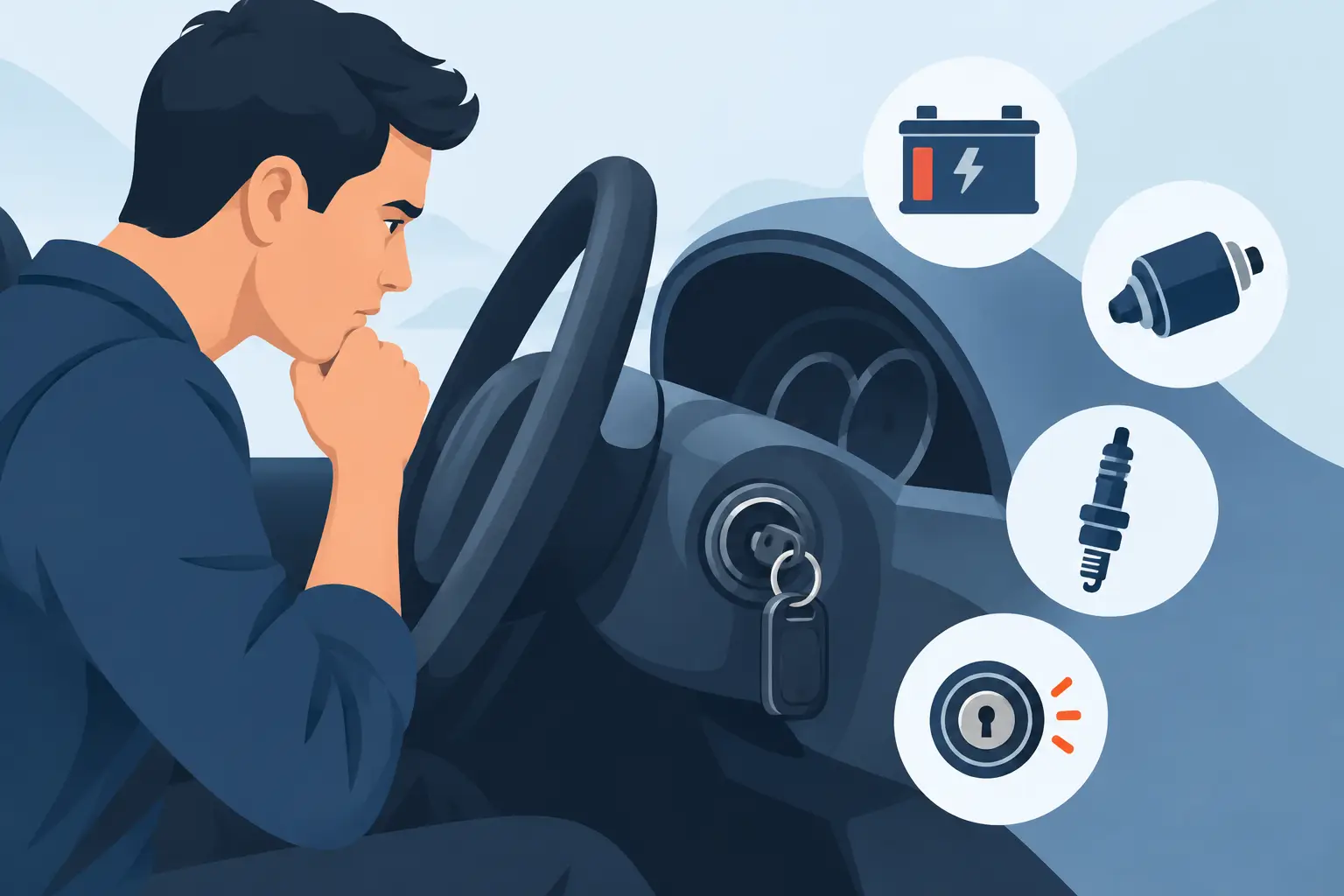
- Keep a portable jump starter in the kit, since a dead battery is a common reason for a lockout.
- Stop and call a professional if the weather seal peels or the window shifts.
Table of Contents
- Why Carrying Car Lockout Tools Makes Sense
- Essential Hand Tools for Your Emergency Kit
- Car Door Unlock Tools That Work on Modern Vehicles
- Portable Power and Battery-Operated Tools
- Safety and Reflective Gear for Roadside Lockouts
- Building a Roadside Emergency Kit for Car Lockouts
- Legal and Safety Risks of DIY Lockout Attempts
- What to Do When Locked Out of Your Car, Step by Step
- Booking a Mobile Locksmith for Your Next Lockout
- Frequently Asked Questions
Why Carrying Car Lockout Tools Makes Sense
Last Updated: November 9, 2026
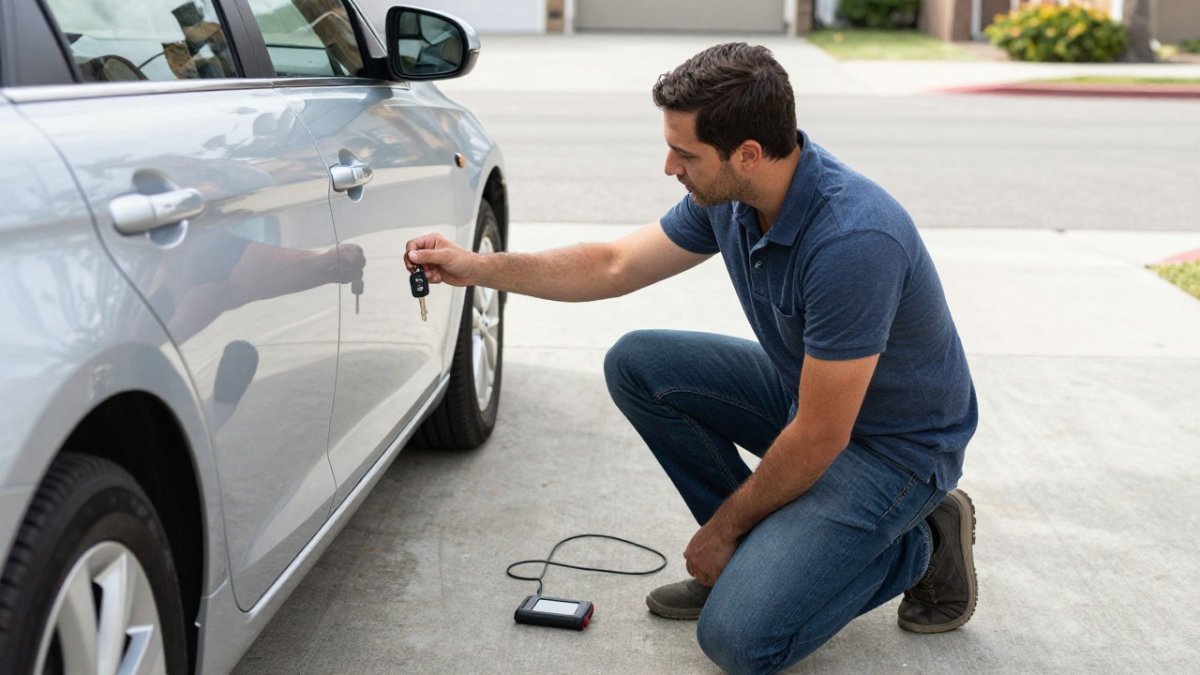
Locked out of your car with the engine off and keys inside? The best emergency tools for car lockouts can save you a tow, a broken window and an hour on the curb. People often reach for a coat hanger, bend a door seal, or wait for a tow truck, and those approaches frequently cause more trouble than they solve. A small, well-chosen kit changes that outcome.
Lockouts happen to careful drivers too. Keys get left on a seat, a fob battery dies in a parking lot, or a child shuts the door with the keys still in hand. The question is not whether it will happen to you, but how prepared you will be when it does.
Carrying the right tools means you can often open a door without damage. It also means you are not depending on a roadside assistance wait during bad weather or late at night.
Below, we cover the tools worth keeping, which ones work on modern vehicles, and where the legal and safety lines fall. We also walk through what to do step by step and when to call a professional.
Essential Hand Tools for Your Emergency Kit
The core of any lockout kit is a small set of hand tools that let you work the door without forcing it. A basic setup includes inflatable air wedges, a long-reach tool, and a pry-resistant plastic wedge. Together they cover most sedans, SUVs and pickups.
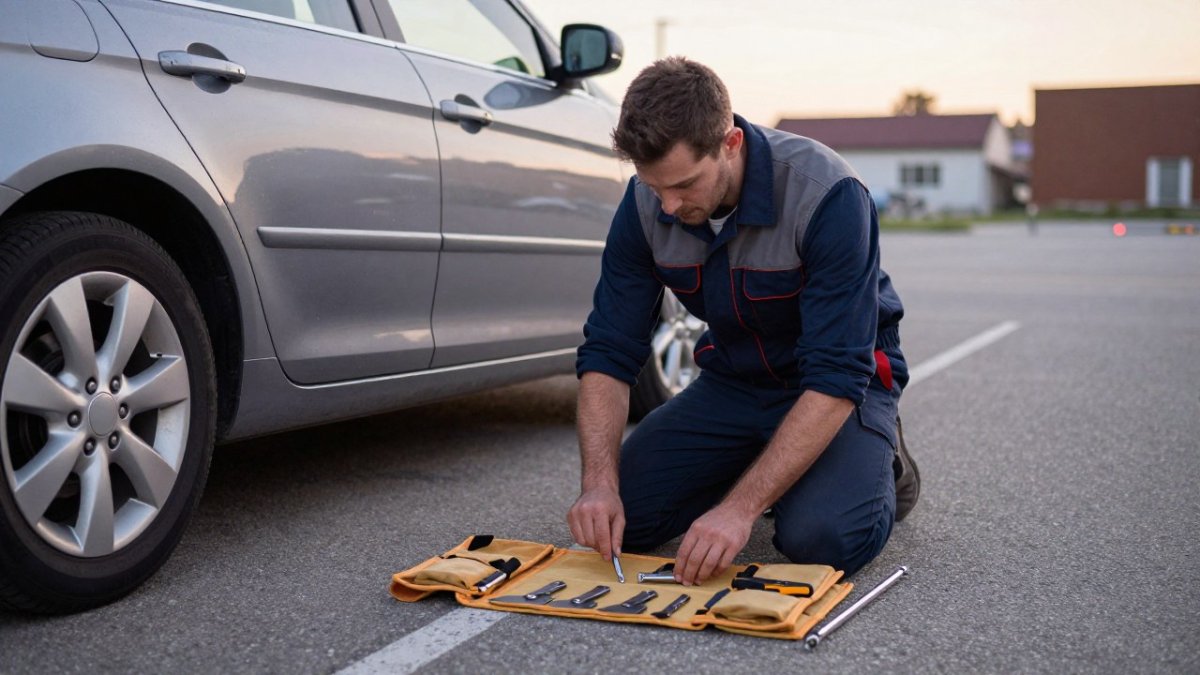
Air wedges are the most useful piece. You slide a thin, deflated wedge into the door gap and pump it up to create room. Long-reach tools let you press the unlock button or pull the interior handle through the gap. Choose one with a flexible tip and a bend you can control. Test it on a practice door at home before you need it.
Many drivers also keep a small set of plastic shims and a rubber mallet. These help you protect paint and trim while you work the gap. Store everything in a canvas roll so it stays dry and easy to find.
Watch out: Metal pry bars can scratch paint, crease the door frame and damage side-airbag sensors. Stick to plastic and inflatable tools in a lockout kit.
The core lockout kit items are summarised below.
| Tool | Use | Watch out |
|---|---|---|
| Inflatable air wedge | Creates gap in door frame | Insert at top corner, pump gently |
| Long-reach tool | Presses unlock button or pulls handle | Keep within the door gap |
| Plastic shims | Protects paint and trim | Use instead of metal |
| Rubber mallet | Tapping gently at the gap | Avoid heavy blows |
| Metal pry bar | Not recommended | Scratches paint, damages airbag sensors |
Car Door Unlock Tools That Work on Modern Vehicles
Older cars used simple mechanical locks that many tools could manipulate. Modern vehicles rely on electronic locking systems, immobilizers and sometimes keyless entry, which changes what works. The practical rule is that the tool must match the lock architecture, not just the door gap. A kit that opens a 2005 sedan may do nothing on a 2022 SUV with a shielded interior handle and a door module that cuts power to the unlock button when the vehicle is armed.
Start by identifying what you are working with. Three broad categories matter:
- Mechanical linkage locks. The interior lock knob or handle is physically connected to the latch. A long-reach tool that hooks the handle or presses the unlock button usually works, provided you can create enough gap without bending the door.
- Electronic button locks. The interior unlock button sends a signal to the body control module. If the vehicle is armed, that button may be disabled until the module sees a valid key. A long-reach tool can press it, but the door may not actually unlock.
- Keyless entry and push-to-start systems. These often have no mechanical interior lock knob at all. The door module may ignore interior switches when armed, and the emergency release is usually a hidden mechanical lever near the interior handle or under a trim cap.
For most newer vehicles, the practical approach is an inflatable air wedge plus a long-reach tool aimed at the interior unlock mechanism, used slowly and with the window down a fraction if the vehicle allows it. Keyless systems may also unlock if you carry a spare fob, so keep a backup in a secure spot at home or with a trusted person. Check your owner’s manual before you start; it often explains the manual unlock method and where the emergency release sits.
Vehicle-specific compatibility is an important consideration for any DIY attempt. Damage-free car lockout techniques walk through the non-destructive approach in more depth. Full-size pickups and body-on-frame SUVs often have wider door gaps and more robust weather stripping, which makes air wedges easier to use. Sedans with frameless windows or tight tolerances can be damaged by even a thin wedge if it is inserted at the wrong angle. Vehicles with side-curtain airbags routed along the roofline or door frame need extra care: prying near the headliner or the A-pillar can disturb the airbag module or its wiring. Cars with laminated side glass are generally more resistant to shimming and can be more expensive to replace if cracked.
Non-destructive entry techniques matter more than the tool brand. The goal is to create a small, controlled gap at the top corner of the door, insert a protective plastic shim to hold the gap, and then use the long-reach tool to press the unlock button or pull the interior handle. Keep the wedge thin enough to clear the weather seal, and never push it deep enough to crush the window glass. Work at the hinge side only if the manual specifies it; otherwise stay at the latch side where the gap is designed to flex. Stop immediately if you see the weather seal peeling, the window shifting in its track, or the door frame creasing.
Some drivers buy specialized slim-jim style tools. These can damage door wiring and the anti-theft system on modern cars, so they are generally not recommended for DIY use. Evaluate any device against your specific vehicle year and make, and test it on a practice door at home before you need it. If the vehicle has a dead fob battery, a portable jump starter or a replacement fob battery may resolve the lockout without any door tool at all.
Watch out: inserting a metal tool past the weather strip on a vehicle with door-mounted side airbags can damage the airbag wiring or the sensor, and that repair often costs more than a professional lockout call. Avoiding such costly electrical damage often requires the specialized equipment and training found at Carlito’s Towing Services, where technicians manage these delicate internal mechanisms safely.
Portable Power and Battery-Operated Tools
Some modern lockout tools run on rechargeable batteries. Compact battery-operated devices can help with interior-side access or assist with a dead fob battery. Keep spare batteries in the kit, since a drained tool is no help during a lockout.
A small portable jump starter is another useful item. A dead battery is a common reason a locked-out driver needs to reopen the car quickly, so a jump starter provides a second safeguard.
Store battery tools away from extreme heat. Hot cars can degrade lithium cells, so keep them in a cabin bag rather than the trunk on summer days.
Safety and Reflective Gear for Roadside Lockouts
Working beside a busy road is risky. Keep a reflective vest, a flashlight with fresh batteries and warning triangles in your kit. Wear the vest before you step out of the car.
Pull fully off the road and turn on your hazard lights. If you are on a highway shoulder, stay as far from traffic as you can and consider calling for help rather than working right at the door.
Gloves protect your hands from sharp edges and cold metal. A high-visibility jacket is helpful at night. These items cost little and make a real difference when you are kneeling beside a car.
Building a Roadside Emergency Kit for Car Lockouts
A lockout kit works best as part of a broader roadside emergency kit. Pack it in a single bag so you can grab everything at once. Store the bag in the trunk or cargo area where it stays accessible but out of the way.
A practical checklist for your kit:
- Inflatable air wedge and hand pump
- Long-reach unlock tool
- Plastic shims and a rubber mallet
- Spare key fob or a written location of your backup key
- Reflective vest and flashlight
- Gloves and a small first-aid kit
- Portable jump starter and charging cable
- Phone charger and a paper copy of your roadside assistance number
Review the kit twice a year. Replace batteries, check that the air pump still works, and confirm the contents match your current vehicle.
Legal and Safety Risks of DIY Lockout Attempts
Trying to open your own car is legal in most cases, but the risks add up quickly, and the legal picture is more specific than most guides admit. Lockout tools are generally legal to own and use on a vehicle you own or have permission to access. Using such tools on a car that is not yours can raise legal issues, so check your state’s rules. If a police officer sees someone working on a car, you may be asked for identification and proof of ownership. Keep your ID and a registration document or a photo of both in your phone or wallet so you can resolve the situation quickly.
Insurance and warranty consequences are the part most drivers never consider. Insurance and warranty terms vary, and damage from a self-directed entry attempt may not be covered. Check your policy and warranty documents before attempting entry.
The safety risks are mechanical and specific. Forcing a door can trigger the alarm, set off side airbags if you strike a sensor, or crack the window glass. Working near an electrical connector in the door can cause problems with power windows, locks, and the door module. On vehicles with laminated side glass, a shim that slips can crack a pane that costs several hundred dollars to replace. On vehicles with frameless windows, the glass can shift in its track and leak afterward. A coat hanger or metal rod can scratch paint, tear the weather stripping, or short a wire in the door harness.
Non-destructive entry is the safety strategy, not just a technique. Use plastic and inflatable tools rather than metal, insert the wedge at the top corner of the door where the gap is designed to flex, and stop the moment you see the seal peel or the window shift. Gloves protect your hands from sharp edges and cold metal, and a reflective vest matters if you are working beside traffic. If you are on a highway shoulder, stay as far from traffic as you can and consider calling for help rather than working right at the door.
Watch out: if you are unsure whether the tool matches your vehicle’s lock type, stop and call a professional. The cost of a quick, damage-free entry is often less than the repair bill for a bent frame or a damaged window, and it avoids the insurance and warranty complications that follow a failed DIY attempt.
What to Do When Locked Out of Your Car, Step by Step
Start by staying calm and checking the obvious. Confirm the doors are fully closed, the keys are truly inside, and no one else has a spare. Check the trunk, since some vehicles let you reach the cabin through the rear seats.
Next, assess the situation. Note the vehicle year, the lock type, and whether the car has keyless entry. Look for a visible unlock button, a manual lock knob, and any signs of damage.
Then try the non-destructive methods in order:
- Use the fob or spare key if one is nearby.
- Insert an air wedge into the upper corner of the door gap and pump gently.
- Slide the long-reach tool through the gap and press the interior unlock button or pull the handle.
- If the door still will not open, stop and call for help.
Work slowly. Forcing the door usually makes the problem worse. If you notice the weather seal peeling or the window shifting, stop immediately.
Finally, once inside, check that the car is in park, the engine is off, and the doors are locked again before you drive. Replace any tools you used so your kit is ready for next time.
Booking a Mobile Locksmith for Your Next Lockout
When a non-destructive method fails, a mobile locksmith is usually the fastest safe option. Find a mobile locksmith for car keys explains how to book one quickly. BDS Locksmith provides on-site service across the South Bay Area. Our technicians are licensed, bonded and insured, and we offer free estimates before we begin work.
We handle automotive lockouts, key fob replacement and ignition repair. We also offer residential and commercial locksmith services, plus a 5% military discount. To get started, call (408) 300-4369 or visit our site to request a quote.
Last Updated: November 9, 2026
Frequently Asked Questions
What are the best emergency tools for a car?
The most useful emergency tools for a car are a flashlight, a set of jumper cables, a tire changing kit with a jack and lug wrench, a multi-bit screwdriver, and a pair of work gloves. For lockouts specifically, a small inflatable air wedge and a long-reach unlocking tool handle most situations on older vehicles. Keep them together in one bag so you can find them in the dark, and check the batteries in any powered items twice a year.
Can a car lockout kit damage my vehicle?
A car lockout kit can damage weather stripping, paint, or internal linkages if used carelessly. Inflatable air wedges should be pumped slowly, and plastic or nylon tools are safer on paint than metal pry bars. Modern vehicles with side-impact airbags and complex door modules are more sensitive to force, so a professional mobile locksmith is the safer choice for newer cars. Improper use can also void warranty coverage on door hardware.
Should I try to unlock my car myself or call a locksmith?
Try the simple options first if you have a spare key nearby or a door that is not fully latched. If the car is a newer model, has a key fob with an electronic lock, or if you have already tried and failed, call a licensed mobile locksmith. A trained technician is better placed to open the vehicle without damage than most DIY attempts. BDS Locksmith offers free estimates, so you can compare before deciding.
What should I do if a child or pet is locked inside a car?
Call 911 immediately if a child or pet is locked inside a car, especially in hot or cold weather. Do not wait for a locksmith to arrive first, because temperatures inside a closed vehicle can rise quickly. Emergency responders have the authority and tools to open the car safely. While you wait, stay near the vehicle and watch for signs of distress.