Last Updated: November 8, 2026
Quick Summary
You can tell if a transponder key programmed correctly by turning it to ON and watching the security light: if it clears after five to ten seconds and the engine starts, the chip was accepted. A steady or flashing light with a crank and no-start usually means the key is not registered.
- The transponder chip has no battery of its own and is read through a radio signal.
- Repeat the ignition test with your spare key to separate key faults from vehicle faults.
- Cranking repeatedly with an unprogrammed key can drain the battery and trigger a temporary lockout.
- Remote button pairing and immobilizer programming are separate jobs, so working buttons do not mean the chip is registered.
- If you are down to one key, get a second key made while the first one still works.
Table of Contents
- How a Transponder Key Communicates With Your Vehicle
- How Do You Test a Transponder Key? A Safe Diagnostic Sequence
- Reading the Dashboard Security Light and Start Behavior
- How to Tell Whether Your Key Even Has a Transponder Chip
- When a Transponder Key Is Not Working: Separating Key Faults From Vehicle Faults
- Programming vs. Pairing: Why Your Remote Buttons Can Work While the Engine Won’t Start
- How to Program a Car Key Without the Original
- What to Do After a Failed Test or When You Only Have One Key Left
- Get a Transponder Key Checked On-Site by BDS Locksmith
- Frequently Asked Questions
How a Transponder Key Communicates With Your Vehicle
A transponder key programmed with a small electronic chip in the head sends a coded signal to your vehicle’s immobilizer. The engine only starts when the chip’s code matches what the onboard computer expects. Learning how to tell if a transponder key is programmed starts with understanding that handshake.
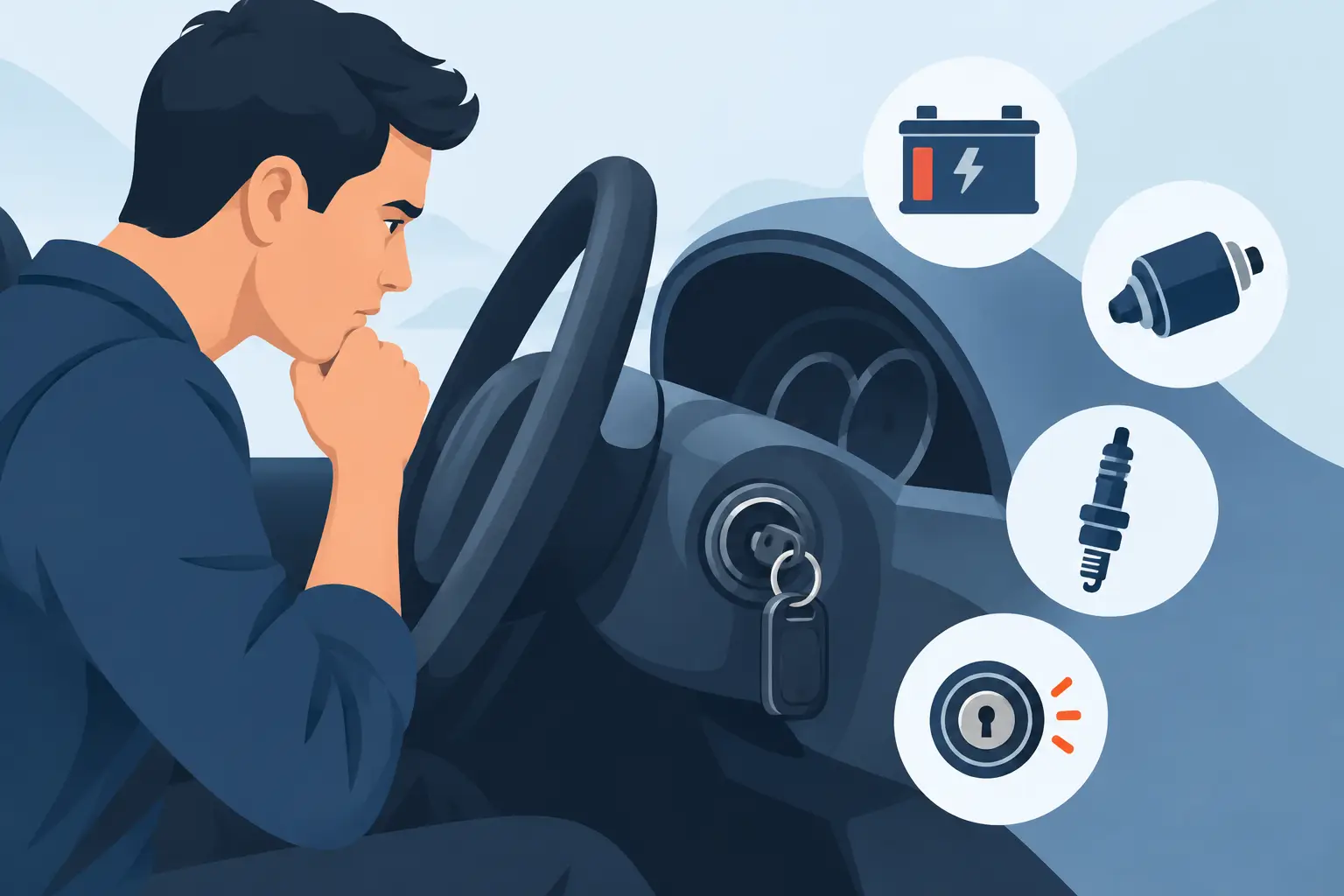
A key that turns but won’t start the engine is often a chip problem. The key may look fine and the battery may be fine, but the chip is the likely cause.
Here is the short version:
- The chip holds a unique code.
- The immobilizer reads that code through a radio signal.
- The onboard computer compares it to the codes it has stored.
- Match means the engine starts. No match means no start.
That is the whole system. Everything else is detail.
The Chip, the Immobilizer, and the Onboard Computer
The transponder chip is a tiny glass or plastic capsule inside the plastic key head. It has no battery of its own.
The immobilizer system is the vehicle security system that reads that code. It sits between the ignition and the engine computer. If the code is wrong or missing, the immobilizer cuts fuel or spark.
The onboard computer stores the codes of every key that has been registered to the car. Most vehicles accept several keys. Some accept only a few.
A key that is cut correctly but not registered will turn the ignition cylinder and fail at the chip check. That is key not programmed in plain terms.
How Do You Test a Transponder Key? A Safe Diagnostic Sequence
You test a transponder key by inserting it in the ignition and watching whether the security light clears and the engine starts. Do this with a charged battery and a quiet setting so you can catch every light and sound.
Follow this order. It matters.
- Turn the key to the ON position. Do not crank yet. Watch the dashboard.
- Count the security light. A steady light is different from a blinking one. Note which.
- Wait five to ten seconds. Many systems run a check before allowing a start.
- Turn to START. Listen for the engine to catch or for a silent no-crank.
- Repeat with your spare key if you have one. This single step separates key faults from vehicle faults.
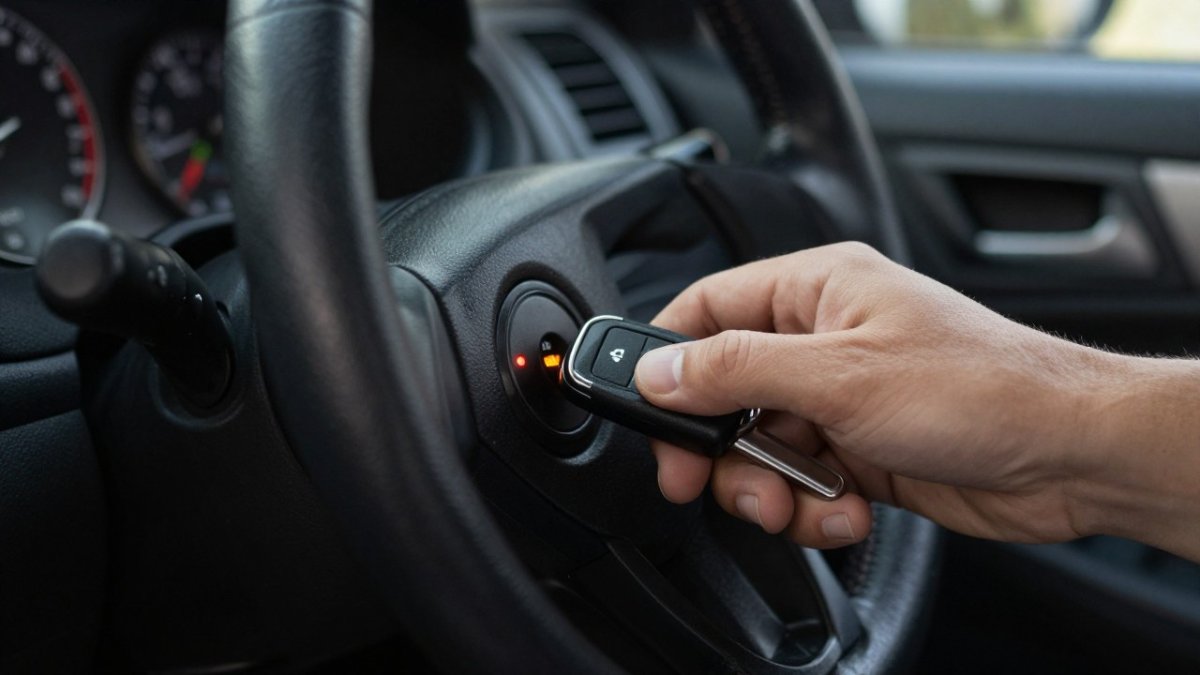
Watch out: cranking the engine over and over with an unprogrammed key can drain the battery and, on some vehicles, trigger a temporary lockout in the immobilizer.
Follow this order to test whether your transponder key is programmed.
| Step | What to do | Note |
|---|---|---|
| 1 | Turn the key to the ON position | Do not crank yet; watch the dashboard |
| 2 | Count the security light | Note whether it is steady or blinking |
| 3 | Wait five to ten seconds | Many systems run a check before allowing a start |
| 4 | Turn to START | Listen for the engine to catch or a silent no-crank |
| 5 | Repeat with your spare key | Separates key faults from vehicle faults |
Reading the Dashboard Security Light and Start Behavior
The security light is your best diagnostic tool, and most drivers ignore it. But the light is not a universal code. Its behavior varies by manufacturer, model year, and even trim level, so treat any pattern as a clue rather than a verdict. What follows is a practical interpretation guide, not a lookup table that applies to every vehicle.
What the Light Is Actually Telling You
The security indicator is wired to the immobilizer control unit, not to the key itself. When you insert a key and turn it to ON, the immobilizer powers up the antenna ring around the ignition cylinder, broadcasts a challenge signal, and waits for the chip to respond with its stored code. The light reflects the result of that handshake. A steady light during the check usually means the immobilizer is still waiting or has not yet received a valid response. A light that extinguishes after a few seconds generally means the handshake succeeded and the engine is cleared to start. A light that continues flashing during crank typically means the immobilizer has not accepted the key and is holding the start circuit open.
That said, some vehicles use the same light for the passive anti-theft system and for other functions, and some do not have a dedicated security light at all. A common pattern is a light that blinks slowly when the vehicle is off and armed, then goes solid or off when a valid key is inserted. Another common pattern is a fast blink for a fixed interval followed by a pause, which often indicates a fault code stored in the immobilizer rather than a simple key mismatch.
Interpreting Start Behavior Alongside the Light
The light alone is not enough. Pair it with what the starter does.
- Crank and no-start with the security light on or flashing. The starter is working, so the battery and starter circuit are likely fine. The immobilizer is probably not releasing fuel or spark because it did not accept the chip. This is the classic unprogrammed-key signature.
- No-crank with the security light on or flashing. Some immobilizers disable the starter circuit entirely, not just fuel and spark. A no-crank condition with a security light can still be a programming issue, but it can also be a starter, battery, or neutral safety switch fault. Test with a known-good spare key before assuming the key is the problem.
- Crank and start, then stall within a few seconds. This pattern often points to a chip that is recognized intermittently or an antenna ring that is losing its signal. It can also indicate a failing immobilizer module.
- No security light at all, no crank. A dead vehicle battery or a cluster fault can suppress the light entirely. Check the battery and the instrument cluster before blaming the key.
Why the Same Light Means Different Things on Different Vehicles
A flashing security light on one make can mean “key not recognized” while on another it means “system armed and functioning normally.” Manufacturers program their own blink patterns, and aftermarket remote starters and alarm systems can change those patterns entirely. If your vehicle has an aftermarket alarm or remote start, the security light may be controlled by that module rather than the factory immobilizer, which makes light-based diagnosis unreliable.
Watch out: do not assume a flashing light means the key is unprogrammed until you have tested a known-good spare key in the same ignition. If the spare starts the car and the original does not, the key is the likely fault. If neither key starts the car, the light is pointing at the vehicle, not the key.
When the Light Pattern Is Not Enough
Light patterns can tell you that something failed the handshake, but they cannot tell you whether the chip is missing, damaged, unregistered, or simply not being read because the antenna ring is faulty. Those distinctions require a scan tool that can read immobilizer codes or a locksmith with a key programmer that can query the chip directly. If the light pattern and the spare-key test point to the key, the next step is having the transponder key programmed or verified professionally, not repeated guessing.
How to Tell Whether Your Key Even Has a Transponder Chip
Not every key has a chip. A plain metal key with a small plastic head may be a basic cut key with no electronics at all. Before you spend time testing programming, confirm the key actually contains a transponder. The methods below range from quick visual checks to definitive vehicle-specific verification.
Visual and Physical Checks
- Look at the key head. A transponder key typically has a thicker, sealed plastic head with a visible seam where the two halves meet. The chip itself is usually a small glass or plastic capsule embedded near the blade, and you will not see it directly. A very thin, flat plastic head with no seam is more likely a basic cut key.
- Look for a chip symbol or marking. Some keys have a small icon, a dot, or a manufacturer part number on the head that indicates a transponder. This is not universal, and the absence of a marking does not prove there is no chip.
- Check the key’s weight and feel. Transponder keys are slightly heavier and thicker in the head than a plain metal key, but the difference is subtle and not reliable on its own.
The Plastic-Bag Test and Its Limits
The plastic-bag test is widely repeated: seal the key head inside a plastic bag and try to start the car. The idea is that the bag shields the chip’s radio response, so a transponder key will fail to start while a non-transponder key will start normally. In practice, this test is unreliable. The bag must be thick enough and sealed tightly enough to attenuate the signal, and many thin bags do not shield adequately. A failed start in a bag can also be caused by a weak chip, a marginal antenna ring, or a battery issue. Use the bag test only as a rough hint, never as proof.
The Reliable Route: VIN-Based Verification
To confirm whether your vehicle uses a transponder system, check the vehicle identification number against manufacturer fitment information. Your owner’s manual often states whether the vehicle is equipped with a passive anti-theft system and what type of key it uses. If the manual is not available, a dealer parts department can look up the VIN and tell you the correct key type and part number.
What the Vehicle’s Age and Equipment Tell You
Vehicle equipment varies across makes and models, so model year alone may not settle the question. Some entry-level vehicles sold into the 2000s still used non-transponder keys, and some vehicles use a transponder only when a certain trim or option package is selected. Do not assume that a vehicle’s model year alone settles the question. The owner’s manual, the VIN lookup, or a dealer parts query is the safer guide.
Watch out: if your key has no chip, programming is not your problem. Your issue is a cut, a worn ignition cylinder, or a vehicle fault. Testing programming on a non-transponder key will waste time and may trigger unnecessary lockout behavior in the immobilizer.
When a Transponder Key Is Not Working: Separating Key Faults From Vehicle Faults
A transponder key not working can mean two very different things, and mixing them up wastes time and money. The spare-key test is the fastest way to split them.
If your spare key starts the car, the vehicle is fine. The first key is the problem. If neither key starts the car, the vehicle is the problem.
Damaged Chip, Weak Battery, or Ignition Problem?
Three faults look alike from the driver’s seat. Here is how to tell them apart.
- Damaged chip. The key was dropped, washed, or bent. The light blinks and the engine never catches. No amount of retrying fixes it.
- Weak key battery. This affects the remote buttons first. The engine may still start because the chip does not need the battery. If the buttons are dead but the car starts, the battery is the issue.
- Ignition problem. The key turns stiffly or not at all. The engine may crank but not fire. This is mechanical, not electronic.
A common mistake is replacing the key when the ignition cylinder is worn. Test the spare first.
Programming vs. Pairing: Why Your Remote Buttons Can Work While the Engine Won’t Start
Remote button pairing and immobilizer programming are two separate jobs, and this is where most guides get it wrong. Your key fob can lock and unlock the doors while the chip inside fails to start the engine.
The remote lock and unlock buttons use a radio signal to the body control module. The chip uses a different signal to the immobilizer. One can work while the other fails completely.
So if your remote buttons work but the engine will not start, do not assume the fob is fine. The fob is fine. The chip registration is not.
If your fob buttons are dead too, our guide on what to do when your car key fob is not working walks through the fixes in order.
How to Program a Car Key Without the Original
You can program a replacement key without the original on some vehicles, but the process depends on the year, make, and model. Many cars need at least one working key present to add a spare. Others need a diagnostic tool or a locksmith’s equipment.
Here is the general shape of the process:
- Confirm the vehicle uses a transponder system.
- Get a replacement key or spare key with the correct chip for your vehicle.
- Have the key cut to your key code or duplicated from a working key.
- Enter programming mode using the vehicle’s programming sequence.
- Register each key in turn.
- Test the key in the ignition before you rely on it.
Some vehicles use a self-programmable key that you can add with a sequence of ignition turns. Others require a scan tool. If your car falls in the second group, DIY will not work.
For a full walkthrough, see our guide on how to program a car key without the dealership.
What to Do After a Failed Test or When You Only Have One Key Left
A failed test is information, not a dead end. If the security light stayed on and the engine never caught, you now know the chip is not registered. That is a solvable problem.
If you are down to one key, treat it as urgent. A single key is one loss away from a lockout, and a locksmith visit with no working key is a harder job than adding a spare. Get a second key made while the first one still works.
Our complete replacement guide for when you have no original key covers the options. If you have lost your only key right now, start with what to do when you lose your only car key.
Watch out: buying a cheap uncut chip key online and expecting it to work is the most common DIY mistake we see. The chip must match your vehicle’s system, and the key must be cut to your lock. A mismatched chip will never program, no matter how many times you try the sequence.
Get a Transponder Key Checked On-Site by BDS Locksmith
Testing a key yourself has limits. You can confirm the light pattern and run the spare-key test, but you cannot read the immobilizer’s stored codes or confirm chip registration without the right equipment. That is where a professional diagnosis saves you from guessing.
BDS Locksmith is a licensed, bonded, and insured mobile locksmith serving the South Bay Area. We come to your vehicle on-site. Same-day service is available, and we offer free estimates.
What you get with an on-site visit:
- A chip and immobilizer check with professional diagnostic equipment
- Key cutting and programming for most makes and models
- Ignition repair if the fault turns out to be mechanical
- A clear answer on whether your key is programmed or the vehicle has a fault
If you want to know what fob programming runs before you book, our on-site car key fob programming cost guide breaks it down. Benjamin, our owner and operator, has helped thousands of Bay Area natives get out of tough lockout situations.
A key that turns but will not start is a puzzle you can solve in about ten minutes with a flashlight and a little patience. Run the diagnostic sequence, read the security light, and test your spare. If the answer is still unclear, stop guessing and let a professional read the system.
Get started with BDS Locksmith and confirm whether your transponder key is programmed, with a same-day on-site check and a clear estimate before we touch your vehicle. Call (408) 300-4369.
Frequently Asked Questions
Can I program a transponder key myself?
Some vehicles allow self-programmable keys, where you cycle the ignition or follow a sequence with your existing working key to register a spare. Most newer cars require a dealer or automotive locksmith with a diagnostic tool that connects to the onboard computer. Check your owner’s manual for a programming sequence first; if none is listed, the vehicle needs professional key programming.
What happens when a transponder key is not programmed?
The key may turn in the ignition cylinder and crank the engine, but the immobilizer will not recognize the chip’s unique code, so the engine will not start or will stall immediately. The security light often flashes or stays lit. Remote lock and unlock buttons can still work because they use a separate radio signal, which is why button function alone does not confirm the key is programmed.
How do I know whether the problem is the key or the car’s immobilizer?
Test with a second key known to start the vehicle. If the spare starts the car, the first key has lost programming or has a damaged chip. If neither key starts it, the immobilizer system or another vehicle fault is likely. A weak key battery or ignition problem can mimic a programming failure, so rule those out before assuming the chip is at fault.
Can a locksmith check whether a transponder key is programmed?
Yes. A licensed automotive locksmith can use diagnostic equipment to check the key’s chip and confirm whether the vehicle recognizes its code. BDS Locksmith provides mobile on-site service across the South Bay Area.