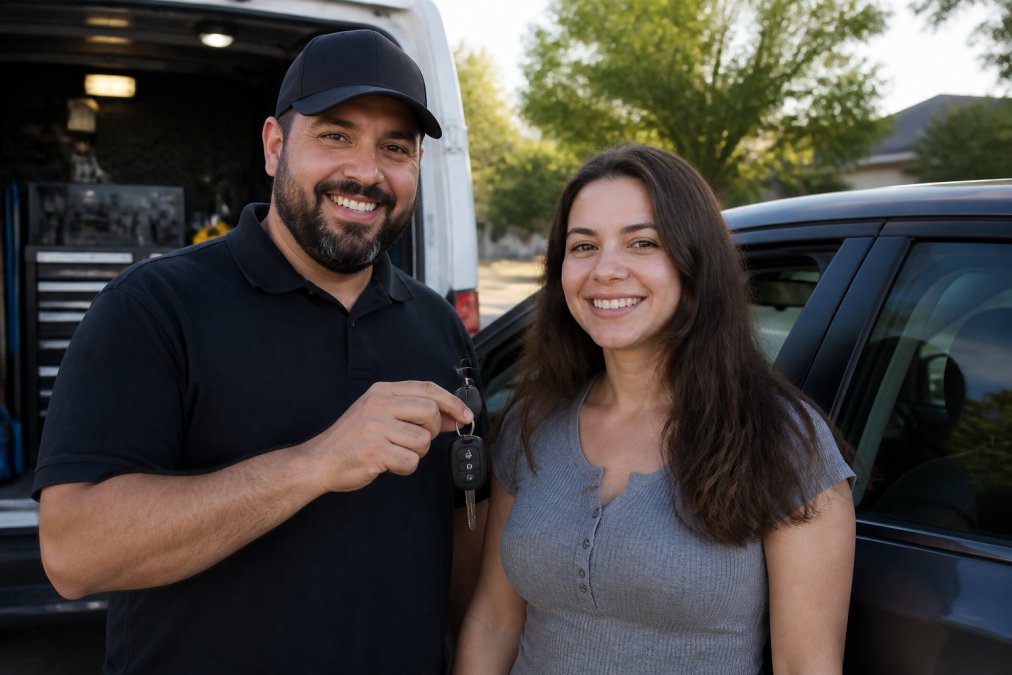
A former employee still has a key. A master key went missing. A tenant moved out, but nobody knows how many copies were made. These are not problems to put off until next week. This commercial rekeying guide explains how Bay Area businesses can quickly regain control of who has access without automatically replacing every lock on the property.
Rekeying changes the internal key combination of an existing lock. The old key stops working, and authorized staff receive new keys. For many offices, storefronts, warehouses, and managed properties, it is a practical way to address an access concern quickly while keeping a working lock and existing hardware in place.
What Commercial Rekeying Actually Does
Inside a standard keyed lock are small components that match a particular key cut. During a rekey, a locksmith changes those components so the lock works with a different key. The lock body, lever, deadbolt, or cylinder may stay in place if it is in good condition and compatible with the new keying.
This is different from replacing a lock. Lock replacement means removing existing hardware and installing new hardware. That may be the better choice when a lock is damaged, worn out, outdated, difficult to operate, or not providing the level of security your business needs.
For a business that has had employee turnover or a lost key, rekeying is often faster and more cost-effective than replacing every lock. But it depends on the condition of the hardware and the risk involved. A qualified locksmith should inspect the doors, locks, and current key system before recommending the right approach.
When a Business Should Rekey Its Locks
Commercial rekeying is a sensible response whenever control of your keys is uncertain. You do not need proof that someone intends to enter the property. If you cannot account for a key, it is reasonable to treat access as compromised.
Common reasons businesses request rekeying include staff departures, layoffs, contractor changes, lost or stolen keys, tenant turnover, break-ins, and changes in property management. It is also useful after a business acquisition, office relocation, or lease change, when you may have inherited locks with an unknown key history.
A restaurant may need to rekey after a shift manager leaves with opening keys. A medical office may need a new key system when several vendors have had access over the years. A warehouse might rekey exterior doors and storage areas after misplaced keys are discovered during an inventory check. The details differ, but the goal is the same: restore clear, accountable access.
If there has been a break-in or attempted break-in, do not assume rekeying alone solves the issue. The door frame, strike plate, hinges, deadbolt, and lock cylinder should all be checked. If the hardware was forced, replace damaged components and consider upgrades that better match the door and the risk.
Rekeying vs. Replacing Locks: How to Decide
Rekeying is usually a strong option when your locks are functioning properly, the hardware is commercial-grade, and the concern is who has a key. It allows you to invalidate old keys while preserving serviceable equipment.
Replacement is often the better choice when the lock sticks, the key turns poorly, the latch does not align, the hardware is visibly damaged, or the lock is a low-security residential model being used on a business entrance. Older hardware may also limit your ability to create a practical master key system or restricted keyway.
Consider the door’s purpose, not only the price of the lock. A back entrance, records room, server closet, cash office, pharmacy storage area, and exterior gate can have very different access and security needs. One key for every door may feel convenient, but it can create more exposure than necessary if that key is lost.
A professional assessment can identify where rekeying makes sense and where a lock upgrade is worth the investment. This approach avoids paying to replace good hardware while preventing a weak door from becoming the next security issue.
Commercial Rekeying Guide: Plan Access Before New Keys Are Cut
The most useful rekeying projects begin with a simple access plan. Before a technician arrives, make a list of each door, who uses it, and whether it is exterior, interior, or restricted. Include gates, supply closets, offices, mailbox units, file rooms, and any storage areas with separate locks.
Decide who truly needs a physical key. Many businesses hand out keys over time without a clear record, then discover that former employees, vendors, and temporary staff may still have access. Rekeying gives you a chance to reset that process.
For a larger facility, a master key system may be appropriate. It can allow one manager or facilities lead to access multiple areas while individual employees receive keys that only open the doors needed for their role. For example, a supervisor may access the front door, office, and stockroom, while a staff key works only at the front door and break room.
Master key systems provide convenience, but they need careful planning. The more complicated the system, the more important it is to keep records current and control key duplication. A locksmith can help design a system that fits your staff size and daily operations without creating unnecessary access.
Ask the Right Questions During a Rekey Service
A commercial locksmith should be able to explain what is being rekeyed, what keys will no longer work, and whether any locks need separate attention. Clear communication matters, especially when several doors or tenants are involved.
Before authorizing work, confirm the number of locks or cylinders being serviced, whether new keys are included, and whether the quoted price covers labor, service calls, and any needed parts. Ask about the condition of your current hardware and whether the technician sees signs of wear, forced entry, or improper installation.
It is also smart to ask how many keys you should receive and what options exist for controlled duplication. Restricted key systems are not necessary for every small business, but they can be valuable for locations with sensitive inventory, multiple managers, or frequent employee changes.
For businesses in San Jose and the South Bay, BDS Locksmith can provide mobile, on-site commercial rekeying so you can address access concerns at the property rather than removing hardware or interrupting operations with a trip to a shop.
Do Not Overlook Doors Beyond the Front Entrance
The front door gets attention because customers see it, but commercial access issues often start elsewhere. Rear exits, side doors, service entrances, shared corridors, gates, utility rooms, and internal offices should be part of the review.
Check that exterior doors close and latch correctly. A high-quality lock cannot compensate for a door that does not align with its strike plate or a frame weakened by repeated force. If employees routinely prop open a door because it is hard to use, that is both a maintenance issue and a security issue.
Also consider non-keyed access points. Alarm codes, keypad codes, key fobs, garage remotes, and smart lock credentials should be updated when an employee leaves or keys are compromised. Rekeying a door while leaving an old access code active leaves a gap in your security plan.
Build a Better Key-Control Process After Rekeying
Rekeying solves the immediate problem, but key control prevents the same problem from repeating. Keep a straightforward record of every issued key, the person responsible for it, the doors it opens, and the date it was returned. This does not need to be complicated. A controlled log maintained by a manager is far better than relying on memory.
Set a written rule that keys cannot be copied, loaned, or transferred without approval. Collect keys during offboarding, including keys held by part-time staff and contractors. If a key is not returned, document it and decide whether the level of access calls for another rekey.
Store spare keys in a secure location and limit who can retrieve them. Avoid hiding keys outside the building, under mats, above door frames, or in unsecured lockboxes. These shortcuts are easy to spot and can undermine otherwise solid hardware.
Finally, schedule a periodic review. A quick check after major staffing changes, lease turnover, or a security incident can catch issues before they become an after-hours emergency. A business should always be able to answer one basic question with confidence: who can get in, and why?