
Table of Contents
- Understanding Ignition Systems in Modern Vehicles
- Signs of a Bad Ignition Cylinder
- How to Diagnose Ignition Problems: A Troubleshooting Flowchart
- Modern Push-to-Start Ignition Failure: What’s Different
- Ignition Lock Cylinder Repair Tools and Safety Precautions
- Ignition Switch Replacement Cost and When to Replace vs. Repair
- Ignition Cylinder Repair vs. Replacement: Which Option Is Right
- Key Programming and Transponder System Diagnostics
- When to Call a Mobile Locksmith or Certified Technician
- Insurance, Warranty, and Emergency Roadside Assistance Coverage
- Frequently Asked Questions
Last Updated: October 2, 2026
Understanding Ignition Systems in Modern Vehicles
Modern vehicles rely on complex ignition systems far beyond simple mechanical switches. Today’s ignition repair for modern vehicles involves electronic components, transponder keys, immobilizer systems, and push-to-start mechanisms. The ignition cylinder is the physical lock where you insert your key. The ignition switch activates your engine electrically. In newer cars, the key fob communicates wirelessly with your vehicle’s computer. The immobilizer system prevents engine start without the correct transponder key. When something goes wrong, the problem could be mechanical, electrical, or both. Benjamin, the owner and operator, has helped thousands of Bay Area natives get out of tough situations regarding their lockouts.
Signs of a Bad Ignition Cylinder
A failing ignition cylinder sends clear warning signals. Your key may feel loose or wiggle excessively when inserted. You might need to jiggle the key or apply pressure to start the engine. The steering column lock might engage unexpectedly, preventing the key from turning. You could hear grinding or clicking sounds when attempting to start. Eventually, your vehicle won’t start at all.
Pay attention to these specific warning signs:
- Key turns with excessive resistance or feels stuck
- Steering wheel locks even when the key is in the ignition
- Engine cranks but won’t turn over
- Ignition switch clicks repeatedly without starting the engine
- Key wobbles loosely in the cylinder
- Physical damage visible around the lock cylinder
How to Diagnose Ignition Problems: A Troubleshooting Flowchart
Diagnosing ignition repair for modern vehicles requires a systematic approach. Start with the simplest explanations before assuming complex electrical failures.
Step 1: Check the Key and Fob Battery
Your key fob battery dies frequently. A weak or dead fob battery prevents the wireless signal from reaching your vehicle’s receiver. Replace the battery with a fresh one, most fob batteries cost just a few dollars. Check your physical key for damage: bent, worn, or corroded edges won’t properly engage the ignition cylinder’s internal pins. If you have a spare key, test it. If the spare works but your primary key doesn’t, the problem is your key, not your ignition system.
Step 2: Test the Steering Column Lock
Insert your key and try to turn it. Does the steering wheel lock prevent rotation? Push the steering wheel forward and backward while turning the key. Sometimes releasing pressure on the steering wheel allows the ignition to turn. If this works, your steering column lock is engaged, a safety feature, not a malfunction. Try turning the steering wheel left and right while gently turning the key. If nothing works, you’ve likely found your problem.
Step 3: Inspect for Electrical Failures
Turn on the dashboard lights and check if they illuminate. Try the windshield wipers. If electrical components work normally, your vehicle’s battery and electrical system are functioning. Listen carefully when you turn the key. Rapid clicking suggests a weak battery. A single loud click suggests a dead battery or bad starter motor. Silence suggests an electrical connection problem or faulty ignition switch. If dashboard lights dim significantly when you turn the key, your battery may be too weak to start the engine.
Modern Push-to-Start Ignition Failure: What’s Different
Push-to-start ignition systems shift from mechanical key cylinders to wireless authentication and electronic engine control. Understanding their failure modes requires knowledge of multiple interconnected systems: the key fob transmitter, the vehicle’s receiver antenna, the push-button switch module, the body control module (BCM), and the engine control unit (ECU). When any component fails, the symptom is often the same, your vehicle won’t start, but the root cause differs significantly from traditional ignition problems.
Key Fob Battery and Transmitter Failures
The key fob battery is the first point of failure in push-to-start systems. When the battery dies, the fob cannot transmit the rolling security code to your vehicle’s receiver. If you replace the battery and the button still doesn’t work, the transmitter circuit inside the fob may have failed. Water damage, physical impact, or age-related component failure can disable the transmitter while the battery remains good. Signs include the fob working intermittently, working only at close range, or not working at all despite a fresh battery. A professional locksmith can test the fob’s transmitter output using specialized RF (radio frequency) diagnostic equipment.
Receiver Antenna and BCM Communication Issues
Your vehicle’s receiver antenna is typically mounted behind the dashboard or in the door frame. If the antenna is damaged, corroded, or disconnected, your vehicle won’t receive the fob’s signal even if the fob is transmitting correctly. The body control module (BCM) processes the signal from the receiver antenna. A faulty BCM may fail to recognize a valid fob signal, preventing engine start even when both the fob and antenna are functioning. Diagnosing BCM problems requires a code reader capable of communicating with your vehicle’s diagnostic system. A professional technician will scan for stored diagnostic trouble codes (DTCs) related to the keyless entry or immobilizer system.
Push-Button Switch Module Wear
The push-button ignition switch is an electronic component that wears with use. Typical durability is 100,000 to 200,000 button presses, though this varies by manufacturer. When the push-button switch fails, you may experience a mushy or unresponsive button, multiple presses required to register, the button lighting up but the engine not cranking, or intermittent operation. Replacement requires removing the dashboard trim around the ignition area, a job for a professional because improper removal can damage surrounding components or disable airbag systems. The switch module typically costs $150-$400 depending on your vehicle’s make and model, plus labor.
Immobilizer System and ECU Authentication
The engine control unit (ECU) contains the immobilizer system, a security feature that prevents engine start without a valid key code. In push-to-start vehicles, the ECU receives the key code from the BCM after the fob is authenticated. If the ECU doesn’t receive the correct code, it cuts power to the fuel injectors and ignition coils. Immobilizer failures occur when the ECU loses its stored key codes, the key fob’s security code becomes corrupted, or the ECU itself fails. Reprogramming the immobilizer requires specialized equipment that can communicate with your vehicle’s ECU. This typically requires a dealership or highly specialized automotive technician.
Emergency Mechanical Override
Many push-to-start vehicles include a hidden mechanical key inside the fob for emergency situations. Look for a small slot or button on the fob (usually on the side or back). Press or slide to reveal a traditional key blade. This key can be inserted into a hidden mechanical slot, often located on the steering column or dashboard. Using the mechanical key bypasses the push-button system entirely. However, this is a temporary solution, it indicates that your push-to-start system has failed and requires professional diagnosis and repair. Not all push-to-start vehicles include a mechanical override. Check your owner’s manual.
Diagnostic Flowchart for Push-to-Start Failures
Step 1: Replace the key fob battery with a fresh CR2032 or equivalent. Attempt to start the vehicle.
Step 2: If the vehicle still won’t start, try the spare key fob (if you have one). If the spare fob works, the problem is your primary fob’s transmitter or battery contacts.
Step 3: If both fobs fail, the problem is in your vehicle’s receiver, BCM, or ECU. Contact a professional technician with diagnostic equipment.
Step 4: A technician will scan your vehicle’s diagnostic codes to identify whether the fault is in the keyless entry receiver, the body control module, the push-button switch, or the immobilizer system.
Step 5: Based on the diagnostic codes, the technician will recommend repair or replacement of the faulty component.
Ignition Lock Cylinder Repair Tools and Safety Precautions
Attempting ignition repair for modern vehicles at home is inherently risky. Modern vehicles contain multiple safety systems, high-voltage electrical circuits, and precision components that can be damaged if mishandled.
Supplemental Restraint System (SRS) and Airbag Hazards
The steering column contains the airbag control module and wiring for the driver-side airbag. The airbag system is armed whenever the vehicle’s battery is connected, even if the engine is off. Improper work on the steering column can trigger the airbag, causing serious injury or death. The National Highway Traffic Safety Administration (NHTSA) classifies airbag deployment as a hazard equivalent to a small explosion.
To safely work near the steering column:
- Disconnect the negative battery terminal and wait at least 15 minutes before beginning work.
- Do not remove the airbag module itself unless you have formal training.
- Avoid striking or applying pressure to the steering column cover or the area around the airbag module.
- If you must remove steering column trim, work slowly and deliberately.
- If you hear a clicking sound or see any sign of electrical activity, stop immediately and reconnect the battery.
Many modern vehicles have electronic steering column locks controlled by the BCM. Disassembling the steering column can disrupt electrical connections, leaving your vehicle in an unsafe state.
Electrical Hazards and Battery Disconnection Protocol
Modern vehicle electrical systems operate at 12 volts for standard circuits, but some systems operate at 48 volts, 400 volts, or higher. Working on ignition systems without proper precautions can expose you to electrical shock.
Before beginning any ignition work:
- Disconnect the negative battery terminal. Use a wrench to loosen the negative (black) terminal clamp.
- Wait 15 minutes. This allows capacitors in the airbag system and other safety modules to fully discharge.
- Verify the battery is disconnected. Try turning on the dashboard lights or windshield wipers.
- Keep the battery disconnected throughout your work.
- Reconnect the negative terminal last. After all work is complete, reconnect and tighten firmly.
If your vehicle has a hybrid or electric propulsion system, the high-voltage battery requires additional precautions. Do not attempt ignition repair on a hybrid or electric vehicle without professional training.
Essential Tools and Equipment
If you decide to proceed with DIY ignition work, you will need:
- Steering column cover removal kit ($20-$40)
- Screwdriver set ($15-$30)
- Socket set and wrenches ($30-$80)
- Multimeter ($20-$100)
- Lock pick set ($15-$50)
- Safety glasses ($5-$15)
- Work gloves ($10-$20)
- Flashlight or headlamp ($10-$40)
- Camera or smartphone ($0): Take photos of wire connections before disconnecting them.
Common Mistakes That Damage Modern Ignition Systems
Forcing components: Modern ignition cylinders are precision components. Forcing them causes internal damage that cannot be repaired, the entire component must be replaced.
Disconnecting wiring without documentation: If you disconnect a wire and forget which connector it came from, you may plug it into the wrong location, disabling multiple vehicle functions.
Ignoring diagnostic codes: Diagnostic trouble codes provide essential information about what is actually broken. Attempting repairs without reading these codes is guesswork.
Working with the engine running: Never work on ignition systems while the engine is running.
Attempting transponder programming without equipment: Modern key fobs contain security codes that must be programmed to match your vehicle’s ECU. Without specialized programming equipment, you cannot reprogram a key fob.
When Professional Service Is the Only Safe Option
If your vehicle is a hybrid or electric vehicle, has push-to-start or keyless entry, needs key fob or transponder reprogramming, has a damaged steering column, shows signs of water damage or corrosion around the ignition area, has electronic steering column locks, or if you are uncomfortable working with electrical systems, do not attempt DIY ignition repair. A professional locksmith or automotive technician has the training, diagnostic equipment, and liability insurance to safely repair your ignition system.
Ignition Switch Replacement Cost and When to Replace vs. Repair
The decision between repair and replacement depends on the severity of damage and your vehicle’s age. A worn ignition cylinder might be repaired by a locksmith. Complete failure usually requires replacement. For older vehicles, repair is often the better choice. For newer vehicles with complex electronic ignition systems, replacement is frequently necessary because electronic components can’t be easily serviced.
Replacement becomes necessary when the ignition cylinder is physically damaged, cracked, or internally broken beyond repair. If the problem is electrical, the ignition switch itself needs replacement, not the cylinder. Consider your vehicle’s age and mileage. A 10-year-old vehicle with 150,000 miles might not justify expensive ignition repairs. A newer vehicle with lower mileage justifies more extensive repairs. BDS Locksmith provides mobile ignition repair for modern vehicles, eliminating towing costs and getting you back on the road faster.
Ignition Cylinder Repair vs. Replacement: Which Option Is Right
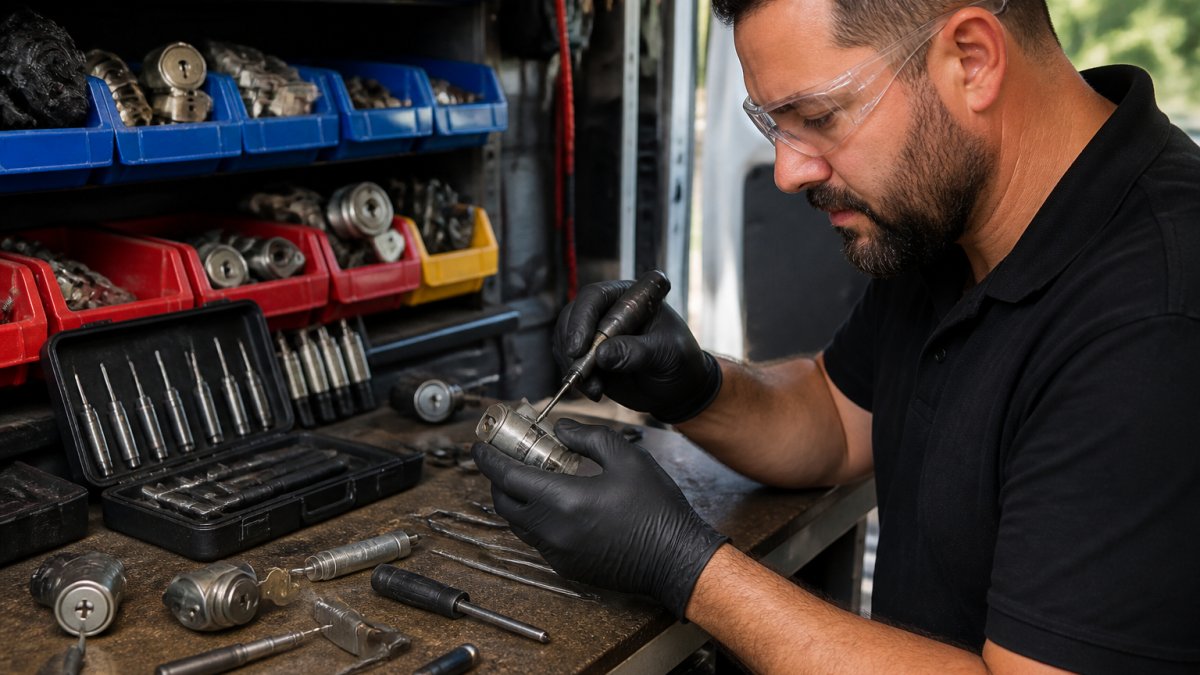
Repair works best when the ignition cylinder’s internal components are damaged but the outer housing is intact. A locksmith removes the cylinder, services the internal pins and springs, and reinstalls it. This approach costs less and preserves your original key. Replacement is necessary when the cylinder housing is cracked, the lock is seized, or internal damage is too extensive to repair. You’ll receive a new cylinder and new keys. Your old keys won’t work with the replacement.
The ignition lock cylinder repair process typically takes one to two hours. Replacement may take longer because the technician must ensure the new cylinder aligns properly with the steering column and electrical connections. Repair preserves your existing key set. Replacement forces you to use new keys exclusively. Consider your vehicle’s ignition system type. Older vehicles with purely mechanical ignition systems are easier and cheaper to repair. Modern vehicles with transponder keys and electronic immobilizers often require replacement.
Key Programming and Transponder System Diagnostics
Modern vehicle keys contain computer chips called transponders. These chips communicate with your vehicle’s immobilizer system. Without the correct transponder code, your engine won’t start even if you have the physical key. If you’ve lost your only key, you need a locksmith who can program a new transponder key. This requires specialized equipment that reads your vehicle’s security codes and programs them into a new key. The process takes 30 minutes to an hour.
Transponder system failures occur when the chip inside your key stops communicating with your vehicle. Your key might work in the ignition lock, but the engine won’t start because the immobilizer doesn’t recognize the key. This requires either reprogramming the existing key or programming a new one. Diagnosing transponder problems requires a code reader that interfaces with your vehicle’s immobilizer system. A professional locksmith has this equipment. When you call for help, verify that the locksmith has experience with your specific vehicle make and model.
When to Call a Mobile Locksmith or Certified Technician
Call a professional when your vehicle won’t start and you’ve ruled out battery problems. A mobile locksmith arrives at your location, saving you the cost and hassle of towing. BDS Locksmith provides 24/7 emergency services, providing emergency assistance whenever you’re locked out or stranded. You need a certified technician when the problem involves complex electronic systems. If your push-to-start ignition fails, if your transponder key won’t program, or if your immobilizer system malfunctions, you need someone with specialized training and diagnostic equipment.
A mobile locksmith is ideal for ignition repair for modern vehicles because they come to you. You don’t have to arrange a tow truck or leave your vehicle at a repair shop for days. Choose a locksmith who is licensed, bonded, and insured. These credentials verify that the technician has formal training and carries liability insurance. BDS Locksmith maintains all required licenses and insurance. Ask about the locksmith’s experience with your vehicle’s specific make and model.
Insurance, Warranty, and Emergency Roadside Assistance Coverage
Check your vehicle’s warranty coverage. Some manufacturers cover ignition system repairs for a specific period or mileage. If your vehicle is still under warranty, the dealership might cover the entire cost of ignition repair for modern vehicles. Your auto insurance may cover ignition repair if the problem resulted from an accident or theft attempt. Review your policy to understand what’s covered. Some comprehensive coverage plans include roadside assistance.
Roadside assistance memberships through organizations like AAA often cover lockout services and emergency key replacement. These memberships cost less than a single professional locksmith visit. Extended warranties purchased at the time of vehicle purchase sometimes cover ignition system repairs. Document all repair receipts and invoices for at least three years. Some credit cards offer purchase protection or extended warranty benefits. Call your card issuer to ask about these benefits.
When your vehicle won’t start and ignition problems are to blame, you need a solution that’s fast, reliable, and transparent. BDS Locksmith specializes in ignition repair for modern vehicles, handling everything from simple key issues to complex transponder programming. Our licensed, bonded, and insured technicians arrive on-site with the right tools and expertise to diagnose and fix your ignition problem without damage to your vehicle. Call (408) 300-4369 for a free estimate and same-day service.
Frequently Asked Questions
What are the most common signs of a failing ignition switch?
A failing ignition switch often shows multiple warning signs: the engine cranks but won’t start, dashboard lights flicker or dim unexpectedly, the key gets stuck in the ignition cylinder, or the engine stalls while driving. In modern push-to-start vehicles, you might notice the engine not responding when you press the start button, or the vehicle requiring multiple attempts to turn on. If you experience any of these symptoms, have the ignition system diagnosed by a certified technician before the problem worsens and leaves you stranded.
How much does ignition repair cost compared to replacement?
Ignition repair costs depend on whether the issue is mechanical, electrical, or involves the transponder key system. Pricing varies based on the specific component, vehicle make and model, and labor time required. Contact BDS Locksmith for a free estimate, we provide transparent pricing before any work begins, so there are no surprises when the job is complete.
Can you repair a modern ignition switch, or does it always need replacement?
Many modern ignition problems can be repaired without full replacement. Issues like a stuck key, worn lock cylinder, or faulty key fob battery are often fixable. However, electrical failures in the immobilizer system or wiring harness damage typically require component replacement. A certified technician can diagnose whether your ignition system needs repair or replacement through electrical testing and physical inspection of the steering column and lock mechanism.
Is it safe to drive with a faulty ignition switch?
No. A faulty ignition switch poses safety risks: the engine may stall unexpectedly while driving, the steering column lock may engage without warning, or the vehicle may not start when you need it most. Additionally, a failing immobilizer system can leave you vulnerable to theft. If you suspect an ignition problem, avoid driving the vehicle and arrange for professional diagnosis and repair immediately. Emergency roadside assistance or a mobile locksmith can help if you’re stranded.