Quick Summary
Locksmith scams usually start with a low advertised price, such as a $19 or $29 fee, that rises once the technician arrives. Common warning signs include vague quotes, unmarked vehicles, drilling without agreement, and pressure to pay in cash immediately. Always get a full itemized written estimate before any work begins.
- Never agree to work until you have heard the full, final price.
- Ask for a written, itemized estimate before the technician starts any work.
- Ask whether the lock can be opened without drilling before authorizing drilling.
- Request photo ID, company name, and proof of licensing and insurance.
- Keep receipts, call logs, and notes to support a chargeback or complaint.
Table of Contents
- How Locksmith Scams Usually Work
- Low Advertised Prices and Bait-and-Switch Quotes
- Unexpected Fees and Inflated Final Bills
- Drilling or Replacing a Lock You Don’t Need to Replace
- Unmarked Vehicles and Missing Company Identification
- How to Know If a Locksmith Is Legit
- Questions to Ask a Locksmith Before Hiring
- Realistic Price Ranges and Itemized Estimates
- What to Do If You Were Scammed by a Locksmith
- Booking a Verified Locksmith Before Your Next Lockout
- Frequently Asked Questions
How Locksmith Scams Usually Work
Locksmith scams follow a predictable pattern, and once you know it, they are much easier to spot. A business advertises a low price, a van shows up with no clear identity, and the bill ends up far higher than the quote. Most victims don’t realize they’ve been scammed until the work is already done.
Many scam operations use a shared playbook. They buy ads that promise a $19 or $29 service fee, answer the phone with a generic business name, and send a driver who may not be a licensed locksmith at all. The goal is to get you to agree to a price before you see the real situation. Once you’re locked out and stressed, it’s harder to say no.
Here is the typical sequence:
- Bait: A cheap price appears in search results or online listings.
- Switch: The technician claims the job is harder, so the price goes up.
- Pressure: You’re told the price must be paid now, often in cash.
- Damage: The lock is drilled or replaced when it didn’t need to be.
Watch out: Never agree to work until you’ve heard a full price. A single phone quote that leaves out the final cost is a common warning sign.
Low Advertised Prices and Bait-and-Switch Quotes
A low advertised price is the most common scam hook. Once the technician arrives, the real bill starts to build.
Common examples of bait-and-switch tactics include:
- Quoting a small fee that only covers the visit
- Adding labor charges after the lock is opened
- Charging extra for “emergency” or “after-hours” service without warning
- Saying the job requires special equipment that costs more
Ask the locksmith to explain every line of the quote before any work begins. A reputable business will tell you the total cost, including labor and parts, in plain terms. If the answer is vague, treat it as a red flag and call someone else.
Unexpected Fees and Inflated Final Bills
Many people are shocked when the final invoice is several times the original quote. This usually happens because fees were hidden in fine print or never mentioned at all.
Watch for these added charges:
- Trip or dispatch fees not stated on the phone
- Surcharges for nights, weekends, or holidays
- Extra fees for “drilling” or “destroying” a lock
- Charges for parts that were never discussed
Before the technician begins, ask for a written estimate. Compare the final bill to that estimate. If the total is much higher without a clear reason, you have grounds to dispute it. Keep receipts and notes from the call, since they help if you need to file a complaint later.
Drilling or Replacing a Lock You Don’t Need to Replace
Drilling is one of the most expensive outcomes of a lockout, because it can turn a simple opening into a full lock replacement plus labor. The scam works because most customers have no idea when drilling is actually justified. Here is the decision tree a legitimate technician follows, so you can tell the difference between a real last resort and an upsell.
What a real locksmith tries first, in order:
- Non-destructive picking. Standard pin-tumbler locks (the kind on most residential doors) can usually be picked with a tension wrench and pick set in a few minutes. This is the default for a simple lockout.
- Bypass tools. A shove knife, under-door tool, or loiding technique can trip the latch on many interior and exterior doors without touching the pins. Common on spring-latch doors.
- Bumping or impressioning. For locks that resist picking, a technician may use a bump key or impression a new key from a blank. Both are non-destructive.
- Removing the cylinder. On some deadbolts, the cylinder can be pulled and replaced without drilling the whole lock body.
When drilling is genuinely justified:
- The lock is damaged, seized, or has a broken key snapped off inside the keyway that cannot be extracted.
- The door is a high-security lock (restricted keyway, hardened steel) that resists picking and the customer needs entry now.
- The lock has been tampered with or the property is a foreclosure/estate situation where no key exists and the cylinder must be sacrificed.
- A child or vulnerable person is locked inside and time is critical.
What to ask before you authorize drilling:
- “Have you tried picking and bypass yet? What happened?”
- “If you drill, is the lock reusable, or am I buying a replacement?”
- “What is the total, drilling labor plus the new lock plus installation, in writing?”
- “Can you show me the damage before you start?”
A legitimate technician will explain which method they tried and why it failed. A scam operator will often skip straight to the drill, sometimes within seconds of arriving, then present a replacement quote while you are still standing in the doorway.
Watch out: If a technician drills before you have agreed to a price, stop the job and ask for the total in writing. Once the lock is destroyed, you have lost your leverage to negotiate, and the replacement cost becomes whatever they say it is.
You are allowed to pause. If a technician says drilling is required and the price jumps unexpectedly, you can ask for a second quote before authorizing the replacement. Keep the drilled lock as evidence if you later dispute the charge or file a complaint.
Replacement upsells to watch for. Even when a lock genuinely needs replacing, some operators push premium hardware or insist on re-keying every lock in the house when only one was affected. Ask for the brand and model of the replacement lock before you agree.
Unmarked Vehicles and Missing Company Identification
A locksmith who arrives in an unmarked car or refuses to show identification should raise concerns right away. Legitimate businesses usually have clearly marked vehicles, uniforms, and business cards.
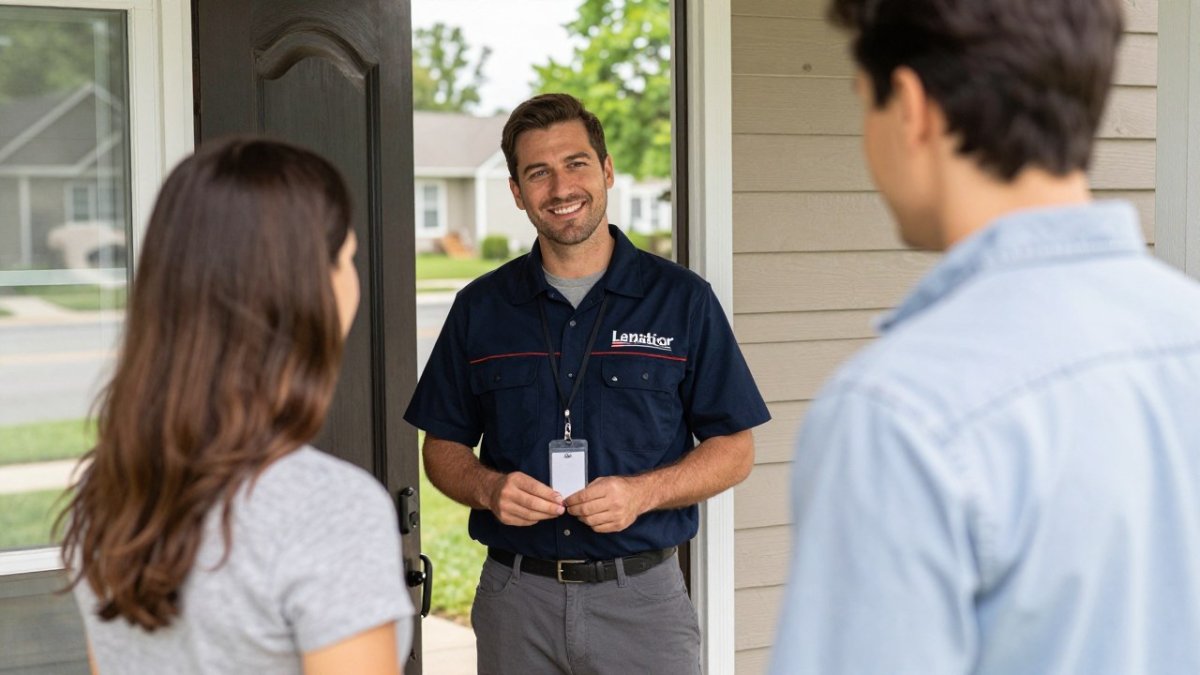
Ask the technician for:
- A photo ID with their name
- The company name and business address
- Proof of licensing and insurance where required
If the person avoids these requests or gets defensive, ask them to leave. Your safety and your property come first. You can also check the business name against a local directory before calling.
How to Know If a Locksmith Is Legit
A legitimate locksmith is easy to verify. Take a few minutes to check the basics before you hire anyone.
- Confirm the business name and address. Search for the company on a map and confirm it’s a real location.
- Ask about licensing. Many states require locksmiths to hold a license. Check your state’s licensing board to confirm.
- Verify insurance and bonding. Ask for proof that the business carries liability insurance.
- Read reviews. Look for consistent feedback about pricing and professionalism, not just star ratings.
- Check the phone number. A local number and a clear company name are better signs than a generic call center.
These steps take little time and can save you from a costly mistake.
Questions to Ask a Locksmith Before Hiring
Asking the right questions up front can reveal a scam quickly. Keep these in mind when you call:
- What is your total price, including all fees?
- Do you charge extra for nights, weekends, or holidays?
- Can you open the lock without drilling it?
- Will you provide a written estimate before starting?
- What is your business name, and where is your office located?
- Are you licensed and insured in this state?
A trustworthy company will answer each question directly. If someone dodges or gets pushy, move on to another provider.
Realistic Price Ranges and Itemized Estimates
Most scam warnings tell you a low price is bait but never tell you what a fair price looks like, which leaves you unable to judge the quote in front of you. Here is the cost structure a legitimate locksmith estimate should break out, so you can see where the money actually goes.
The five line items every estimate should separate:
- Service call or dispatch fee. A flat charge to get the technician to your door, typically the number advertised as the “$19” or “$29” hook. On a legitimate quote this is disclosed as a separate line, not presented as the total.
- Labor. Charged either flat-rate per job or by time. Ask which, and ask what the clock starts on, arrival, or first tool on the lock.
- Parts. A new cylinder, deadbolt, or knob set. Ask for the brand and model so you can compare retail pricing.
- After-hours or emergency surcharge. Nights, weekends, and holidays commonly carry a premium. A legitimate company tells you the surcharge before dispatch, not on the invoice.
- Tax and disposal. Small, but it should appear on the written estimate rather than materialize at payment.
How to read a quote against the structure. A quote that is a single number with no breakdown is the warning sign, not the number itself. Ask the dispatcher to read the line items back to you before the technician is sent. If the phone quote is “$29” and the written estimate that arrives is $180 with no explanation of the difference, you are looking at the bait-and-switch pattern described above.
The comparison test. Get the itemized estimate from at least two providers for the same job description. If one quote is dramatically lower than the others, ask what it excludes, the answer is usually labor, parts, or the after-hours surcharge. A quote that is dramatically higher is worth a second call to confirm it includes replacement hardware you actually need.
What a written estimate should contain. Company legal name and business address, the technician’s name, the itemized lines above, the total, and a statement of what happens if the job turns out to be more complex than described. Get it in writing before work begins so you have a dated record.
Watch out: A verbal quote is not an estimate. If the company will not put the line items in writing before dispatch, treat the advertised price as marketing rather than a commitment, and be prepared to decline the job at the door.
Because pricing depends on lock type, time of day, and the job itself, the most reliable benchmark is a written, itemized estimate from a licensed local provider. Contact BDS Locksmith for a free estimate before you authorize any work.
The five line items a legitimate written estimate should separate, so you can see where the money goes:
| Line item | What to look for | Red flag |
|---|---|---|
| Service call or dispatch fee | Disclosed as a separate line | Presented as the total price |
| Labor | Flat-rate or time-based, with a stated start point | Start point unclear |
| Parts | Brand and model named | No brand or model given |
| After-hours or emergency surcharge | Stated before dispatch | Appears only on the invoice |
| Tax and disposal | Shown on the written estimate | Appears at payment |
What to Do If You Were Scammed by a Locksmith
If you believe you’ve been scammed, act quickly. Start by collecting everything you have: receipts, texts, call logs, photos of the van or license plate, and the name the technician gave you.
Next, take these steps:
- Dispute the charge. Contact your credit card company or bank and explain the situation. Ask about a chargeback if you paid by card.
- File a complaint. Report the business to your state licensing board and your state attorney general’s consumer protection office.
- Report online. Post a factual review and report the listing to the search platform that showed the ad.
- Consider legal help. For larger losses, a consumer attorney can advise you on your options.
Reporting scams helps protect other people in your area.
Booking a Verified Locksmith Before Your Next Lockout
The best time to find a trustworthy locksmith is before you need one. Save a verified company’s number in your phone so you’re not forced to choose from ads during an emergency.
BDS Locksmith is a licensed, bonded, and insured mobile locksmith serving the South Bay Area. We offer on-site service, same-day availability, 24/7 emergency help, and free estimates. Our team also offers a 5% military discount. To get a clear price before any work begins, call (408) 300-4369 today.
Last Updated: November 7, 2026
Frequently Asked Questions
How do I know if a locksmith is legit?
Ask for the company’s business name and address, then check that the business has a real local address rather than only a call-center number. Request the technician’s photo identification and confirm the company’s license and proof of insurance. Be wary of any locksmith who answers only with a generic phone line, cannot name the business on arrival, or arrives in an unmarked vehicle. A legitimate company will be comfortable with you checking these details before any work starts.
What should I do if a locksmith gives me a much higher price after arriving?
Do not authorize any work until the technician gives you a written, itemized estimate that includes every fee. Ask the technician to explain each charge, and compare it to the price you were quoted. If the final price is far above the quote and you feel pressured, you can decline the service and pay only for the trip charge the company disclosed. Keep the invoice, photos, and any call records in case you need to file a complaint or dispute a charge.
Is it a red flag if a locksmith says a lock cannot be picked?
Not always, but it is worth asking why. Many modern locks, such as some high-security cylinders, are designed to resist picking, so a skilled locksmith may recommend a different approach. However, a technician who claims every lock must be drilled or replaced without explaining the reason may be padding the bill. Ask whether picking, decoding, or rekeying is possible before you agree to drilling or replacement.
What should I do if I have been scammed by a locksmith?
Stop further payment and document everything, including the business name, phone number, vehicle description, invoice, and any text or call records. Try to resolve the issue directly with the company first and request a written refund or itemized explanation. If that fails, file a complaint with your state attorney general’s consumer protection office and report the charge to your credit card company or bank, which may be able to reverse a payment. Leaving a factual review can also warn other customers.