Last Updated: November 22, 2026
Quick Summary
Locksmith identity verification is a short, structured check that confirms you are the owner or an authorized person before any lock is touched. For a car, you pair the registration or title in your name with a matching driver’s license; for a home, you show a lease, mortgage statement, or utility bill tying you to the address.
- Government-issued photo ID is required for any locksmith appointment.
- Vehicle registration or title must be paired with a matching driver’s license.
- A lease, mortgage statement, or utility bill ties you to a home address.
- Renters can establish lawful access with a lease or recent utility bill.
- Ask to see a license number, business registration, and certificate of insurance.
Table of Contents
- How does the locksmith customer identity verification process work?
- How Do Locksmiths Verify Ownership of a Car?
- How Does a Locksmith Confirm You Own Your Home?
- Locked Out Without ID? Locksmith Options and Alternatives
- The Locksmith Customer Verification Checklist
- Verify Locksmith License and Insurance Before You Hand Over a Key
- Privacy, Consent, and How Your Documents Should Be Handled
- When Verification Fails: Edge Cases and How a Locksmith Decides
- Booking Emergency Lockout Help with BDS Locksmith
- Frequently Asked Questions
How does the locksmith customer identity verification process work?
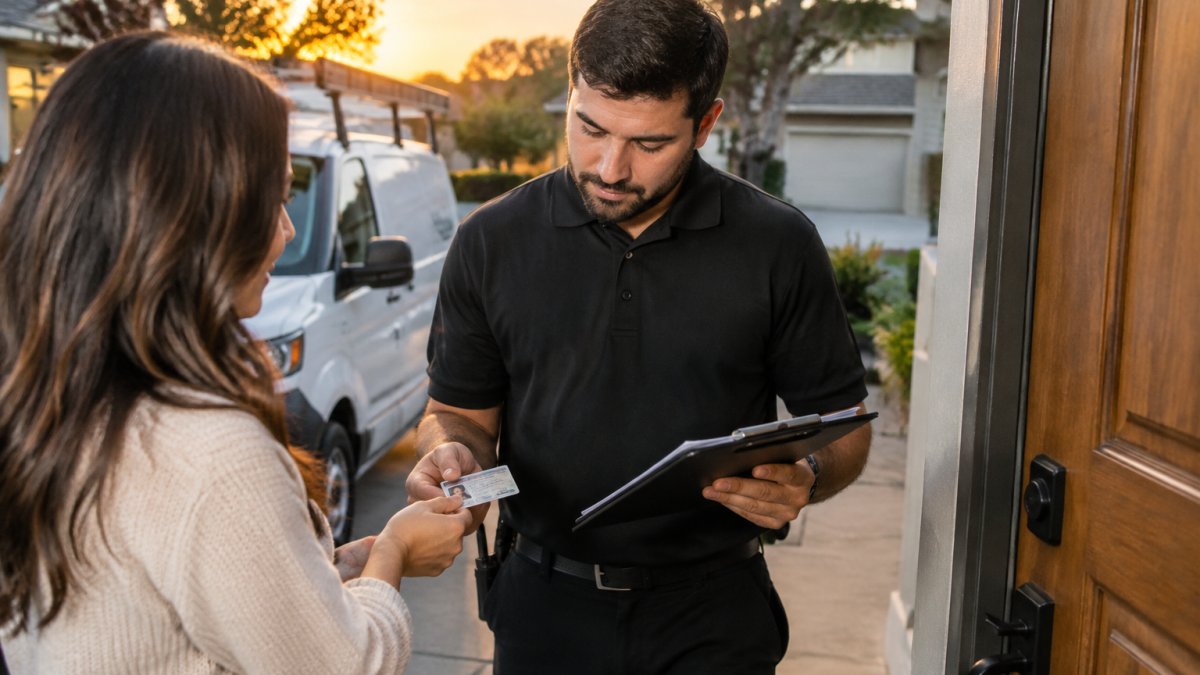
Locksmith identity verification is a short, structured check that confirms you are the owner or an authorized person before any lock is touched.
How Do Locksmiths Verify Ownership of a Car?
For a vehicle, proof of ownership is generally the registration or title in your name, paired with a matching driver’s license.
Automotive lockouts can involve several ownership situations. Vehicle verification may depend on who is requesting access:
The goal is always the same: confirm that the person asking for access is the person entitled to it, and document the basis for that conclusion. A locksmith who cannot explain which document satisfied the check is a locksmith who is not really checking.
How Does a Locksmith Confirm You Own Your Home?
Watch out: if you cannot produce any document tying you to the address, expect us to pause the job until you can. That pause protects you as much as it protects the property.
Locked Out Without ID? Locksmith Options and Alternatives
Being locked out without ID is a real problem, and it happens more than you would think. Your wallet is often sitting on the kitchen counter right next to the keys you left behind.
If you want to understand what a careful verification looks like from the customer side, our guide on what to check for in locksmith credentials walks through the exact list.
The Locksmith Customer Verification Checklist
Use this checklist to prepare for your appointment.
- Government-issued photo ID (driver’s license, state ID, passport, or military ID)
- Vehicle registration or title for car lockouts
- Lease, mortgage statement, or utility bill for home lockouts
- Work order or authorization letter for rentals and commercial jobs
- Phone number on file that matches the property record
- Name of the person who will meet the locksmith on site
For commercial and property manager jobs, add:
- Company letterhead authorization
- Master key or access control documentation
- Point of contact for the building
Keep a photo of your registration and lease on your phone. It takes thirty seconds and saves a lot of hassle later.
Here is what to have ready before the locksmith arrives, based on the article’s checklist.
| Situation | Document to prepare | Note |
|---|---|---|
| Any appointment | Government-issued photo ID | Driver’s license, state ID, passport, or military ID |
| Car lockout | Vehicle registration or title | Pair with a matching driver’s license |
| Home lockout | Lease, mortgage statement, or utility bill | Ties you to the address |
| Rentals and commercial jobs | Work order or authorization letter | Plus phone number matching the property record |
| Commercial and property manager jobs | Company letterhead authorization | Add master key or access control documentation |
| Commercial and property manager jobs | Point of contact for the building | Add to the standard checklist items |
| On-site meeting | Name of the person meeting the locksmith | Listed on the customer checklist |
| Preparation tip | Photo of registration and lease on your phone | Takes thirty seconds and saves hassle later |
Verify Locksmith License and Insurance Before You Hand Over a Key
Before you let anyone work on your lock, it is reasonable to ask to see their professional license and proof of insurance.
What to ask for:
- State or local locksmith license number you can look up in the licensing database
- Business registration matching the company name on the van
- Certificate of insurance showing general liability coverage
- A written estimate before any work starts
If the person at your door cannot produce a license or dodges the question, that is your signal to stop. A legitimate operator carries proof. We do, and we will show it before we pick up a tool. For a step-by-step walk-through of the check, see our guide on how to verify a locksmith license and insurance.
Privacy, Consent, and How Your Documents Should Be Handled
Your documents should be inspected in front of you, recorded only as needed, and never stored longer than the job requires. That is the standard we hold ourselves to, and it is the standard you should expect from any locksmith.
A few practical points:
- Consent: you should be told why a document is being requested and what will be recorded.
- Minimal capture: a license number and name match is usually enough. Full photocopies are rarely necessary for a residential lockout.
- Secure handling: documents should not be left on a dashboard, photographed casually, or shared with third parties.
- Retention: ask how long records are kept and request deletion once the job is closed.
Privacy matters more in this trade than most people realize. A locksmith sees your address, your ID, and your schedule all at once. That is exactly why the industry needs clear rules about handling customer documents.
When Verification Fails: Edge Cases and How a Locksmith Decides
When verification fails, the locksmith declines service and explains what would resolve the issue. That is the correct outcome, not a sign of bad service. The useful question is not whether a check can fail but how a locksmith decides, in the moment, between proceeding, pausing, and declining. The way a locksmith handles that decision can also help distinguish a reputable locksmith from one who treats verification as an obstacle rather than a safeguard.
Most practitioners work from three outcomes rather than a yes-or-no answer:
- Proceed: the documents tie the requester to the property or vehicle, and the basis is recorded.
- Pause: the requester is plausibly authorized but a document is missing or inaccessible. The job waits for a specific item rather than being refused outright.
- Decline: the requester cannot establish authorization, refuses to provide ID, or the circumstances suggest the access is not lawful.
That framework matters because the edge cases below are where customers and locksmiths most often misunderstand each other:
- Name mismatch after a marriage or divorce: a marriage certificate or a second document bridges the gap. Without one, the job pauses rather than declines.
- Estate lockouts: the executor needs letters testamentary or a court document naming them (Letters | California Courts). A death certificate alone does not establish authority to enter.
- Foreclosure or bank-owned property: a work order from the asset manager is required. A former owner still on the deed is a pause, not a decline, until title records are checked.
- Renters: a lease or recent utility bill establishes lawful access even though the renter is not the owner. Renters are not a lesser category of customer.
- Third-party request: a friend or family member calling for someone else needs a signed authorization from the owner, and the locksmith should confirm it with the owner directly when possible.
- Suspicious behavior: evasive answers, no documents, or pressure to skip the check lead to a decline. Pressure to skip the check is itself a signal.
Watch out: a locksmith who declines should tell you exactly which document would change the outcome. A vague refusal with no path forward is a sign the operator is improvising rather than following a process.
A customer-preparation habit cuts most of these problems off before the appointment. Keep a photo of your lease, mortgage statement, vehicle registration, and insurance card in a phone album labeled for the purpose. If you rent, ask your landlord for a short written authorization you can show on request. If you drive a company car, keep the fleet authorization in the glove box or on your phone. Thirty seconds of preparation turns a paused job into a completed one.
If verification reveals an unlicensed operator or a scam pattern, report it. Our guide on how to report an unlicensed locksmith covers the state channels. And if you are worried about being quoted one price and charged another, read up on avoiding bait and switch before you call anyone.
Booking Emergency Lockout Help with BDS Locksmith
Emergency lockout help starts with one call, and the verification check happens on site, not over the phone. We are a mobile locksmith service covering the South Bay Area, with 24/7 emergency services.
What you get when you book with us:
- Licensed, bonded, and insured technicians, with proof available on request
- Same-day availability and mobile service to your home, business, or vehicle
- Free estimates before any work begins
- A 5% military discount for service members
- Safe, damage-free entry whenever the lock allows it
Our owner, Benjamin, has helped thousands of Bay Area customers out of tough lockouts. If you are locked out in Albany or the surrounding area, you can request lockout help from our local team and we will confirm details before we roll.
Lockouts are stressful, and the last thing you want is a long interrogation at your own front door. But the verification step is what separates a professional locksmith from someone who will open any door for anyone. BDS Locksmith keeps that process short, respectful, and consistent, backed by licensed, bonded, and insured technicians, same-day mobile service, and free estimates before we start. Get started with BDS Locksmith and get back inside without the guesswork.
Frequently Asked Questions
What can I show a locksmith if my ID is locked inside my house or car?
You can still complete locksmith identity verification in most cases.
Can a locksmith unlock a car without proof of ownership?
Most reputable locksmiths will not complete a car unlock or key cutting job without some form of ownership check. The standard is a government-issued ID plus a document that ties you to the vehicle, such as the registration, title, or an insurance card listing the VIN. If those are locked inside the car, the technician may verify your name against the VIN through public records or ask you to confirm details about the vehicle. Expect to sign a short authorization form before any tool touches the lock.
How can I verify a locksmith’s license and insurance before they arrive?
Ask for the company’s license number and proof of insurance before you agree to service. BDS Locksmith is licensed, bonded, and insured.
Do locksmiths ask for proof of ownership for a residential lockout?
Yes. For a home lockout, expect to show a driver’s license or state ID with your name, plus something that ties you to the address, such as a utility bill, lease agreement, or mortgage statement. Renters can use a lease, and property managers can provide written authorization. If you just moved in and have no mail yet, the technician may ask you to confirm details about the property or contact the landlord. This step protects you as much as the locksmith, since it prevents someone else from talking their way into your home.