Table of Contents
- Why Garage Side Doors Are a Security Vulnerability
- What You’ll Need Before You Start
- Step 1: Choose the Best Lock for Your Garage Side Door
- Step 2: Reinforce Your Garage Entry Door Frame
- Step 3: Install a Reinforced Strike Plate and Strengthen Hardware
- Step 4: Secure the Door Between Garage and House
- Step 5: Address Windows and Glass Panels
- Common Mistakes to Avoid When Securing Garage Side Doors
- When to Call a Professional Locksmith
- Frequently Asked Questions
Last Updated: October 8, 2026
Why Garage Side Doors Are a Security Vulnerability
Secure garage side doors are often overlooked in home security plans, yet they represent one of the easiest entry points for intruders when left unsecured. Unlike front doors that get regular attention, these doors frequently have weaker locks, damaged frames, and poor visibility from the street. Many homeowners don’t realize how to secure garage side doors effectively until it’s too late.
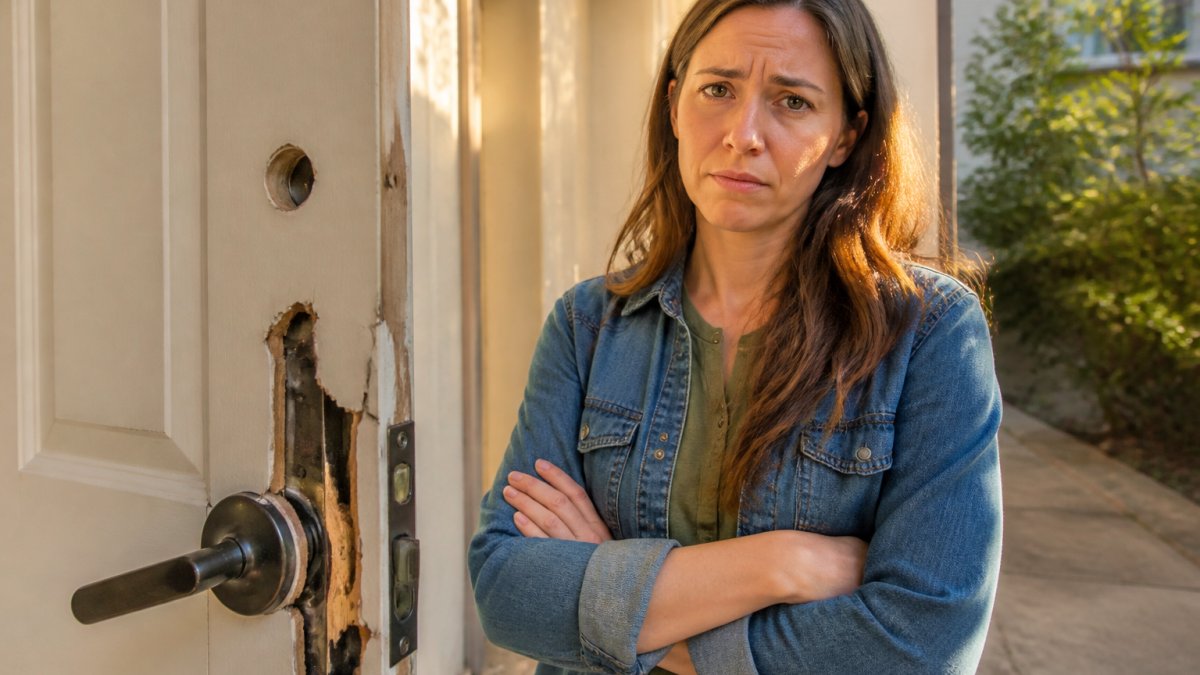
The problem compounds because garage side doors typically lead directly into your home or provide access to tools, vehicles, and valuables stored inside. A burglar can work on this door without being seen from the road. If the lock fails or the frame splinters, you’ve lost a critical layer of protection.
At BDS Locksmith, we help homeowners identify and fix these vulnerabilities. The good news is that securing garage side doors doesn’t require expensive renovations. Strategic upgrades to locks, frames, and hardware can transform a weak entry point into a genuine deterrent.
What You’ll Need Before You Start
Before you begin upgrading your garage side door security, gather these materials and tools:
- A deadbolt lock rated for exterior use
- A reinforced strike plate with longer screws
- Wood shims or metal shims for frame reinforcement
- A drill with bits
- A screwdriver set
- A tape measure
- A level
- Wood filler or epoxy (if frame damage exists)
- Weatherstripping or door seals
You should also inspect your door frame for rot, cracks, or separation from the wall. If the frame is severely damaged, you may need to replace the entire door assembly rather than just upgrading the lock.
Check whether your garage side door opens inward or outward. Inward-opening doors are more secure because the hinge pins are inside. Outward-opening doors expose the hinges to the outside, which can be a vulnerability if the pins aren’t protected.
Step 1: Choose the Best Lock for Your Garage Side Door
The lock you choose is the foundation of your security upgrade. A quality deadbolt is non-negotiable for any garage side door that leads into your home or provides access to valuable items.
Look for a deadbolt rated for exterior use with at least a one-inch throw. The throw is the metal bolt that extends into the strike plate. A longer throw makes it harder for someone to force the door open by kicking or shoulder-checking it.
Consider these lock types:
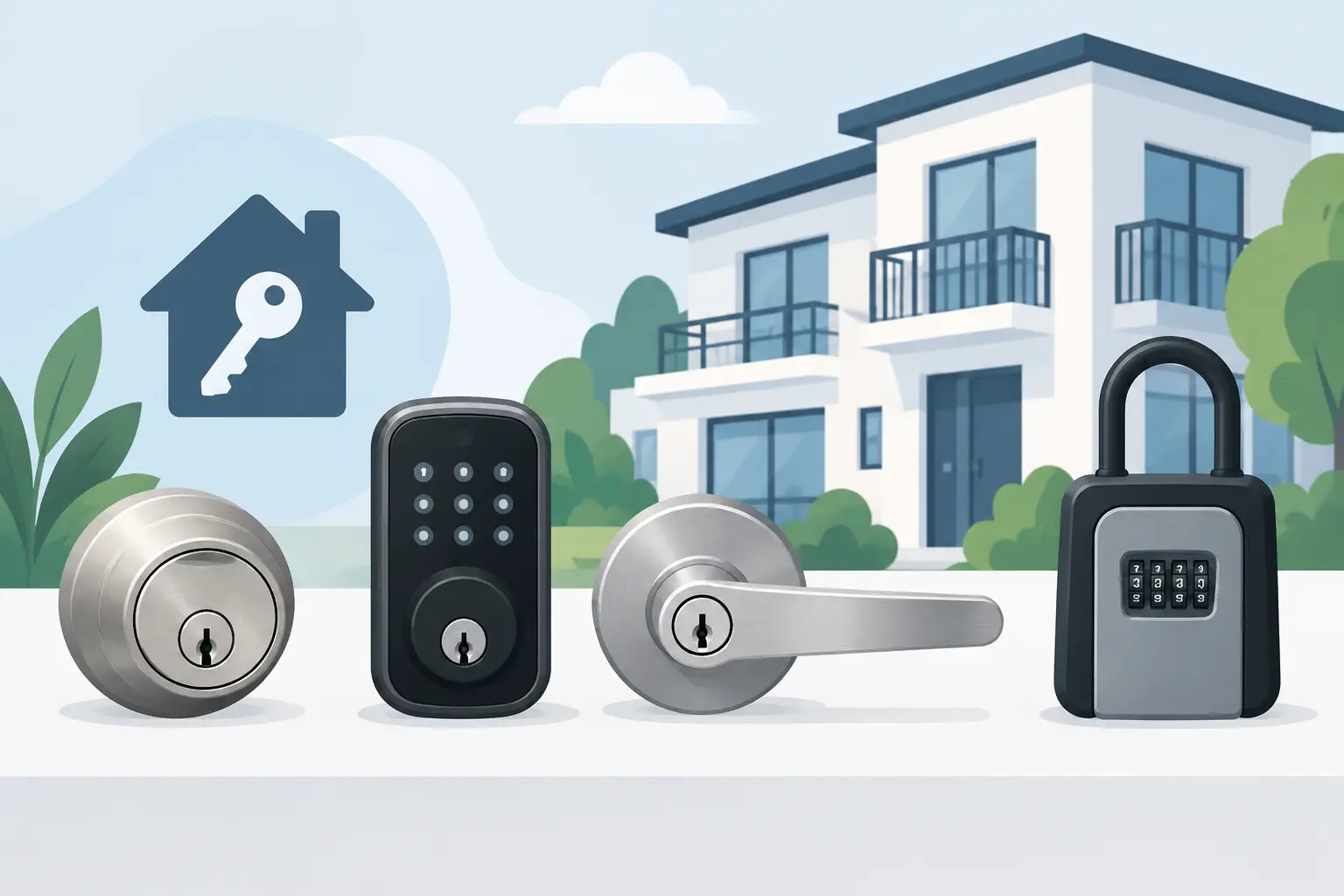
- Single-cylinder deadbolt: Uses a key on the outside and a thumb turn inside. Good for garage doors where you want quick interior access.
- Double-cylinder deadbolt: Requires a key on both sides. More secure but creates a fire hazard if you can’t quickly exit during an emergency.
- Smart lock: Offers keyless entry and remote monitoring. Verify the battery backup system works if power fails.
Avoid relying on the simple push-button lock that came with your door. These locks are easy to bypass and provide minimal security. If your garage side door currently has only this type of lock, upgrading to a deadbolt should be your first step.
The best lock for your garage side door depends on your specific situation. If you have young children, a single-cylinder deadbolt balances security with safe exit. If you want maximum security and don’t have fire code concerns, a double-cylinder deadbolt is stronger. For convenience and monitoring, a smart lock works well as long as you maintain the battery and have a physical key backup.
Step 2: Reinforce Your Garage Entry Door Frame
A strong lock means nothing if the frame splinters when someone applies force. Most door frames fail because the strike plate screws only penetrate the soft wood trim, not the solid framing behind it.
Start by examining your current frame. Look for these warning signs:
- Gaps between the door and frame
- Cracks or splits in the wood
- Soft spots that dent when you press them
- Separation where the frame meets the wall studs
If you find rot or significant damage, reinforce the frame before installing a new lock. Use wood filler for small gaps or epoxy for larger damaged areas. Allow these materials to dry completely before proceeding.
Next, check that the frame is properly aligned. Close the door and look at the gaps on all sides. The gaps should be even and consistent. If they’re uneven, the frame may be twisted or settling, which weakens the entire assembly.
To reinforce a solid frame, you’ll install a reinforced strike plate in the next step. For frames with minor issues, adding shims behind the frame can help straighten it and improve alignment. Insert shims where gaps appear, then tighten the fasteners gradually to avoid over-correcting.
Step 3: Install a Reinforced Strike Plate and Strengthen Hardware
The strike plate is where the deadbolt bolt enters the frame. This is the critical connection point that determines whether your door will hold under force.
Remove your existing strike plate by unscrewing it. Measure the hole and choose a reinforced strike plate designed for exterior doors. These plates are thicker than standard ones and have longer screws that penetrate deep into the frame studs.
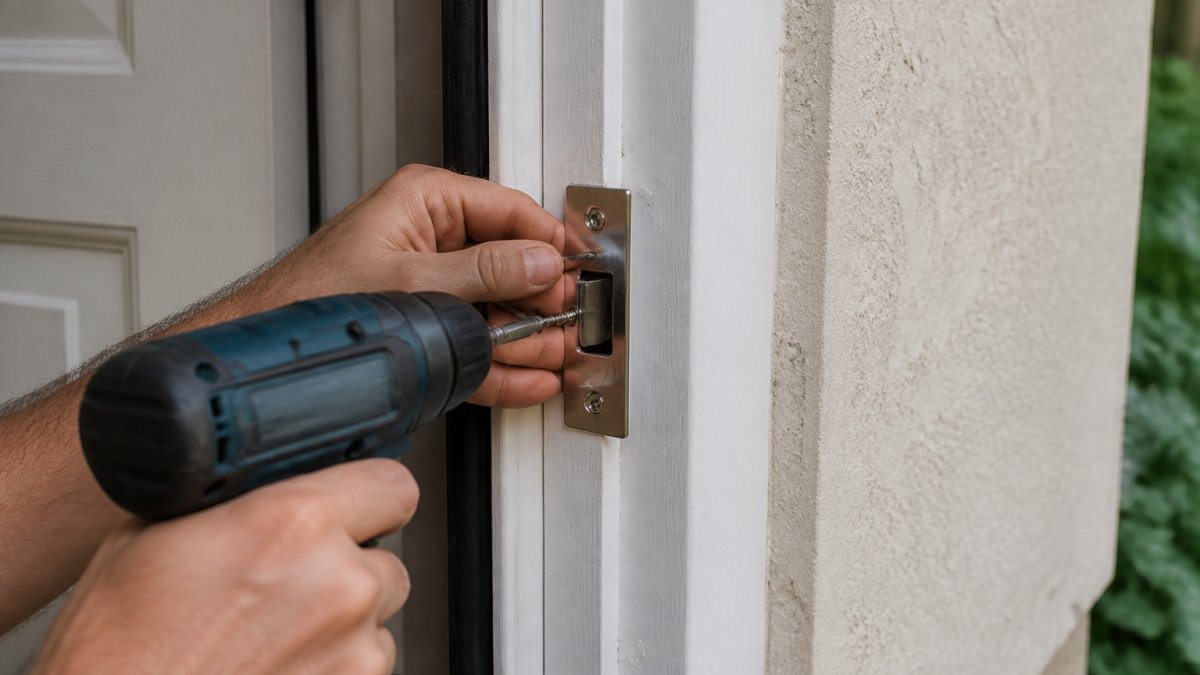
Here’s how to install it properly:
- Align the new strike plate so the bolt hole matches the deadbolt throw
- Mark the screw holes with a pencil
- Drill pilot holes to prevent the wood from splitting
- Install the longest screws that came with the plate, ensuring they penetrate at least three inches into the solid framing
- Use a level to confirm the plate is straight before tightening all screws
If the original screw holes don’t align with the frame studs, drill new ones. The screws must anchor into solid wood, not just the trim. This is what stops an intruder from kicking through.
While you’re upgrading hardware, replace any visible hinges with heavy-duty exterior hinges. If your door opens outward, install hinge pin locks on the interior side. These prevent someone from removing the door by lifting it off the hinges.
Step 4: Secure the Door Between Garage and House
The door connecting your garage to your home interior is as important as the exterior garage side door. This interior door should also have a deadbolt, not just a keyed knob lock.
Many homeowners skip this step because the garage side door feels like the main barrier. But if someone gets into the garage, the interior door becomes your last line of defense. Treat it with the same attention you’d give a back door.
Install a deadbolt on the interior-facing side of this door. The lock should be accessible from inside the house so you can secure it when you’re home. Some homeowners prefer a keyed deadbolt on both sides for maximum security, but a thumb-turn interior lock is usually sufficient.
Also check the frame of this interior door. Apply the same reinforcement principles: ensure the frame is solid, the strike plate is secured with long screws into the studs, and hinges are heavy-duty.
Consider adding a door reinforcement bar or security brace on the interior side. These devices wedge under the door handle and against the floor, preventing the door from being forced open even if the lock fails.
Step 5: Address Windows and Glass Panels
If your garage side door has a window or glass panel, it creates a security weak point. An intruder can break the glass, reach through, and unlock the door from the inside.
Evaluate your options:
- Reinforce the glass: Apply security film to the interior side of the window. This film holds broken glass together, making it harder to create an opening large enough to reach through.
- Replace with solid panels: If the window is small and decorative, consider replacing it with a solid panel. This eliminates the vulnerability entirely.
- Install a security bar: Place a removable or permanent bar across the interior of the window. This prevents someone from reaching the lock even if they break the glass.
- Add exterior security bars: Install bars on the outside of the window. These are visible and act as a strong deterrent.
If you choose security film, apply it carefully to avoid bubbles and wrinkles. The film should cover the entire glass surface, including the edges. Quality security film costs less than replacing a door and provides reliable protection.
For glass panels near the lock, security film is essential. This is the most vulnerable spot because breaking the glass gives direct access to the deadbolt.
Common Mistakes to Avoid When Securing Garage Side Doors
Many homeowners make predictable errors that undermine their security efforts. Learning what to avoid will save you time and money.
Using short screws on the strike plate is the most common mistake. Standard door hardware screws are only one inch long. They anchor into the soft trim wood, not the frame studs. When someone kicks the door, the frame splinters and the door opens. Always use screws at least three inches long that penetrate solid framing.
Ignoring frame damage is another frequent error. A rotted or cracked frame won’t hold a deadbolt, no matter how strong the lock is. If you see soft spots or cracks, repair them before installing new hardware. Skipping this step wastes money on a lock that won’t protect you.
Installing a lock without reinforcing the frame leaves you vulnerable. The lock is only as strong as what it’s anchored to. Upgrading both together is essential.
Neglecting the interior garage-to-house door creates a false sense of security. If an intruder gets into the garage, this door is your last barrier. Treat it as seriously as the exterior door.
Forgetting about hinges on outward-opening doors is another oversight. If the door opens toward the outside, the hinge pins are exposed. Someone can remove the pins and lift the door off its hinges. Install hinge pin locks or choose a door that opens inward.
Using a smart lock without a physical backup key leaves you stranded if the battery dies or the system fails. Always maintain a traditional key option.
Assuming the door is secure just because it has a new lock ignores the frame and hardware. Security is a system. Each component must be strong.
When to Call a Professional Locksmith
Some situations require professional expertise. Knowing when to call a locksmith saves frustration and prevents costly mistakes.
Call a professional if your frame has significant rot or structural damage. A locksmith can assess whether the frame is salvageable or needs replacement. Attempting repairs on a severely damaged frame can make the problem worse.
If you’re unsure whether your frame studs are solid or whether screws are anchoring properly, a professional can verify this. They have tools and experience to diagnose frame issues quickly.
Consider professional installation if you want a smart lock system. A locksmith can ensure the lock integrates properly with your door and frame, and they can set up the app and backup systems correctly.
If your garage side door has unusual dimensions or your frame is not standard, a locksmith can recommend the best lock and installation method for your specific situation.
BDS Locksmith offers free locksmith estimates for residential security upgrades. Our licensed and insured experts can inspect your garage side door, identify vulnerabilities, and recommend solutions. We handle installation with precision and care, ensuring your door is genuinely secure, not just locked.
For emergency situations, a locksmith can rekey your locks if you’ve lost keys or want to restrict access after moving into a new home. This is faster and cheaper than replacing locks entirely.
Securing your garage side doors is one of the most practical home security investments you can make. The combination of a quality deadbolt, reinforced frame, heavy-duty hardware, and attention to windows and interior doors creates a strong barrier against unauthorized entry. Start with the steps you can handle yourself, and don’t hesitate to call a professional when the work exceeds your comfort level. BDS Locksmith can help with a free estimate and professional installation if you need guidance. Call (408) 300-4369 to discuss your garage security needs and get started on protecting your home today.
Frequently Asked Questions
What is the best lock for a garage side door?
A deadbolt is the most effective lock for garage side doors because it cannot be forced open as easily as a standard spring latch. Look for a Grade 2 or Grade 1 deadbolt rated by ANSI (American National Standards Institute) for residential use. Deadbolts with at least a 1-inch throw length provide stronger security. If your garage side door has glass panels, choose a deadbolt with a thumb turn on the inside and a key lock on the outside to prevent break-ins through the glass.
Should a garage side door have a deadbolt?
Yes, absolutely. A deadbolt is essential for securing garage side doors because it provides resistance to forced entry that standard spring latches cannot match. Since garages often connect directly to homes and contain tools and vehicles, a deadbolt significantly improves your home’s overall security. Install the deadbolt at least 40 inches from the floor, and pair it with a reinforced strike plate and longer screws for maximum protection.
How can I reinforce a garage side door if I’m renting?
If you rent, talk to your landlord about installing a deadbolt or upgrading the lock. Many landlords approve these improvements because they increase property security. If approval isn’t possible, use removable security solutions like a door brace or portable door lock that doesn’t require permanent installation. These tools wedge under the door handle or frame to prevent entry without damaging the door. Document all changes and remove them before you move.
When should I call a professional locksmith to secure my garage side doors?
Call a locksmith if you need high-security lock installation, are unsure about door frame damage, want professional assessment of vulnerabilities, or need help with smart locks and electronic security systems. A licensed locksmith can evaluate your specific door, recommend the right lock grade, and install hardware correctly to ensure it functions properly and provides real security. Professional installation also protects you if something goes wrong during the process.