Table of Contents
- What Is Residential Rekeying and Why Homeowners Choose It
- Average Cost of Rekeying Locks
- Cost to Rekey vs. Replace Locks
- How Long Does It Take to Rekey a House
- Understanding Locksmith Service Call Fees
- Factors That Influence Residential Rekeying Pricing
- Cost Breakdown for a Full House Rekey
- Emergency vs. Standard Business Hours Pricing
- Why Professional Rekeying Adds Security Value Beyond Cost
- Frequently Asked Questions
Last Updated: September 18, 2026
What Is Residential Rekeying and Why Homeowners Choose It
Residential rekeying services involve changing the internal pin configuration of your existing locks so they work with new keys. Instead of replacing the entire lock hardware, a professional locksmith removes the lock cylinder, replaces the pins inside, and reassembles it. The result: your old keys no longer work, but your lock mechanism stays in place.
Homeowners choose rekeying for several practical reasons. When you move into a new home, you don’t know who has copies of the previous keys. Renters often need to rekey locks after lease changes. And if you’ve lost keys or had them stolen, rekeying eliminates the security risk without the cost of full replacement.
At BDS Locksmith, we help homeowners understand when rekeying makes sense versus when replacing locks is the better choice. The decision often comes down to the condition of your existing locks and your long-term security goals.
Average Cost of Rekeying Locks
The cost to rekey a single lock cylinder for residential properties depends on several factors including lock type, your location, and whether you’re rekeying during standard or emergency hours.
Service call fees:
Most locksmiths charge a service call fee (also called a trip charge) that depends on your location and the locksmith’s standard rates. This fee typically covers the technician’s travel time, vehicle costs, and initial assessment of your locks. Some locksmiths apply this fee toward your final invoice if you proceed with rekeying; others charge it separately. Always ask upfront whether the service call fee is credited or standalone.
Full house rekey costs:
A typical residential full house rekey, covering front door, back door, garage entry, and side doors, includes one service call fee and labor. These estimates assume standard business hours and locks in good condition.
Emergency and after-hours pricing:
After-hours service (evenings, weekends, holidays) typically adds to the standard rate. Midnight emergency lockouts can increase the base price.
Geographic variation:
Pricing varies significantly by region. Urban areas and regions with higher cost of living typically charge more than rural or lower-cost regions.
For the most accurate pricing for your situation, contact a local locksmith for a free estimate. Reputable professionals assess your specific locks and provide transparent pricing before any work begins.
Cost to Rekey vs. Replace Locks
Understanding the difference between rekeying and lock replacement helps you make the right choice for your home’s security.
Rekeying keeps your existing lock hardware and changes only the internal pins. This approach works well when your current locks are in good condition and you simply need new keys to work with them.
Lock replacement means removing the entire lockset and installing a new one. You choose this option when your locks are damaged, outdated, or when you want to upgrade to higher-security hardware like smart locks or deadbolts with enhanced security features.
Here’s the practical difference: rekeying costs less upfront because you’re only paying for the labor to reconfigure the pins. Replacement costs more because you’re purchasing new hardware and paying for installation. However, replacement gives you the opportunity to upgrade to better locks with improved security features, master key compatibility, or smart lock technology.
| Approach | Best For | Cost Profile | Time to Complete |
|---|---|---|---|
| Rekeying | Locks in good condition, quick security update | Lower | 15-30 minutes per lock |
| Replacement | Damaged locks, security upgrade, smart lock installation | Higher | 30-45 minutes per lock |
Choose rekeying when your locks work fine but you need new keys. Choose replacement when you want to upgrade your home’s security system or when existing locks are worn out.
How Long Does It Take to Rekey a House
The time required to rekey your entire house depends on how many locks you’re rekeying and the complexity of each one.
For a typical residential rekeying project, plan on 15 to 30 minutes per lock. A single deadbolt on your front door takes roughly 15 minutes. If you’re rekeying five locks throughout your home, expect the job to take 75 to 150 minutes total, or roughly two to three hours.
Several factors affect the timeline. Locks that are stuck or corroded take longer to work with. Older lock mechanisms may require extra care during disassembly. If you’re rekeying a mix of lock types, the technician may need to adjust their approach for each one.
Professional locksmiths work efficiently because they’ve done this hundreds of times. They know exactly how to remove the lock cylinder, replace the pins, and reassemble everything without damaging your door or frame. A full house rekey typically takes two to four hours depending on how many entry points you have.
Understanding Locksmith Service Call Fees
Service call fees are a standard part of locksmith pricing. When a professional arrives at your home, this fee covers their travel time, vehicle costs, and initial assessment of your locks.
Most locksmith service calls include a trip charge that applies whether you proceed with the work or not. This is similar to how plumbers or electricians charge for coming out to diagnose a problem. The service call fee typically varies based on your location and the locksmith’s standard rates.
Here’s what matters: ask about the service call fee upfront. Reputable locksmiths like BDS Locksmith quote this cost before arriving. Some companies apply the service call fee toward the final invoice if you proceed with rekeying. Others charge it separately. Knowing this difference helps you budget accurately.
Emergency service calls outside standard business hours usually include an after-hours surcharge on top of the regular service call fee. If you need rekeying done on a weekend or late evening, expect to pay more than you would during regular business hours.
Factors That Influence Residential Rekeying Pricing
Several specific factors determine what you’ll pay for residential rekeying services.
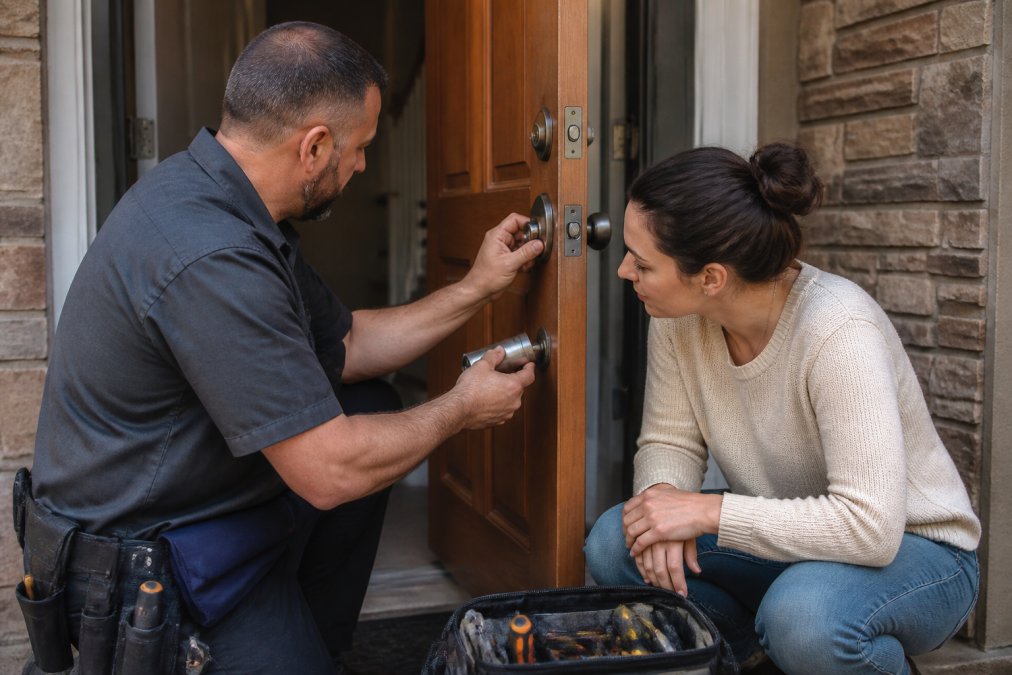
Lock type and complexity is the primary driver. A standard pin tumbler deadbolt costs less to rekey than a high-security lock with additional pins or security features. Master key systems, where multiple keys can open different locks but one master key opens all of them, require more precise pin configuration and cost more.
Lock condition affects pricing. If your locks are in good working order, rekeying is straightforward. Locks that are stuck, corroded, or damaged may require extra time or specialized tools, increasing the cost.
Number of locks you need rekeyed directly impacts the total bill. Rekeying one lock costs less than rekeying ten. Some locksmiths offer package pricing for full house rekeys, which can reduce the per-lock cost.
Lock hardware quality matters too. Budget-grade locks rekey quickly and cost less. Premium locks with better security features take longer to work with and cost more.
Your location influences pricing. Service areas with higher cost of living typically charge more for locksmith services. Travel distance from the locksmith’s base also factors in.
Timing affects the price. Standard business hours (typically 8 AM to 5 PM on weekdays) cost less than emergency after-hours service. Weekend and holiday pricing usually includes a surcharge.
Keyed alike configuration is when multiple locks open with the same key. This requires precise pin matching across several locks and costs more than rekeying locks independently.
Cost Breakdown for a Full House Rekey
A full house rekey means rekeying all the locks on your property so they work with one master key set.
Start with the entry doors. Most homes have a front door deadbolt, back door deadbolt, and garage entry door. That’s three locks minimum. Some homes add side door deadbolts or patio door locks to the mix.
Next consider interior locks if you have them. Bedroom doors and office doors with locks add to the total count. Not all homeowners rekey interior locks, but some prefer the security of having all locks on one key system.
The service call fee applies once per visit, regardless of how many locks you rekey. If a technician arrives and rekeys five locks, you pay one service call fee. If you rekey ten locks during the same visit, the service call fee remains the same.
Labor costs scale with the number of locks. Each lock takes 15 to 30 minutes to rekey. A five-lock house rekey takes roughly two to three hours. A ten-lock rekey takes four to five hours.
Here’s a practical example: suppose you have five exterior locks (front door, back door, garage entry, side door, and patio door). The technician arrives, assesses all five locks, charges one service call fee, then rekeys each lock while you wait. Total time is usually two to three hours. You walk away with one master key that opens all five locks.
BDS Locksmith provides free estimates for full house rekeys. We assess your specific locks, count how many need rekeying, and give you a transparent price before any work starts.
Emergency vs. Standard Business Hours Pricing
Locksmith pricing changes significantly based on when you need the service.
Standard business hours typically run 8 AM to 5 PM on weekdays. Rekeying during these hours costs less because the locksmith is working during their regular schedule with no overtime or premium pay involved.
After-hours service means evenings, nights, weekends, or holidays. Most locksmiths charge an additional surcharge on top of their regular rates for after-hours work. This surcharge compensates for the inconvenience of working outside normal hours and reflects the higher operational costs.
Emergency lockouts that require immediate response often include an emergency fee. If you’re locked out of your home and need access right now, you’ll pay more than if you schedule rekeying during regular business hours.
The difference can be substantial. What costs a certain amount on a Tuesday afternoon might cost more on a Saturday evening or at midnight. If your rekeying isn’t urgent, scheduling during standard business hours saves money.
For non-emergency rekeying, plan ahead and call during business hours. For actual emergencies where you’re locked out or have a security concern that can’t wait, the premium pricing for after-hours service is worth the immediate response.
Why Professional Rekeying Adds Security Value Beyond Cost
Rekeying offers security benefits that extend far beyond the simple transaction of changing your locks. A professional locksmith’s assessment during rekeying can identify vulnerabilities in your home’s security posture and recommend upgrades that prevent future problems.
The security audit during rekeying:
When a professional locksmith arrives to rekey your locks, they conduct an informal but valuable security assessment. They examine:
- Lock condition and wear. Worn or corroded locks may not function reliably or may be vulnerable to manipulation. A locksmith can identify locks that are nearing end-of-life and recommend replacement before they fail.
- Door frame integrity. A lock is only as strong as the door frame it’s mounted in. Locksmiths assess whether your door frames are solid and whether strike plates are properly installed. Loose or damaged frames compromise even high-quality locks.
- Key control gaps. During rekeying, professionals identify how many keys exist for each lock and who holds them. This reveals whether previous owners, contractors, or service providers may still have access to your home.
- Consistency across entry points. A professional audit ensures all exterior doors have comparable security levels. A high-security front door paired with a weak garage entry lock creates a false sense of security.
Smart lock compatibility assessment:
If you’re considering upgrading to smart locks, keyless entry systems, or electronic deadbolts, a professional rekeying visit is the ideal time to assess compatibility. During the assessment, a locksmith can:
- Evaluate your door thickness and material to determine which smart lock models will fit and function properly.
- Identify whether your doors have the correct backset (the distance from the edge of the door to the center of the lock hole) for smart lock installation. Standard backsets are 2⅜ inches or 2¾ inches; non-standard doors may require adapters or custom solutions.
- Assess power requirements if you’re considering electronic deadbolts. Some smart locks require hardwired power or battery backup; a locksmith can advise whether your doors and frames support these installations.
- Recommend whether rekeying your mechanical locks makes sense now or whether a full smart lock upgrade is the better long-term investment.
Many homeowners assume they can simply replace a mechanical lock with a smart lock, but door thickness, backset, and frame condition often complicate the transition. A professional assessment during rekeying prevents costly mistakes.
Master key system security implications:
Master key systems, where one master key opens all locks but individual keys open only specific doors, offer convenience and access control. However, they introduce security trade-offs that a professional can help you understand:
- Increased complexity. Master key systems require more precise pin configuration. If a single key is lost or compromised, the entire system’s security is at risk.
- Rekeying costs. Changing a master key system costs more than rekeying standard locks because all pins must be reconfigured in coordination across multiple cylinders.
- Access control clarity. A locksmith helps you define which keys open which doors and ensures the system matches your actual security needs. Poorly designed master key systems create confusion and security gaps.
For residential properties, master key systems are most valuable for multi-unit rentals or large homes where different family members need different access levels. For single-family homes, standard rekeying often provides adequate security at lower cost.
The value of professional expertise:
The security audit value of professional rekeying often exceeds the cost of the service itself. You’re not just getting new keys. You’re getting expert evaluation of your home’s security posture, identification of vulnerabilities, and recommendations for improvements that prevent future break-ins or unauthorized access. A locksmith who takes time to assess your locks during rekeying is investing in your long-term security, not just completing a transaction.
Frequently Asked Questions
What is the average price to rekey a lock?
Residential rekeying costs depend on lock type, number of cylinders, and whether you need emergency service. A single lock cylinder rekey typically costs less than a full deadbolt rekeying. The locksmith service call fee is often a separate charge. For accurate pricing on your specific locks, contact a licensed locksmith for a free estimate that accounts for your home’s layout and lock hardware.
Is it cheaper to replace locks or rekey them?
Rekeying is generally more affordable than lock replacement when your existing locks are in good condition. Rekeying changes the internal pin tumbler configuration so old keys no longer work, while replacement installs entirely new locksets. The cost to rekey vs. replace locks depends on the number of entry doors, lock quality, and whether you want to upgrade to higher-security hardware. A locksmith technician can assess which option makes sense for your residential security needs.
How long does it take to rekey a house?
Rekeying time varies based on the number of locks and their accessibility. A single lock typically takes 15-30 minutes, while a full house rekey may take 2-4 hours depending on how many entry points need service. The locksmith’s experience and the complexity of your lock mechanisms affect the timeline. Licensed locksmiths work efficiently to minimize disruption while ensuring proper lock integrity and security.
What’s included in a locksmith service call fee?
A service call fee covers the locksmith technician’s travel time, arrival at your property, and initial assessment of your locks. This fee is separate from the actual rekeying labor and materials. Emergency or after-hours service typically includes an additional surcharge beyond standard business hours pricing. Always ask about the service call fee structure when requesting a quote so there are no surprises when the locksmith arrives.
Protecting your home starts with knowing who has access to it. A professional rekeying from BDS Locksmith gives you that control. We provide free estimates, transparent pricing, and same-day service throughout the South Bay Area. Call BDS Locksmith at (408) 300-4369 to schedule your residential security assessment today. Our licensed, bonded, and insured team delivers the security upgrades your home deserves.