Last Updated: October 22, 2026
Quick Summary
You can rekey master lock storage units if the lock has a removable cylinder, which you can identify by locating a set screw on the side or bottom. The process involves removing the cylinder, swapping out the pins to match a new key configuration, and reassembling the lock, taking 15 to 30 minutes once you have the correct key blank and pin kit.
- Disc-style padlocks cannot be rekeyed at home; conventional cylinder locks with removable cylinders are the only DIY-rekeyable option.
- Verify your lock’s exact model number and confirm the manufacturer lists it as rekeyable before ordering any parts.
- Rekeying requires a matching key blank and pin kit specific to your lock’s keyway and model.
- Test both the new key and the old key after rekeying to confirm the lock works and the old key no longer opens it.
- Call a locksmith if the set screw is stripped, the cylinder is stuck, or you cannot find a matching rekeying kit.
Table of Contents
- Can You Actually Rekey a Master Lock for a Storage Unit?
- Disc-Style vs. Conventional Padlocks: Which Can Be Rekeyed?
- Best Padlocks for Storage Units and Rekeying Compatibility
- Step-by-Step: Rekeying Your Master Lock
- How to Remove a Storage Unit Lock Without a Key
- Rekeyable Padlock vs. Replaceable Padlock: Which Should You Choose?
- Common Mistakes to Avoid When Rekeying Storage Unit Locks
- When to Call a Professional Locksmith
- Frequently Asked Questions
Can You Actually Rekey a Master Lock for a Storage Unit?
Yes, you can rekey master lock storage units, but only if the lock is designed to be rekeyed. Not all padlocks have removable cylinders. Before you attempt any rekeying, you need to identify your lock type and confirm it supports this process.
How rekeyable padlocks work
A rekeyable padlock contains a removable cylinder (also called a plug) that holds the pins. These pins align with your key’s cuts. When you remove the cylinder, you can rearrange the pins to match a new key. The cylinder slides out after you remove a small set screw, usually located on the side or bottom of the lock.
The process works because padlock cylinders are standardized. Most standard cylinders can be rekeyed using a pin kit that matches your lock’s size and keyway. You’ll need the correct key blank and a rekeying tool to align the pins properly.
Identifying your lock type
Storage unit padlocks fall into two main categories: disc-style and conventional cylinder locks. Disc locks use a flat, rotating disc instead of traditional pins. Conventional locks use a pin chamber system similar to door locks.
Look at your lock’s shape. A disc lock is flat and round. A conventional padlock is rectangular with a rounded top. The keyway (the slot where your key inserts) also differs. Disc locks have a narrow, D-shaped keyway. Conventional locks have wider, more varied keyways.
Check the lock’s body for a set screw. If you see a small screw on the side or bottom, your lock likely has a removable cylinder. Disc locks rarely have removable cylinders, making them difficult to rekey at home.
Take a photo of your lock’s keyway and any manufacturer markings before starting. This helps you order the correct rekeying kit and ensures you get the right pins for your specific lock model.
Disc-Style vs. Conventional Padlocks: Which Can Be Rekeyed?
Disc locks and storage units
Disc-style padlocks are extremely common on storage units because they’re affordable and durable. However, most disc locks cannot be rekeyed by the user. The disc mechanism doesn’t use removable pins like traditional locks.
Some high-security disc locks do offer rekeying options, but they require special tools and expertise. The manufacturer usually handles rekeying through their customer service. If your storage unit has a basic disc lock, your best option is replacement rather than rekeying.
Disc locks excel at security and weather resistance. They withstand rust and tampering better than conventional locks. But this durability comes with a trade-off: they’re not designed for easy home rekeying.
Conventional cylinder locks
Conventional padlocks with removable cylinders are fully rekeyable at home. These locks use a standard pin-tumbler mechanism. You can access the pins by removing the cylinder, then swap them out for a new key configuration.
Master lock storage solutions and similar brands offer many rekeyable models. Look for locks marketed as “rekeyable” or “recodable.” The product packaging or manual will specify whether your lock supports this feature.
Conventional locks are easier to rekey than disc locks. You’ll need basic tools and a rekeying kit. The process takes 15-30 minutes once you have the right parts.
Disc locks are nearly impossible to rekey at home. Conventional cylinder locks with removable cylinders are designed for rekeying and are your best choice for storage unit security.
Best Padlocks for Storage Units and Rekeying Compatibility
The compatibility check most guides skip
Before you buy a rekeying kit or touch a screwdriver, confirm three things about your exact lock: the model number, whether the manufacturer lists a serviceable or replaceable cylinder, and whether a matching key blank and pin kit exist for that keyway. Most failed rekeying attempts trace back to skipping this check, not to technique.
Step 1: Identify the exact model
Look for a stamped or laser-etched model number on the lock body, the bottom edge, or the shackle collar. Master Lock, for example, prints model numbers on the body and often a date or lot code nearby. Write down the full string, including any letter suffixes, because a Master Lock 140 and a 141 can use different cylinders and keyways.
If the stamping is worn, check the original packaging, the product listing where you bought it, or the manufacturer’s website. Search the brand plus the model number and open the official product page. The page usually lists keyway type, cylinder type, and whether the lock is described as rekeyable or recodable.
Step 2: Verify the cylinder is serviceable
A lock is only rekeyable at home if the cylinder can be removed without destroying the body. Look for a set screw on the side, bottom, or back of the lock. A visible seam around the cylinder is a good sign.
Check the manufacturer’s documentation for the words rekeyable, recodable, or serviceable cylinder. If the product page does not say so, assume it is not user-rekeyable. Calling the manufacturer’s customer service with the model number is faster than guessing.
Step 3: Confirm a key blank and pin kit exist
Rekeying requires a key blank that matches your lock’s keyway and a pin kit sized for that cylinder. Keyways are brand- and model-specific. A kit for one brand will not fit another brand’s keyway, and even within a brand, different model families use different blanks.
Order the blank and pin kit by model number, not by lock category. If you cannot find a matching kit, that is your signal to replace the lock rather than force a rekey.
Which lock types are worth rekeying
Conventional pin-tumbler padlocks with removable cylinders are the practical DIY candidates. They use standard pins, accept common key blanks, and take 15 to 30 minutes to rekey once the right parts are on hand.
Disc-style storage locks are usually not DIY-rekeyable. The disc mechanism does not use a removable pin stack the way a conventional cylinder does, and most models have sealed or non-serviceable bodies. Some high-security disc locks can be serviced, but that work typically goes through the manufacturer or a locksmith rather than a home kit.
A quick compatibility checklist
- Model number recorded from the lock body
- Manufacturer page confirms rekeyable or serviceable cylinder
- Set screw or visible cylinder seam present
- Matching key blank available for the keyway
- Pin kit sized for the cylinder
- Lock body free of cracks, heavy rust, or a binding shackle
If any item fails, replacement is the safer and often cheaper path.
Photograph the model stamp, the keyway, and the set screw location before ordering anything. A parts counter or locksmith can confirm the right blank and pin kit from those three images alone.
Step-by-Step: Rekeying Your Master Lock
Before you start: the feasibility check
This procedure only works on a conventional pin-tumbler padlock with a removable cylinder. Confirm the model number, verify the manufacturer lists the cylinder as serviceable or rekeyable, and make sure a matching key blank and pin kit are available for that keyway. If any of those fail, stop here and go to the replacement options at the end of this section.
Tools and parts
- Matching key blank for your lock’s keyway
- Pin kit sized for your cylinder
- Small Phillips or flathead screwdriver that fits the set screw
- Tweezers or a small pick
- A shallow tray or towel to catch pins
- Your current working key for reference
- A plug follower or a rolled strip of paper to keep pins from spilling
Rekeying kits, replacement cylinders, and new comparable padlocks have varying costs. The trade-off at the end matters.
Step 1: Remove the cylinder
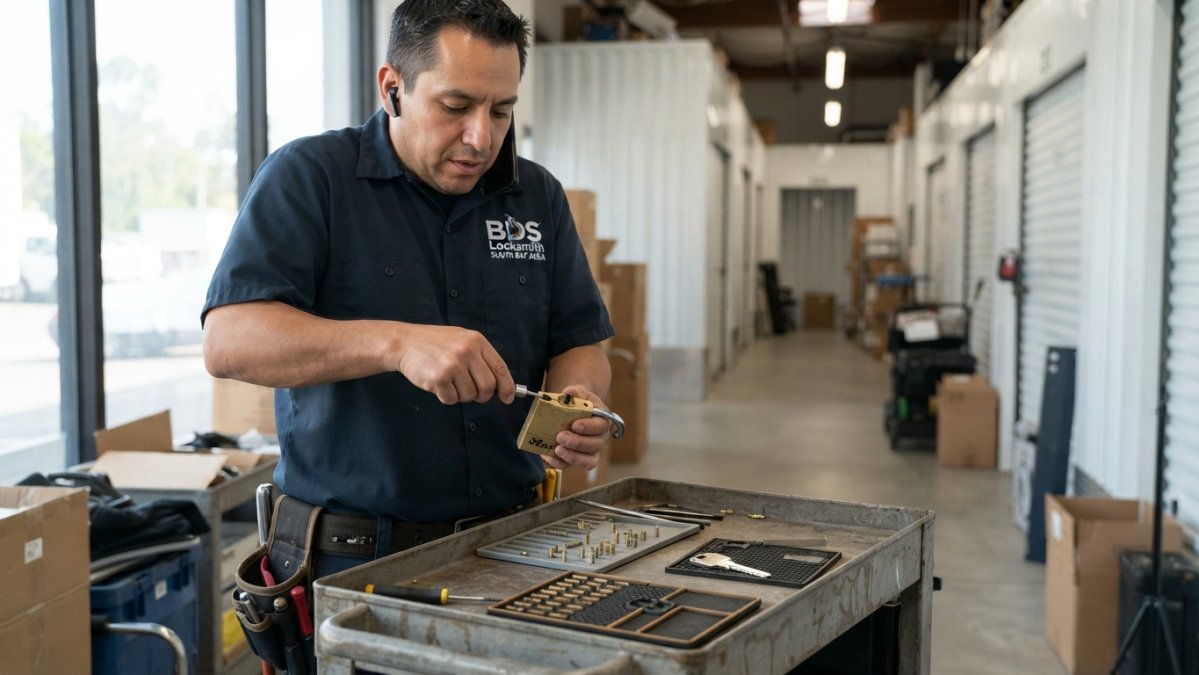
Locate the set screw on the side, bottom, or back of the lock. Turn it counterclockwise slowly with the correct driver. If it resists after gentle pressure, stop; a stripped set screw turns a 20-minute job into a locksmith call.
Once the screw is out, keep it in the tray. Pull the cylinder straight out. It should slide without prying. If it binds, check for a second retaining screw or a shackle-related pin before applying any force.
Step 2: Read the existing pin stack
With the cylinder out, insert your current key and look at the pin chambers. The pins should sit flush with the shear line when the key is in. Photograph the pin order before removing anything. Most standard padlocks use five or six pins; count yours so the new kit matches.
Step 3: Swap the pins for the new key
Empty the old pins into the tray. Insert the new key blank into the cylinder. Following the pin kit’s chart, drop the new pins into the chambers one at a time. Each pin should sit flush with the cylinder surface when the new key is inserted. If a pin sits proud or recessed, it is the wrong size for that chamber; recheck the chart rather than forcing it.
Step 4: Reassemble and test
Slide the cylinder back into the body with the keyway aligned to the opening. Reinstall the set screw and snug it; do not overtighten. Test the new key: it should turn smoothly and open the lock. Then test the old key: it should no longer work. If the old key still opens the lock, a pin is in the wrong chamber. Pull the cylinder and recheck the stack before locking anything valuable inside.
Step 5: Confirm before you rely on it
Lock and unlock the padlock several times, then test it on the storage unit door with the door open. Keep a spare new key off-site. A rekeyed lock with one key is one lost key away from the same problem you just solved.
Rekey, replace the cylinder, buy new, or call a locksmith?
- Rekey the existing lock when the body is sound, the cylinder is serviceable, and a matching kit exists. Lowest parts cost, moderate effort, keeps the same lock body.
- Replace the cylinder when the body is fine but the cylinder is worn or the keyway is obsolete. Slightly higher parts cost, less pin work.
- Buy a new lock when the lock is a sealed disc style, the body is damaged, or no matching kit exists. Fastest path, and often comparable in cost to a kit plus blank.
- Call a locksmith when the set screw is stripped, the cylinder is stuck, the lock is high-security, or you need same-day access. Highest labor cost, but it avoids damage to the door and the lock body.
Never drill or cut a lock on a rented storage unit without checking the facility’s rules first. Many facilities require a locksmith or manager to handle removal, and unauthorized cutting can create liability for door damage.
Rekeying is a compatibility decision before it is a technique. Confirm the model, the serviceable cylinder, and the matching kit first; then the pin swap is a short, reversible job. If any check fails, replacement or a locksmith is the better trade.
How to Remove a Storage Unit Lock Without a Key
When removal is your only option
Sometimes rekeying isn’t possible. Your lock might not support rekeying, the cylinder might be stuck, or you’ve lost access to your storage unit entirely. In these cases, removal is your only choice.
Removing a lock without a key requires cutting or drilling. Both methods destroy the lock, so you’ll need a replacement afterward. This is why BDS Locksmith recommends keeping spare keys in a secure location. A lost key costs far less than lock removal and replacement.
Contact your storage facility before attempting removal. Many facilities have policies about lock removal. Some require a locksmith to handle it. Getting permission prevents conflicts with management.
Cutting vs. drilling methods
Cutting uses bolt cutters or an angle grinder. Bolt cutters work on padlocks with shanks under 3/8 inch thick. Position the cutters on the shank and apply steady pressure. The lock should separate cleanly.
Angle grinders cut through thicker shanks and harder materials. Wear safety glasses and gloves. The grinder creates sparks and heat. Work slowly to avoid damaging the storage unit door.
Drilling destroys the lock’s internal mechanism. Use a drill bit slightly smaller than your lock’s diameter. Drill straight through the cylinder. Once the cylinder is compromised, the lock opens. This method works on nearly all locks but takes longer than cutting.
Bolt cutters are fastest for standard padlocks. Angle grinders handle heavy-duty locks. Drilling works as a backup if cutting fails. Choose based on your lock’s material and your available tools.
Rekeyable Padlock vs. Replaceable Padlock: Which Should You Choose?
Cost and convenience trade-offs
Rekeyable locks cost more upfront but save money long-term. If you change keys frequently or need multiple keys for one lock, rekeying is economical. You keep the same lock body and only change the pins.
Replaceable locks are cheaper initially. You buy a new lock each time you need a new key configuration. This approach works if you rarely change keys or don’t mind the ongoing expense.
Consider how often you’ll need new keys. Storage unit access changes when tenants move or employees leave. Facilities with high turnover benefit from rekeyable locks. Single-user storage units may not justify the rekeying investment.
When replacement is the safer choice
Replace your lock if it shows signs of wear or damage. Rust, corrosion, or difficulty turning the key means the lock’s internal mechanism is degrading. Attempting to rekey a damaged lock may cause further damage.
Replace if your lock doesn’t support rekeying. Disc locks and non-removable cylinder locks can’t be rekeyed at home. Forcing the issue risks breaking the lock entirely.
Replace if you’ve lost your current key and don’t have a spare. Rekeying requires removing the cylinder, which is impossible without the current key working properly. Removal and replacement is faster than struggling with a stuck lock.
New locks provide peace of mind. You know the mechanism is clean and functional. Old locks may have internal debris or wear that makes rekeying unreliable.
Common Mistakes to Avoid When Rekeying Storage Unit Locks
Ordering the wrong rekeying kit is the most common error. Locks vary by brand, model, and keyway type. A kit for a Master Lock won’t work on a Schlage lock. Check your lock’s specifications before ordering anything.
Forcing the set screw damages the lock. If it won’t turn after gentle pressure, stop immediately. Stripping the screw head makes removal impossible. You’ll need professional help to extract it.
Losing track of pin order causes failure. Write down or photograph the original pin arrangement before removing them. Some rekeying kits include pin trays to keep pins organized during the process.
Reinstalling the cylinder crooked prevents the key from working. Align the keyway carefully as you slide the cylinder back in. The key should turn smoothly once the cylinder is fully seated.
Using the wrong key blank creates a useless lock. Your new key must match your lock’s keyway exactly. A key that almost fits won’t work reliably. Always verify the blank matches your lock before rekeying.
Not testing the lock after rekeying leaves you with a non-functional padlock. Test both the new key and confirm the old key no longer works. If something’s wrong, it’s easier to fix before you lock your storage unit.
When to Call a Professional Locksmith
DIY rekeying works for straightforward situations. Your lock is in good condition, you have the right tools, and you’re comfortable working with small mechanisms. If all these conditions apply, rekeying at home is feasible.
Call a professional if your lock is damaged or stuck. A locksmith has specialized tools to remove stuck cylinders without breaking them. They can assess whether rekeying is possible or replacement is necessary.
Call if you’re uncertain about your lock type or rekeying compatibility. A locksmith identifies your lock instantly and explains your options. This prevents ordering wrong parts or wasting time on incompatible locks.
Call if you need emergency access to your storage unit. A locksmith removes locks quickly without damaging your door. They can install a new lock immediately. This is much faster than attempting removal yourself.
Professional locksmiths handle complex locks that resist DIY approaches. High-security locks, vintage locks, and specialty padlocks often require professional expertise. At BDS Locksmith, our team has the tools and experience to rekey or remove locks safely.
Call a locksmith if you want to avoid mistakes. Rekeying mistakes can lock you out of your storage unit. A professional gets it right the first time, saving you frustration and additional costs.
Rekeying your storage unit lock is possible if your lock supports it, but it requires the right tools, parts, and technique. Mistakes are costly, a misaligned pin leaves you locked out. If you’re uncertain about your lock type, don’t have the correct rekeying kit, or your lock shows signs of wear, professional help is your safest choice. BDS Locksmith provides free estimates and same-day service for lock rekeying and replacement throughout the area. Our licensed, bonded, and insured team handles everything from identifying your lock type to completing the rekeying process safely. Call (408) 300-4369 for a consultation, and let our experts secure your storage unit with precision.
Frequently Asked Questions
Can a Master Lock be rekeyed?
Yes, many Master Lock padlocks can be rekeyed if they have a removable cylinder. Look for a small set screw on the side of the lock. If you can remove the cylinder, you can rekey it with a new pin configuration. However, not all Master Lock models are rekeyable, some disc-style locks are designed for replacement only. Check your specific lock model’s documentation or contact a locksmith to confirm.
What should I do if I lost the keys to my storage unit lock?
If your storage unit lock is rekeyable, you can have a locksmith rekey it with a new key. If it’s not rekeyable or rekeying isn’t practical, you’ll need to remove the old lock by cutting or drilling it and replace it with a new one. A professional locksmith can handle both options quickly and without damaging your storage unit door. This is often faster and safer than attempting DIY removal.
What is the best type of lock to use on a storage unit?
Conventional padlocks with removable cylinders are generally best for storage units because they’re rekeyable and durable. Look for locks with hardened steel bodies, pick-resistant pins, and a secure keyway design. Disc-style locks are also popular but are typically designed for replacement rather than rekeying. Choose a lock rated for outdoor use if your storage unit is exposed to weather. Quality matters more than price for long-term security and reliability.
Can I rekey my storage unit lock myself?
You can attempt rekeying yourself if you have the right tools and your lock is compatible, but it’s risky. Mistakes can damage the lock cylinder or springs, leaving you locked out. Professional locksmiths have specialized tools and expertise to rekey locks correctly on the first try. For storage units, where security is critical, professional rekeying is usually worth the investment to avoid costly mistakes or lockouts.