Last Updated: October 23, 2026
Quick Summary
Signs your home locks need an upgrade include keys that stick or jam, visible rust or cracks, wobbly hardware, lost or unaccounted-for keys, and locks that are over a decade old or builder-grade. Any cracked housing or damage from a break-in attempt means replace the lock immediately. Rekey when the hardware is sound and the problem is only who holds the keys.
- A key that catches or needs a wiggle usually means the lock cylinder is wearing out or the door is misaligned.
- Any visible damage to a lock body, especially a cracked housing, is a replace-now signal.
- Change locks after moving in because you cannot know who holds copies of the new home keys.
- Most residential locks are built for roughly a decade of normal use before replacement is due.
- Rekey sound locks and replace only the worn or outdated ones, then key everything to one master key system.
Table of Contents
- 9 Signs Your Home Locks Need an Upgrade
- 1. Your Keys Stick, Jam, or Are Hard to Turn
- 2. Visible Rust, Corrosion, or Physical Damage
- 3. Loose, Wobbly, or Cracked Lock Hardware
- 4. Lost, Stolen, or Unaccounted-For Keys
- 5. Moving Into a New Home: Change Locks After Moving
- 6. A Break-In or Attempted Break-In
- 7. Outdated Locks or Inadequate Security
- 8. When to Replace Door Locks: Age and Wear
- 9. Rekey vs Replace Locks: Which Is Right for You?
- Frequently Asked Questions
9 Signs Your Home Locks Need an Upgrade
Most homeowners think about their locks twice: when they move in and when a key goes missing. That gap in attention is exactly where security problems grow. We see the same pattern on service calls across the South Bay Area: a lock that has quietly failed for years, discovered only after a break-in or a lockout. Knowing the signs your home locks need an upgrade lets you fix the problem on your schedule instead of an emergency’s.
A worn lock is any lock mechanism that no longer operates smoothly or holds the door securely, whether from age, damage, or repeated key use. The warning signs below cover the full range, from a sticky key to a wobbly cylinder, and each one points to a different fix. Below, we’ll walk through all nine signs, then show you exactly how to decide between repair, rekeying, and full replacement.
1. Your Keys Stick, Jam, or Are Hard to Turn
A key that fights you every time is the most common early warning sign. If your key catches, needs a wiggle, or takes two hands to turn, the lock cylinder is wearing out or the door has shifted out of alignment.
The cause matters. A sticking key usually means internal wear on the pins inside the lock cylinder, while a key that turns hard but doesn’t jam often points to door alignment issues or a swollen frame. Spraying lubricant buys time, but it doesn’t fix a worn lock mechanism. Ignoring it long enough leads to a snapped key inside the cylinder, which turns a simple fix into a lockout. Plenty of broken key halves are pulled out of front door locks, and it’s always more expensive than the repair would have been. While you sort out the upgrade, these tips for preventing home lockouts will help you avoid getting stranded outside.
2. Visible Rust, Corrosion, or Physical Damage
Rust on a lock is more than a cosmetic problem. Corrosion eats into the lock mechanism, weakens the springs, and can seize the cylinder entirely, especially on doors exposed to humidity, coastal air, or direct weather exposure.
Look closely at the lock housing, the strike plate, and the screws holding the door hardware in place. Any of these signs means moisture has gotten inside:
- Orange or brown discoloration around the keyhole or cylinder face
- Pitting or flaking metal on the deadbolt faceplate
- Rusted or stripped screws that no longer grip the door frame
- Cracks in the lock housing or a bent bolt
A cracked housing is the most serious of these. It means the lock can fail under force exactly when you need it most. Any visible damage to a lock body is a replace-now signal, not a wait-and-see one.
3. Loose, Wobbly, or Cracked Lock Hardware
If the lock moves when you touch it, the door no longer has a secure lock. A wobbly cylinder, a loose handle, or a deadbolt that shifts in its bore means the hardware has worked itself free from the door, and a determined push could defeat it.
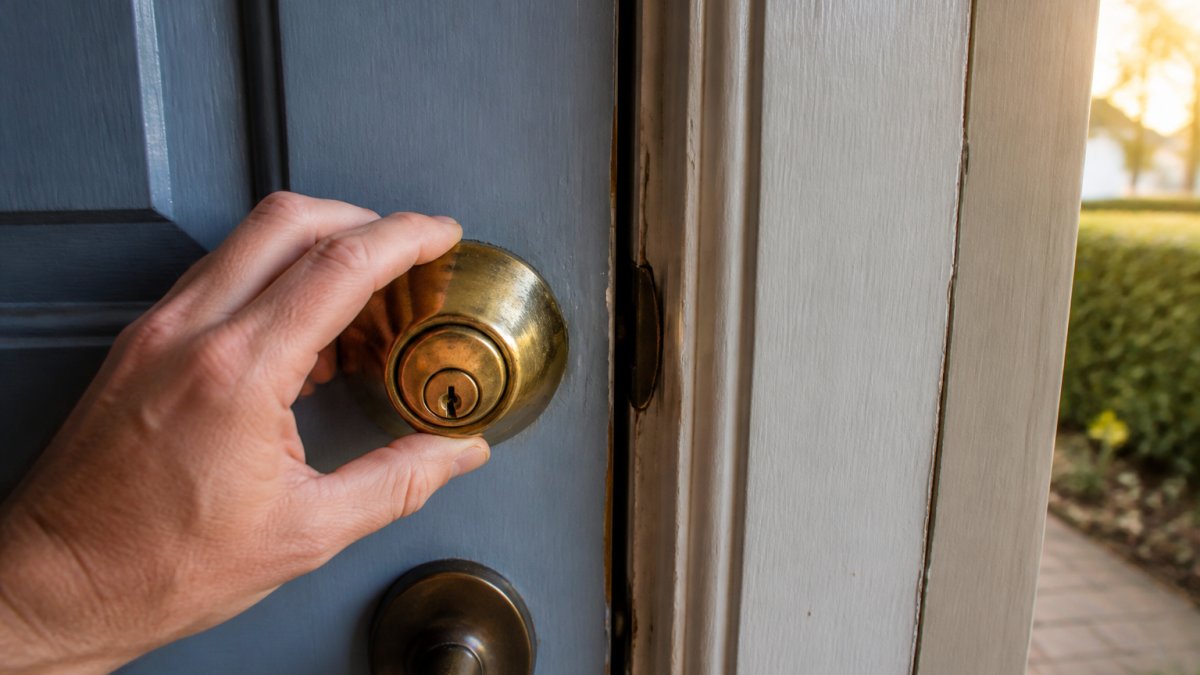
Grab the lock and give it a firm wiggle. Movement of any kind is a security risk. The fix depends on the cause: sometimes the mounting screws have simply loosened and need tightening, but a loose lock that keeps coming back loose usually means the door itself is damaged around the bore hole. A cracked housing or a split door frame cannot be fixed with a screwdriver. That hardware needs lock replacement before the damage spreads to the door slab.
Never ignore a deadbolt that wiggles. A loose cylinder can be pulled or kicked free in seconds during an attempted break-in, and the repair cost climbs fast once the door frame itself is damaged.
4. Lost, Stolen, or Unaccounted-For Keys
The moment a key leaves your control, your home security has a gap you cannot see. A lost key might be in a coat pocket, or it might be in a stranger’s hand, and you have no way to tell the difference.
Stolen keys are the obvious emergency. But unaccounted-for keys are just as serious: a spare key given to a former roommate, a cleaning service, or a contractor who never returned it. Each one is an open door to unauthorized access. The standard advice is blunt because it works: if you cannot account for every key to a lock, that lock’s key control is broken. Rekeying solves this cheaply by changing the internal pins so old keys no longer work, without replacing the hardware. If the lock is also worn or outdated, replacement makes more sense.
5. Moving Into a New Home: Change Locks After Moving
Change locks after moving in. This is the one sign that has nothing to do with wear and everything to do with the unknown. You have no idea how many copies of your new home keys exist or who holds them: former occupants, real estate agents, contractors, neighbors, or a previous owner’s family.
Moving is also the best moment to assess the whole entry. Check the door lock on every exterior door, confirm the deadbolt throws fully, and look for old lock hardware that predates modern security ratings. A lock upgrade at move-in is cheap insurance, and it’s far easier to handle before the furniture is in the way. Renters should ask the landlord first; many are happy to have a professional handle it. Our team handles small residential jobs like a single deadbolt swap.
6. A Break-In or Attempted Break-In
After a break-in, every lock on the property should be treated as compromised. Even an attempted break-in that failed can bend the strike plate, distort the door frame, or damage the bolt, leaving the lock weaker than before.
Damage is often invisible from the outside. A kicked door can leave the deadbolt looking fine while the frame around it has split, which means the bolt no longer has solid material to grip. Have every entry point inspected, not just the door that was attacked. Then upgrade the weak points: a reinforced strike plate, a longer bolt, and hardware rated for forced entry. This is also the moment to think beyond the lock itself, since the strongest deadbolt in the world is only as good as the frame it sits in.
7. Outdated Locks or Inadequate Security
An old lock can look perfectly fine and still be a security risk. Builder-grade locks and hardware installed decades ago were never designed for today’s threats, and their security rating often falls well short of what a modern lock upgrade provides.
Here’s what separates outdated hardware from adequate hardware:
| Feature | Outdated Lock | Modern High-Security Lock |
|---|---|---|
| Cylinder type | Standard pin tumbler | Pick- and bump-resistant cylinder |
| Bolt | Short, basic throw | Full-length hardened bolt |
| Strike plate | Standard screws | Reinforced, long-screw plate |
| Key control | Easy to copy | Restricted, authorized duplication |
| Rating | Unrated | Rated for forced entry |
If your locks have never been evaluated, they probably belong in the left column. High-security deadbolts add real resistance to picking, bumping, and kicking, and they restore the peace of mind that a builder-grade lock never provided. If you’re realizing your hardware is past its prime, this guide to the benefits of high security deadbolts explains what the upgrade actually delivers.
8. When to Replace Door Locks: Age and Wear
Knowing when to replace door locks comes down to two clocks: calendar age and actual wear. Most residential locks are built for roughly a decade of normal use, and a lock that has passed that mark deserves a hard look even if it still turns. But age alone is a blunt instrument. The better approach is to inspect the lock against a short list of wear indicators and then judge whether the hardware still meets the security standard your entry needs.
The wear indicators that matter
Wear shows up in the details, not just in whether the key turns:
- Spring tension: internal springs lose tension over time, so the bolt no longer snaps home crisply or the key feels mushy
- Pin wear: flattened or worn pins make the key catch, stick, or require a wiggle
- Bolt throw: the bolt should extend fully into the strike plate without binding; a partial throw means the door is not truly secured
- Cylinder play: any side-to-side movement of the cylinder in its bore signals a loose or worn housing
- Strike plate condition: elongated screw holes, a bent plate, or missing screws mean the bolt has been stressed
- Key wear: a key that is visibly worn on its cuts can indicate the lock’s pins are wearing the key down
Exterior doors age faster because weather exposure and humidity work on them year-round. A front door that sees dozens of turns a day will wear out long before a back door that is rarely used. Judge each lock on its own: age, usage, exposure, and how it feels in your hand. If two or more indicators raise a flag, plan the lock replacement now rather than waiting for a failure.
Check the security grade, not just the age
A lock can be young and still inadequate. Look for a security grade on the hardware, often stamped on the faceplate or listed on the packaging. Builder-grade locks installed by production builders are commonly unrated or at the low end of the scale, and they were never designed for today’s forced-entry and picking threats. When you replace, choose hardware rated for forced entry and confirm the cylinder offers pick- and bump-resistant features. If you cannot find a grade on the existing lock, assume it is below what a modern replacement provides.
Confirm compatibility before you buy
Replacement hardware has to fit the door you have. Before purchasing, measure the backset (the distance from the door edge to the center of the bore hole) and the bore hole diameter, and confirm the door thickness. Most residential doors use a standard backset, but older or custom doors can differ. Matching these dimensions lets you swap the lock without drilling fresh holes in a good door. Our high-security lock installation guide walks through the tools and steps. Also check that the new deadbolt’s bolt and faceplate align with the existing strike plate; if the frame is damaged or the door is misaligned, fix that first or the new lock will inherit the old problems.
Look beyond the lock to the full entry
A stronger lock on a weak entry is money wasted. While you are assessing age and wear, inspect the strike plate, the door frame, and the hinges. A standard strike plate held by short screws offers little resistance to a kick, and a split frame gives the bolt nothing solid to grip. Upgrading the strike plate and using long screws that reach the wall stud behind the frame is a small change that makes a new lock dramatically harder to defeat. If the frame is damaged, repair it before or during the lock replacement. Readers planning the job can check how long a lock installation takes.
A practical replacement timeline
- Every year: test each exterior lock for smooth operation, full bolt throw, and tight hardware
- Every few years: check for rust, corrosion, and loose screws, especially on weather-exposed doors
- At about ten years: plan replacement for any lock in daily use, even if it still functions
- Immediately: replace any lock with visible cracks, a wobbly cylinder, or damage from a break-in attempt
If two or more of these timelines line up with what you are seeing, the lock has earned a replacement rather than another round of lubricant. For a deeper look at what upgraded hardware delivers, this guide to the benefits of high security deadbolts explains the difference in forced-entry resistance and key control.
9. Rekey vs Replace Locks: Which Is Right for You?
The choice between rekeying and replacement depends on one question: is the hardware itself still sound? If the lock is solid and the only problem is who holds the keys, rekey. If the lock is worn, damaged, or outdated, replace. But most homeowners face a mix of both problems, so use the decision path below rather than a single yes-or-no test.
Step 1: Is the hardware structurally sound?
Grab the lock and wiggle it. Check the cylinder face, the bolt, and the strike plate for cracks, rust, or movement. If any of these are present, the lock is a replacement candidate regardless of key control:
- Cracked housing or split door frame: replace, and repair the frame first
- Rust or pitting on the cylinder or bolt: replace
- Wobbly cylinder or loose handle that returns after tightening: replace
- Bolt that does not throw fully or binds in the strike: diagnose alignment before deciding
If the hardware passes this check, move to Step 2.
Step 2: Is the only problem key control?
Key control means you know exactly who holds every working key. If a key is lost, stolen, or unaccounted for, rekeying changes the internal pins so old keys no longer work while keeping the existing hardware. This is the least disruptive and lowest-cost fix, and it is the right call when:
- You just moved in and do not know who has copies
- A roommate, tenant, cleaner, or contractor returned keys but you cannot verify all copies
- A key was lost but the lock itself is in good condition
- You want every exterior door on one key without replacing hardware
Rekeying does not reset the hardware’s age or security rating. If the lock is more than about a decade old or is builder-grade, replacement usually makes more sense even when key control is the trigger.
Step 3: Does the lock meet your security needs?
A sound lock can still be inadequate. Standard builder-grade pin tumbler cylinders offer little resistance to picking or bumping, and short bolts with standard strike screws are vulnerable to kicking. If the lock is unrated or you cannot find a security grade on the hardware, treat replacement as the upgrade path. This is also the moment to consider a high-security cylinder with restricted key control, a full-length hardened bolt, and a reinforced strike plate.
Step 4: What does the cost and disruption trade-off look like?
Rekeying is the budget-friendly fix and typically takes far less time because the hardware stays on the door. Replacement costs more but resets the clock on the hardware and lets you upgrade the security rating at the same time. For a multi-door home, the cheapest path is often to rekey sound locks and replace only the worn or outdated ones, then key everything to a single master key system. If cost is your deciding factor, professional rekeying involves specific steps so you can compare it fairly against replacement.
Quick decision checklist
- Key control problem only (lost keys, new home, departing tenant): rekey
- Visible damage (rust, cracks, wobbly cylinder): replace
- Outdated security rating or builder-grade hardware: replace
- Multiple locks, same key desired: rekey to a master key system
- Break-in or forced entry damage: replace, and inspect the frame
- Lock is over a decade old: replace
- Mixed conditions across doors: rekey sound locks, replace worn ones, unify under one key
Rekey when the hardware is sound and the problem is who holds the keys. Replace when the hardware is worn, damaged, outdated, or below the security rating you need. When in doubt, have each lock inspected individually rather than applying one verdict to the whole house.
Frequently Asked Questions
How do I know if my home locks need to be replaced?
Watch for keys that stick or jam, visible rust or corrosion, loose or wobbly hardware, and cracked lock housings. If your locks are more than 10 years old or you’ve experienced a break-in, replacement is wise. Also replace locks after moving into a new home, since you don’t know who else has keys. A professional locksmith can assess wear and recommend rekeying versus full replacement based on the lock’s condition and security grade.
Should I rekey or replace my home locks?
Rekeying changes the internal pins so old keys stop working, which is cheaper and faster than replacement. Choose rekeying if the lock hardware is in good shape and you just need to revoke old keys, such as after a roommate moves out. Replace locks when the hardware is damaged, outdated, or you want a higher security rating. A locksmith can inspect your deadbolt and cylinder to help you decide which option fits your situation and budget.
Should I change my locks after moving into a new home?
Yes. You cannot know how many copies of the keys exist or who has them, including former occupants, contractors, or neighbors. Changing or rekeying locks after moving is a basic security step. It also gives you a chance to upgrade to a deadbolt with a higher security rating. Many homeowners choose rekeying for cost savings, but if the existing locks are old or flimsy, full replacement provides better peace of mind.
Can a locksmith upgrade an old deadbolt?
A locksmith can often upgrade an old deadbolt by replacing the cylinder or installing a new deadbolt that fits the existing door preparation. Upgrading to a ANSI/BHMA Grade 1 or Grade 2 deadbolt improves resistance to kicking and drilling. If the door frame or strike plate is damaged, the locksmith may reinforce those areas too. For best results, ask for a security assessment so you know whether a simple cylinder swap or a full deadbolt replacement is needed.