Last Updated: November 17, 2026
Quick Summary
Professional deadbolt installation for apartments requires landlord approval, a single-cylinder deadbolt with an interior thumb turn for fire-code egress, and correct door measurements before you buy. A technician handles compatibility checks, door preparation, fitting, strike-plate alignment, and testing so the bolt throws fully with the door closed.
- Read your lease first, since many rentals require written landlord approval and some require a building master key.
- Avoid double-cylinder deadbolts on apartment entry doors because they can violate egress codes and trap occupants.
- Measure door thickness, backset, and bore hole size before buying, since a lock that does not fit means a return or delay.
- Rekey when the hardware is sound but keys are not; replace when the bolt is wobbly, sticking, or low grade.
- Test the bolt with the door closed and latched, then test egress from the inside before signing off.
Table of Contents
- Why Apartment Deadbolt Installation Is Different From a House
- Choosing the Right Lock: Single-Cylinder vs Double-Cylinder Deadbolts
- Door and Frame Compatibility Checks Before You Buy
- What a Door Lock Installation Service Actually Includes
- Apartment Door Lock Replacement: When to Rekey and When to Replace
- What Professional Deadbolt Installation for Apartments Cost Covers
- Post-Installation Testing and Troubleshooting
- Book a Deadbolt Installation Appointment With BDS Locksmith
- Frequently Asked Questions
Why Apartment Deadbolt Installation Is Different From a House
Professional deadbolt installation for apartments is not the same job as fitting a lock on a single-family house, and treating the two as interchangeable is where most problems start. The apartment version involves a landlord, a shared building, and a fire code that a house never touches.
The door itself is the first difference. Apartment entry doors are usually hollow metal or fire-rated assemblies, not solid wood slabs. Drill through one carelessly and you can void its fire rating or crack the frame. The second difference is permission: you may not own the door you want to modify. The third is egress, the legal right to get out fast in an emergency.
Below, the four factors that make apartment work distinct are broken down, along with what each one means before you buy a lock or book a technician.
Lease, Permission, and Building Requirements
Read your lease before you buy hardware. Many rental agreements require written landlord approval for any lock change, and some require the building to keep a master key. Installing a deadbolt without permission can put your deposit at risk or violate the terms outright.
Get approval in writing, including the specific lock model. If you rent and want the full permission checklist, our guide to installing deadbolts in rental apartments walks through the request and compliance steps.
Fire Safety and Egress Rules You Cannot Skip
Apartment doors are life-safety equipment. A deadbolt that needs a key to open from the inside traps occupants during a fire, and most building codes and local fire codes prohibit that on an egress door. Single-cylinder deadbolts with a thumb turn on the inside are the standard for this reason.
Avoid installing a double-cylinder lock on an apartment entry door, since it can create a code violation and a genuine hazard.
Choosing the Right Lock: Single-Cylinder vs Double-Cylinder Deadbolts
For an apartment entry door, the single-cylinder deadbolt with an interior thumb turn is almost always the correct choice. It meets egress requirements, it is simple to operate, and it satisfies most building rules. A double-cylinder deadbolt, which needs a key on both sides, belongs on doors with glass panels where someone could otherwise reach in and turn the thumb turn. That is a house scenario, not a typical apartment one.
Grade matters too. Look for a Grade 1 or Grade 2 deadbolt rated by the American National Standards Institute (ANSI), which tests locks for durability and forced entry.
- Single-cylinder: thumb turn inside, key outside. Best for apartments and egress doors.
- Double-cylinder: key both sides. Avoid on apartment entry doors.
- High-security: hardened bolt, pick-resistant cylinder, reinforced strike. Worth the upgrade.
Door and Frame Compatibility Checks Before You Buy
Measure before you spend. A deadbolt that does not fit your door and frame is a return, a delay, and sometimes a hole in the wrong place. Three measurements decide whether a lock will work: door thickness, backset, and bore hole size.
Door thickness on apartment entries is commonly 1-3/4 inches, but metal doors vary. Backset is the distance from the door edge to the center of the bore hole, usually either 2-3/8 or 2-3/4 inches. Bore hole diameter is typically 2-1/8 inches, with a 1-inch edge bore for the latch.
Check that the door frame has a solid strike plate location and that the door closes flush. If the frame is metal, confirm there is enough material to mount a strike. Our apartment deadbolt installation guide covers the full compatibility check step by step.
What a Door Lock Installation Service Actually Includes
A professional door lock installation service covers more than screwing in a lock. It typically starts with a compatibility check, then door preparation, fitting, and alignment so the door closes and latches smoothly.
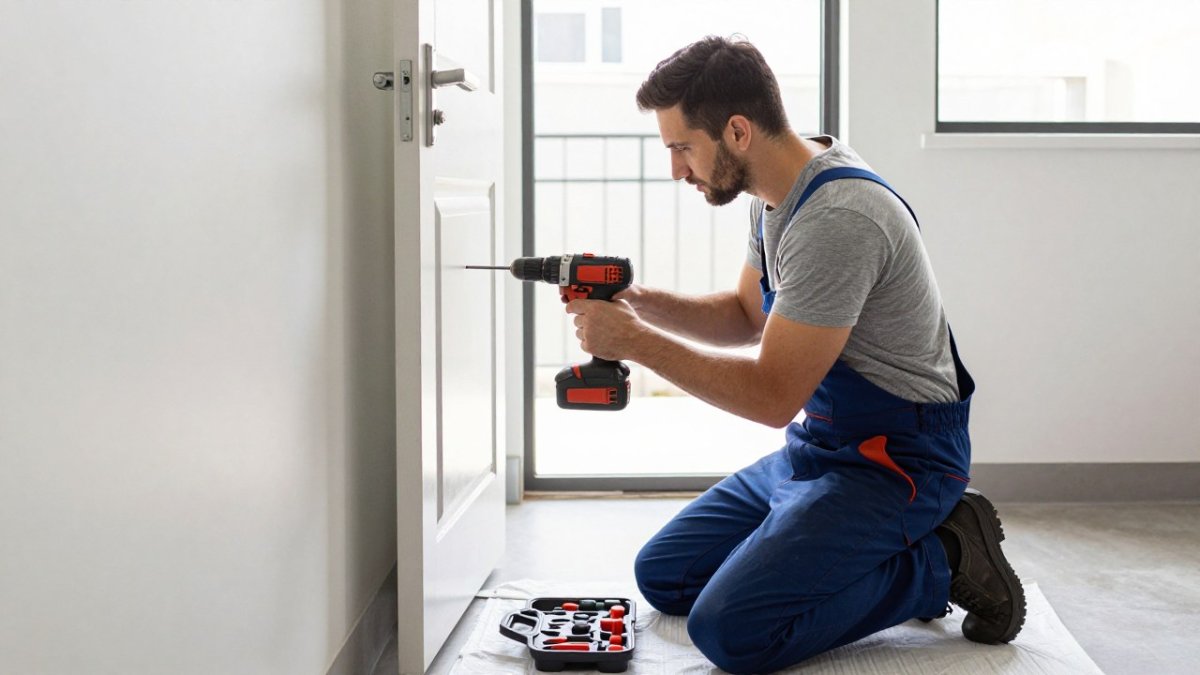
What most people miss is the alignment work. A deadbolt that looks installed can still fail to throw fully if the strike plate sits a millimeter off. That is the part a rushed job skips. To see what a mobile visit covers, read our mobile locksmith apartment deadbolt guide.
Apartment Door Lock Replacement: When to Rekey and When to Replace
Rekey when the lock hardware is sound but the keys are not. If you moved into a new apartment and previous tenants may still hold keys, rekeying changes the pins so old keys stop working while you keep the same lock.
Replace when the hardware is failing, the grade is too low, or you want a security upgrade. A wobbly bolt, a sticking cylinder, or a builder-grade lock on a ground-floor unit are all replacement signals. Compare the two routes with our residential rekeying price guide before you decide.
| Situation | Rekey | Replace |
|---|---|---|
| New tenant, lock works fine | Yes | No |
| Lost key, lock is solid | Yes | No |
| Wobbly or sticking bolt | No | Yes |
| Upgrading to high-security | No | Yes |
What Professional Deadbolt Installation for Apartments Cost Covers
Pricing for professional deadbolt installation for apartments depends on the lock you choose, the door condition, and whether door modification is needed. Free estimates are available so you know the scope before work begins.
A useful way to read any quote is to split it into three buckets: labor, hardware, and door modification. Most apartment jobs fall into a predictable pattern, and knowing the buckets helps you spot a quote that is missing something. Separating labor, hardware, and door modification also clarifies when replacing failing apartment door hardware is part of a routine deadbolt job or a separate repair.
Labor. This is the technician’s time for the compatibility check, door preparation, drilling, fitting, strike-plate mounting, alignment, testing, and cleanup. A door with no existing deadbolt bore generally takes longer than a swap on a prepped door.
Hardware. The deadbolt itself is separate from labor. A reinforced strike plate, replacement hinges, and a new knob or handle set may also be hardware line items. If you supply your own lock, confirm with the installer how labor on customer-supplied hardware is handled.
Door modification. Widening an existing bore, repairing a cracked metal frame, adding a strike-plate reinforcement plate, or shimming a door that no longer sits square may add labor.
What drives the price up in apartments specifically. A fire-rated hollow metal door with a closer takes more care than a wood slab. A frame with no solid strike location may need reinforcement. A building that requires the work to be done during business hours, or that requires the installer to check in at a front desk and use a service elevator, adds time. None of these are upsells; they are real scope.
What a fair quote should list. Ask for the lock model and grade, the labor scope, whether strike-plate reinforcement is included, whether old hardware is hauled away, and whether the price changes if the door needs modification.
For current rates, check our pricing page or request a quote. If you are comparing rekeying against replacement, our residential rekeying price guide breaks down that trade-off before you commit to either.
Post-Installation Testing and Troubleshooting
Test the lock before the technician leaves, with the door in its normal operating position. Throw the bolt with the door open, then closed. It should extend fully with light pressure and retract cleanly. If it binds, the strike plate or door alignment needs adjustment, not force.
Apartment entry doors fail in ways a house door does not, and the checklist below is built around those failure modes.
Test with the door closed and latched. A deadbolt that throws perfectly on an open door can still bind once the door is closed and the latch is engaged. Close the door, turn the thumb turn, and confirm the bolt extends fully without the door moving. If you have to push or lift the door to get the bolt to throw, the strike plate is misaligned or the door has sagged on its hinges.
Check the strike plate engagement. The bolt should sit fully inside the strike plate opening, not catch on the edge. On metal-frame apartment doors, the strike is often mounted in a thin frame section, and a bolt that hits the edge will eventually wallow out the opening. A reinforcement plate or a careful file of the strike opening is the fix, not a harder shove.
Watch the door closer. Many apartment entry doors have a hydraulic closer. A closer that pulls the door shut too fast can slam the door and mask a misaligned bolt, and a closer that is too weak lets the door hang open so the bolt never engages the strike. Adjust the closer speed after the lock is installed, not before.
Test egress from the inside. With the door closed and locked, operate the thumb turn from the inside with the lights off, the way you would in an emergency. It should turn without a key and without a trick. This is an important test on an apartment door.
Listen and feel for binding. A key that turns hard, a thumb turn that is stiff, or a bolt that needs a second push are all signs of misalignment, debris in the cylinder, or a door that has shifted. Forcing a stiff bolt wears the cylinder and can crack the door around the bore hole.
Common issues after installation:
- Bolt will not throw fully: strike plate misaligned; adjust or file the plate.
- Key turns hard: cylinder binding; check for debris or misalignment.
- Door rattles or sticks: hinge or frame shift; tighten hinges and recheck the latch.
- Thumb turn stiff: internal binding; have the lock checked.
- Bolt catches on the strike: metal-frame strike opening too small or door sagging; reinforce or adjust.
- Door closer slams or hangs: closer speed wrong; adjust after install.
Watch out: a deadbolt that passes the open-door test but fails the closed-door test is not installed, even if it looks finished. Make the technician repeat the closed-door and egress tests before signing off.
Book a Deadbolt Installation Appointment With BDS Locksmith
A deadbolt is only as good as its installation, and an apartment door leaves little room for error. BDS Locksmith is a licensed, bonded, and insured mobile locksmith serving the South Bay Area. We offer same-day service, free estimates, and a 5% military discount.
Before you book, review our guide to choosing a locksmith for lock installation so you know what to ask. Then call (408) 300-4369 to schedule your apartment deadbolt installation and secure your door the right way.
Getting a deadbolt installed correctly on an apartment door means balancing security, your lease, and fire safety, and cutting corners on any one of them costs you later. BDS Locksmith handles that balance for you with mobile, on-site service, same-day availability, and licensed, bonded, and insured technicians who test every lock before they leave. Get started with BDS Locksmith and secure your apartment door with a properly fitted deadbolt.
Frequently Asked Questions
Do I need my landlord’s permission to install a deadbolt in my apartment?
In most cases, yes. Your lease typically controls whether you can change or add locks, and many buildings require management to keep a key or approve the hardware. Ask your landlord or property manager in writing before scheduling deadbolt installation, and keep the approval. If the building provides the lock, a locksmith may only be able to rekey or replace it with management’s sign-off. Getting permission first protects your deposit and avoids a dispute later.
Can a locksmith install a deadbolt without damaging my apartment door?
A skilled technician can install a deadbolt with minimal disruption by measuring the backset and door thickness, checking the frame, and drilling a pilot hole before the bore hole. Damage usually happens when someone skips those checks or forces hardware into a door that was not prepped for it. Ask the installer to confirm compatibility before drilling, and confirm the company is licensed and insured so any accidental damage is covered.
Should an apartment deadbolt be rekeyed or replaced?
Rekey if the lock is solid and you only need new keys, which is common after moving in or when a previous tenant may still have a key. Replace when the hardware is loose, the bolt does not extend fully, or you want a high-security deadbolt with a reinforced strike plate. Which option fits your door depends on the hardware and labor involved.
How long does professional deadbolt installation take?
A fresh install that needs measuring, drilling, and fitting can take longer than a replacement on a prepped door. Door thickness, frame condition, and whether the strike plate needs adjustment all affect timing. Ask the technician for an estimate when you book, and confirm whether the visit includes testing the latch, bolt, and door alignment before they leave.