Last Updated: November 5, 2026
Quick Summary
Most door lock failure cases trace back to four root causes: internal wear, debris and moisture, key problems, and door or frame misalignment. The lock itself is often the victim, not the villain, since a door that has shifted a few millimeters can make a healthy lock feel broken. Diagnose the root cause before replacing anything.
- Work from the simplest cause to the most complex: rule out the key, then check alignment, then inspect hardware.
- If a spare key turns smoothly and the original does not, the key is your problem, not the lock.
- Spraying a wet lubricant into a dirty cylinder traps grit into a paste and can seize the lock.
- Open the door and turn the lock by hand with the door ajar; if it turns freely, the problem is alignment.
- Replace the lock when the cylinder is cracked, broken, or forced, since internal damage is permanent.
Table of Contents
- Why Residential Door Locks Fail: The Four Root Causes
- Front Door Lock Not Working With Key? Start With the Key Itself
- How to Fix a Door Lock That Is Stuck: A Step-by-Step Diagnostic
- How to Fix a Door Lock Cylinder: Cleaning, Lubrication, and When to Stop
- Misaligned Doors, Latch Problems, and Loose Hardware
- Door Lock Lifespan: How Long Should a Residential Lock Last?
- Repair or Replace? Decision Criteria for a Failing Lock
- Security and Emergency Considerations Before You Force Anything
- Book a Residential Lock Inspection With BDS Locksmith
- Frequently Asked Questions
Why Residential Door Locks Fail: The Four Root Causes
A door lock failure is the inability of a lock to secure, latch, or release a door on demand, and most door lock failure cases trace back to a handful of causes. Most residential lock failures trace back to four root causes: internal wear, debris and moisture, key problems, and door or frame misalignment.
Here’s the part most guides miss. The lock itself is often the victim, not the villain. A door that has shifted a few millimeters can make a perfectly healthy lock feel broken.
So before you replace anything, figure out which of the four root causes you’re dealing with. The fix changes completely depending on the answer.
Wear and Tear in Internal Components
Every lock has moving parts: springs, pins, cams, and tumblers. Each turn of the key wears them down a little more.
Over years of regular use, these internal components can fatigue, and the lock mechanism may start to bind or feel loose.
A common mistake is ignoring the early warning signs. A key that needs a little jiggle today will need a locksmith later.
Debris, Dust, and Moisture Inside the Lock Cylinder
The lock cylinder is the small rotating piece your key slides into. It’s also a magnet for trouble.
Dust buildup, grit, and pollen work their way inside. Moisture from weather exposure creeps in and can cause corrosion. Temperature changes make metal parts expand and contract, opening tiny gaps for debris.
Watch out: spraying a wet lubricant into a dirty cylinder traps the grit into a paste. That turns a stiff lock into a seized one.
Front Door Lock Not Working With Key? Start With the Key Itself
When the front door lock is not working with key in hand, the key is the first suspect. A worn key is the most overlooked cause of a residential lock problem. Keys wear down from daily use, and a worn key can stop lifting the pins correctly.
Look closely at your key. Is the tip rounded? Are the cuts shallow or shiny? Those are signs of a worn key.
Damaged or broken keys cause a different set of problems. A bent key forces the cylinder off-center. A key that snaps off inside leaves you locked out entirely.
Test with a spare. If the spare turns smoothly and the original doesn’t, the key is your problem, not the lock.
How to Fix a Door Lock That Is Stuck: A Step-by-Step Diagnostic
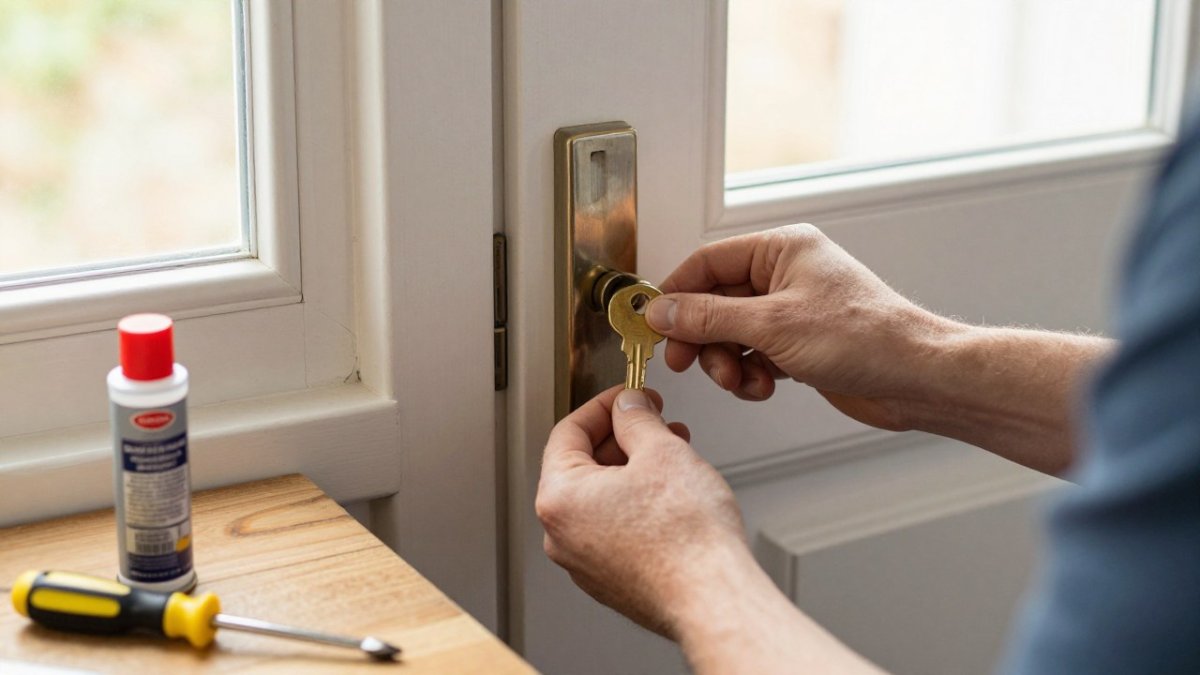
To fix a door lock that is stuck, work from the simplest cause to the most complex. Rule out the key first. Then check door alignment. Then inspect the hardware. This order saves time and prevents unnecessary damage.
Step 1: Rule Out the Key
Try a spare key before anything else. If the spare works, have a new key cut from the spare, not the worn original. A worn original copies its flaws onto every duplicate.
Step 2: Check the Door and Frame Alignment
Open the door and turn the lock by hand with the door ajar. If it turns freely, the problem is alignment, not the lock. A door that has shifted, swelled, or sagged pushes the latch out of line with the strike plate.
Step 3: Inspect the Lock Hardware
Tighten any loose screws on the handle and strike plate. Check for a loose handle that wobbles when you turn it. If the hardware is tight and aligned but the lock still binds, the problem is inside the cylinder.
How to Fix a Door Lock Cylinder: Cleaning, Lubrication, and When to Stop
Fixing a door lock cylinder starts with cleaning, not lubricating. But the right cleaner and lubricant depend on the lock type, and using the wrong product is how a stiff lock becomes a seized one.
Match the Method to the Lock Type
Standard pin-tumbler knob locks and deadbolts. These are the most common residential locks. Blow out loose dust with compressed air, then apply a dry lubricant made for locks, such as graphite or a PTFE spray. Work the key in and out several times to spread it, then turn gently. Avoid wet oils and greases, which trap grit into a paste.
Mortise locks. These have a larger internal case with more moving parts. Clean the cylinder as above, but also inspect the mortise case for accumulated debris. A dry PTFE spray is usually preferred over graphite here because graphite can migrate onto finished surfaces. If the lock has a thumb-turn or knob mechanism, lubricate the exposed moving parts sparingly.
Euro-cylinder locks. These are common on newer doors and some sliding systems. Many have a sacrificial break point and tight tolerances. Use only a dry lubricant specified for the cylinder, and never force the key. If resistance remains after two attempts, stop and call a professional; forcing a Euro-cylinder can damage the break point and lock you out permanently.
Smart locks and keypad locks. Do not spray lubricant into the keypad or battery compartment. Clean the keyway (if present) with a dry lubricant only, and follow the manufacturer’s guidance for the electronic components.
Cleaning Steps That Work for Any Cylinder
- Remove loose debris with compressed air, holding the can upright to avoid propellant spray.
- Insert the key and work it in and out several times without turning to dislodge grit.
- Apply a small amount of the appropriate dry lubricant.
- Work the key again, then turn gently. If resistance remains after two attempts, stop.
Watch out: spraying a wet lubricant into a dirty cylinder traps the grit into a paste. That turns a stiff lock into a seized one, and the fix becomes a replacement rather than a cleaning.
When to Stop and Call a Professional
Some high-security cylinders should only be serviced by a professional. Stop if the key will not insert fully, if the cylinder spins freely without engaging, or if you see damage to the face of the cylinder. These are signs of internal failure, not dirt, and further attempts can make the lock unrecoverable.
Misaligned Doors, Latch Problems, and Loose Hardware
A door that won’t close or latch properly usually points to the door frame, not the lock. But the symptom you see depends on the lock type, and matching the symptom to the hardware saves you from adjusting the wrong part.
How Each Lock Type Fails When Alignment Shifts
Deadbolts. A deadbolt that binds when the door closes is the classic alignment symptom. The bolt extends into the strike plate, and a door that has shifted, swelled, or sagged pushes the bolt out of line. You may need to push or lift the door to turn the key. Check the gap between the door and frame; if it is uneven, the door has shifted. Tighten hinge screws first, then adjust or move the strike plate if needed.
Knob locks and latch locks. These fail differently: the latch may click but not hold, or the knob may turn without retracting the latch. A loose knob or rose (the decorative plate) puts stress on the latch mechanism. Tighten the mounting screws before assuming the lock is worn.
Mortise locks. These have a larger faceplate and are less forgiving of misalignment. A mortise lock that binds often indicates the door has warped or the mortise pocket has shifted. Adjusting a mortise lock usually requires removing the faceplate and checking the pocket, which is a job for a professional if the door itself has moved.
Euro-cylinder locks. These are common on newer doors and some sliding systems. Misalignment here often shows up as a key that turns but the door will not open, or a cylinder that feels loose. Check that the cylinder retaining screw is tight and that the door is not sagging on its hinges.
Loose Hardware: The Slow Damage You Don’t See
Loose handles and loose screws are easy to miss. A handle that shifts under pressure puts stress on the lock mechanism. That stress shows up later as a binding deadbolt or a latch that no longer catches. Check the screws on the handle, the strike plate, and the hinges. A screw that will not tighten may have stripped its hole; a longer screw or a small amount of wood filler can restore grip.
Watch out: overtightening a strike plate screw can pull the plate out of alignment and make the binding worse. Tighten until snug, then test the lock before adding more.
A Quick Diagnostic Order
- Open the door and turn the lock by hand with the door ajar. If it turns freely, the problem is alignment, not the lock.
- Check the gap between the door and frame. Uneven gap means the door has shifted.
- Tighten hinge screws, then test.
- Adjust or move the strike plate only if the bolt still binds.
- Check the handle and lock mounting screws for looseness.
This order separates lock faults from door and frame problems before you spend money on parts you do not need.
Door Lock Lifespan: How Long Should a Residential Lock Last?
Residential lock lifespan depends on quality, exposure, and how often the lock is used. Exterior locks facing weather generally wear faster than interior locks.
When a lock nears the end of its lifespan, the signs stack up. The key sticks. The cylinder feels gritty. The deadbolt binds. If you’re seeing several of these at once, it may be time for an upgrade rather than another repair. Our guide to the signs your home locks need an upgrade walks through the warning signs in detail.
Repair or Replace? Decision Criteria for a Failing Lock
Repair makes sense when the lock is otherwise sound. A stiff cylinder, a worn key, or a loose strike plate are all cheap fixes. Rekeying is often the cheaper path when the hardware is fine but the keys are the problem, and our breakdown of residential lock rekeying costs explains what that involves.
Replace the lock when the hardware itself is failing. Cracked cylinders, broken internal parts, or a lock that has been forced are beyond repair. If the verdict is replacement, our guide to choosing a locksmith for lock installation covers the questions to ask before you hire anyone.
| Situation | Best Move | Why |
|---|---|---|
| Key sticks but spare works | Cut a new key | Worn key, healthy lock |
| Lock turns freely with door open | Adjust door or strike plate | Alignment issue, not the lock |
| Gritty cylinder, no damage | Clean and lubricate | Debris is the cause |
| Cracked or forced cylinder | Replace the lock | Internal damage is permanent |
| Hardware fine, keys compromised | Rekey the locks | Cheaper than replacement |
Security and Emergency Considerations Before You Force Anything
Forcing a stuck lock is how small problems become expensive ones. A snapped key or a bent cylinder can leave your home unsecured and cost more to fix than the original issue.
If you’re locked out, don’t drill or pry. Call a professional. If the lock has failed and your door won’t secure, focus on securing the exterior first. Our guide to securing exterior doors against break-ins covers practical steps you can take tonight.
One more thing: never leave a door propped or unlocked while you wait for a repair. A failed lock is a security gap, not just an inconvenience.
Book a Residential Lock Inspection With BDS Locksmith
A failing lock rarely fixes itself, and the longer you wait, the more likely a cheap repair turns into a full replacement. BDS Locksmith is a licensed, bonded, and insured mobile locksmith serving the South Bay Area. We come to you and offer free locksmith estimates. Our team offers same-day service, 24/7 emergency services, and a 5% military discount. Benjamin, our owner and operator, has helped many Bay Area residents get out of tough lockout situations.
Get started with BDS Locksmith and secure your home with a lock that works the first time, every time. Call (408) 300-4369 to book a residential lock inspection or request your free estimate today.
Frequently Asked Questions
What are the most common causes of residential door lock failure?
The most frequent causes are worn internal components, debris or moisture inside the lock cylinder, damaged or worn keys, and misaligned doors or strike plates. Regular use gradually wears down the pins and springs inside the cylinder, while dust, temperature changes, and weather exposure accelerate that wear. Loose handles and screws also let the lock shift out of position. A quick diagnostic that separates key problems from lock problems from door problems usually identifies the cause within minutes.
What is the average door lock lifespan?
A standard residential lock lasts a varying amount of time depending on use, and exterior locks exposed to weather and heavy daily traffic may fail sooner than interior locks. Door lock lifespan depends on build quality, climate, and maintenance. If your lock is past that window and you are already seeing stiff turning or key insertion problems, replacement is usually more economical than repeated repairs.
Can a misaligned door cause a lock to stop working?
Yes. When a door shifts on its hinges or the frame settles, the latch and deadbolt no longer line up with the strike plate. The lock may turn but the door will not latch, or the key becomes hard to turn because the bolt is binding against the plate. Check for gaps around the door, sagging hinges, or a strike plate that shows scrape marks. Adjusting the hinges or repositioning the strike plate often fixes the lock without touching the cylinder at all.
When should I call a locksmith instead of fixing a stuck lock myself?
Call a professional if the key breaks off inside the cylinder, if the lock turns but the door will not open, or if you have already tried lubrication and alignment checks without success. Forcing a stuck lock can damage the cylinder and leave you locked out entirely. A licensed locksmith can diagnose whether the issue is the lock, the key, or the door frame and fix it without damaging your door. BDS Locksmith offers free locksmith estimates and same-day availability.