Table of Contents
- What You’ll Need Before Programming Your Spare Key Fob
- Check Vehicle Compatibility and Key Type
- Car Key Fob Programming Instructions: The DIY Process
- How to Program a Key Fob Without the Original Key
- Key Fob Programming Cost: DIY vs. Professional Service
- Key Fob Not Working After Programming: Troubleshooting
- Common Mistakes to Avoid When Programming Your Spare Key Fob
- When to Call a Professional Locksmith
- Conclusion
- Frequently Asked Questions
Last Updated: October 20, 2026
What You’ll Need Before Programming Your Spare Key Fob
Before you attempt to program spare car key fob, gather the essentials. You’ll need your vehicle’s ignition key (the original programmed key), your new spare key fob, and access to your driver’s seat. Some vehicles also require the owner’s manual or vehicle-specific programming instructions. Having everything ready prevents frustration mid-process.
The ability to program spare car key fob at home depends entirely on your vehicle’s make, model, and year. Not every car supports DIY programming. Older vehicles and luxury brands often require dealer service. Understanding your vehicle’s capabilities before you start saves time and prevents wasted effort.
Benjamin, the owner and operator, has helped thousands of Bay Area natives get out of tough situations regarding their lockouts. Knowing which category your vehicle falls into is the first step.
Check your owner’s manual first. It often contains vehicle-specific programming instructions. If you’ve lost it, search online for “[Your Vehicle Year/Make/Model] owner’s manual PDF” to find free digital copies.
Check Vehicle Compatibility and Key Type
Your vehicle’s compatibility determines whether DIY programming is possible, and the single most common reason a DIY attempt fails is that the owner never confirmed eligibility before buying a fob. Most vehicles built from roughly the mid-1990s through the early 2010s support some form of onboard programming. Newer vehicles, luxury brands, and high-security immobilizer systems increasingly require a dealer or a locksmith with a pass-thru programming tool. Confirm your vehicle’s status before you spend money on a fob.
First, separate the two functions
A “key fob” can do two completely different jobs, and they use different procedures:
- Remote pairing (RKE): teaches the vehicle to recognize the fob’s radio buttons for lock, unlock, trunk, and panic. This is the easier function and is what most DIY button-press sequences actually program.
- Transponder/immobilizer programming: teaches the vehicle’s anti-theft system to accept the chip inside the key so the engine will start. This is a separate, security-controlled function and is often not available as an onboard procedure.
If your goal is only to make the buttons work, you may be able to pair the remote at home even when the chip cannot be programmed at home. If your goal is to start the car with the new key, you need immobilizer programming, and that is the function most likely to require professional equipment. Do not follow a remote-pairing sequence and assume the key will start the engine.
Identify your key type
There are three main categories:
- Remote key fob (RKE only): Controls locks and trunk from a distance; may have no transponder chip.
- Transponder key: Contains a chip that communicates with the vehicle’s immobilizer; may have no remote buttons.
- Combination fob/transponder: Performs both functions in one unit, the most common type on modern vehicles.
Check the physical key and the fob housing. A transponder key usually has a molded head with a chip pocket; a remote-only fob often has a separate metal key or no key at all. Your owner’s manual and the fob part number will confirm which type your vehicle uses.
Verify onboard-programming eligibility
Before buying a fob, run this three-step check:
- Owner’s manual: Look in the index under “remote,” “key fob,” “transmitter,” or “immobilizer.” If the manual includes a do-it-yourself pairing procedure, your vehicle likely supports onboard remote pairing. If it says “see your dealer,” assume DIY is not supported.
- Model-year and trim: Eligibility often changes within a single generation. A 2012 model may allow onboard pairing while a 2014 refresh of the same nameplate does not. Verify the exact model year and trim, not just the nameplate.
- Fob part number: Match the part number on your existing fob or in the manual to the replacement. A fob for a different trim or frequency will not pair, even if it looks identical.
A common pattern is that domestic vehicles from the 1990s through early 2010s are the most likely to support onboard remote pairing, while late-model and luxury vehicles increasingly require a scan tool or dealer-level access. Treat any generic online sequence as a starting point only, and confirm it against your own manual before you try it.
Never attempt programming on a vehicle you don’t own or have explicit permission to modify. Unauthorized key programming can trigger security alerts and may violate laws regarding vehicle access.
Search for your owner’s manual by exact year, make, model, and trim, for example, “[Year] [Make] [Model] [Trim] owner’s manual PDF.” Manufacturer owner sites and public manual archives usually host free copies. The manual’s programming section is more reliable than any generic sequence you’ll find on a forum.
Car Key Fob Programming Instructions: The DIY Process
The DIY process for car key fob programming instructions works only on vehicles that support onboard programming. This typically includes many domestic vehicles from the 1990s through early 2010s. Follow these steps precisely, as timing and sequence matter.
Step 1: Gather Your Keys and Get in the Driver’s Seat
Sit in the driver’s seat with all doors closed. You’ll need both your original programmed key and your new spare key fob. Some vehicles require a second programmed key present during the process, so verify this requirement in your owner’s manual first.
Close all doors. Lock them from inside the vehicle if possible. Some programming sequences abort if a door opens during the process. Ensure the interior is clear of distractions and you have 10-15 minutes uninterrupted.
Step 2: Enter Programming Mode Using the Ignition Switch
This step uses the ignition switch to trigger programming mode. Turn your original programmed key to the “On” position without starting the engine. Hold it there for several seconds until the dashboard lights activate.
Then turn the key back to “Off.” Repeat this sequence: On, Off, On, Off, On. The exact timing varies by vehicle, but most require about one second in each position. Watch for visual signals. The dashboard lights may flash, the locks may cycle, or you may hear a chime. These signals confirm you’ve entered programming mode.
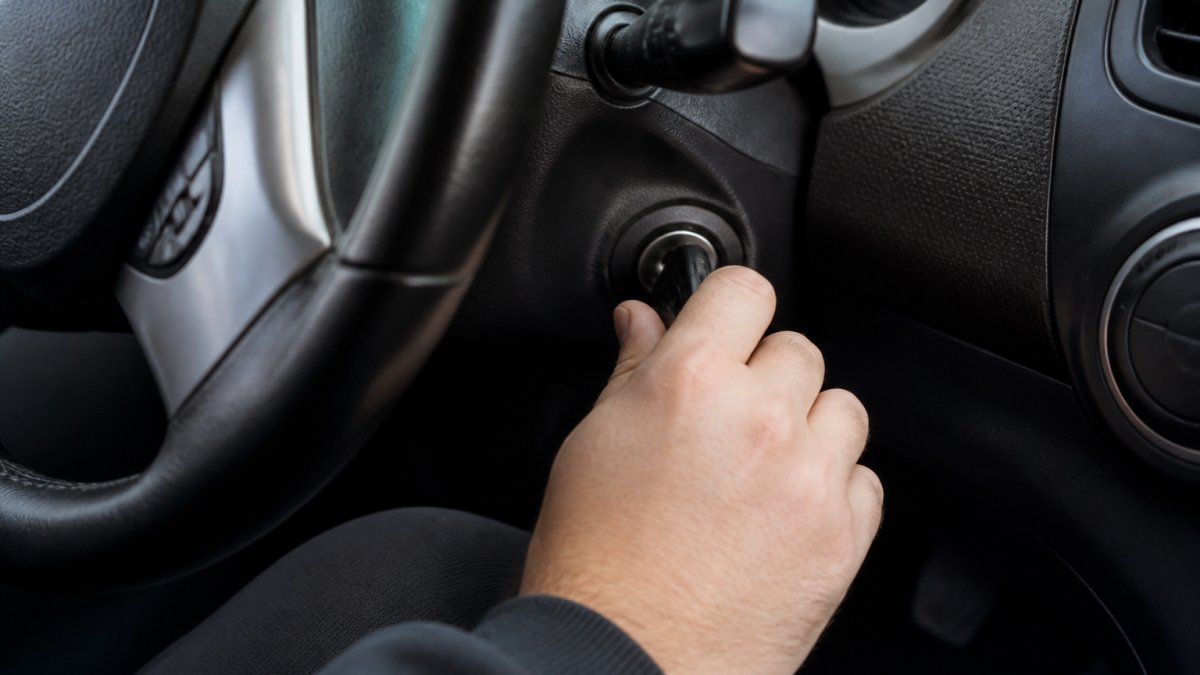
Some vehicles require a slightly different sequence. Consult your owner’s manual for the exact procedure. If nothing happens after several attempts, your vehicle likely doesn’t support this method.
Timing is critical. If you rush or pause too long between turns, the programming sequence resets and you’ll need to start over. Take your time and follow the manual’s exact intervals.
Step 3: Program Your Spare Key Fob
Once you’re in programming mode, press any button on your spare key fob. You should see another visual confirmation: lights flash, locks cycle, or you hear a sound. This signals that your new fob has been programmed.
Some vehicles require you to press the button multiple times or hold it for a specific duration. Press and hold for 1-3 seconds, then release. Repeat 2-3 times. The manual specifies the exact procedure for your vehicle.
If your vehicle supports programming multiple spare fobs, you can repeat this step with additional fobs before exiting programming mode. Each fob receives its own unique code.
Step 4: Test the Remote Key Fob
Exit programming mode by turning the ignition key to “Off” or starting the engine. Test your new spare key fob from outside the vehicle. Press the lock button. The doors should lock. Press unlock. The doors should open.
Test all buttons: lock, unlock, trunk release (if equipped), and panic alarm. If any button fails to work, re-enter programming mode and repeat the process. Failed programming is usually caused by timing errors or incorrect button sequences.
How to Program a Key Fob Without the Original Key
If you’ve lost your original programmed key, how to program a key fob without original becomes a critical question. The short answer: most vehicles cannot be programmed without at least one working programmed key present. This is a security feature that prevents unauthorized key creation.
However, some workarounds exist depending on your situation. If you have a spare key that’s already programmed, use that instead of the original. The programming procedure remains identical.
If you have no programmed keys at all, professional service is required. A locksmith or dealership can use specialized equipment to reprogram your vehicle’s immobilizer system and create new keys from scratch. This process requires proof of ownership and typically takes 1-2 hours.
BDS Locksmith can help if you’re in this situation. Our licensed technicians have the equipment to program keys and fobs even when originals are lost. We verify ownership and provide same-day service in most cases.
Some vehicles have security measures that lock out key programming after multiple failed attempts. If you try DIY programming and fail, you may need to wait 24 hours before the system resets. This is intentional, it prevents thieves from attempting random programming sequences.
Key Fob Programming Cost: DIY vs. Professional Service
Most guides tell you DIY is cheaper and the dealer is more expensive, then stop. That is not useful when you’re deciding what to do this afternoon. Here is a practical breakdown of what each route actually involves in cost, time, and risk. Pricing varies by vehicle, region, and fob type, always get a quote before committing.
DIY programming
- Cost: Free if you already own a compatible fob. A replacement fob itself varies in cost depending on the vehicle. Budget for a new battery.
- Time: 10-30 minutes once you have the correct fob and the manual’s procedure.
- Success rate: High on vehicles that support onboard pairing; zero on vehicles that don’t, no matter how carefully you follow the steps.
- Risk: Low if you follow the manual. Failed attempts on some vehicles can trigger a temporary lockout, so don’t repeat a sequence dozens of times.
Professional locksmith
- Cost: Programming labor varies, plus the cost of the fob if the locksmith supplies it. Mobile service may add a trip charge.
- Time: Often 30-60 minutes on-site, including verification and testing. Many locksmiths offer same-day or mobile service.
- Success rate: Near 100% with the right equipment, including vehicles that block DIY programming.
- Includes: Ownership verification, testing of all buttons and the immobilizer, and usually a workmanship guarantee.
Dealership service
- Cost: Typically the highest of the three routes. Programming labor and dealer-supplied fobs can vary in price.
- Time: Usually requires an appointment and may take a day or more if the fob must be ordered.
- Success rate: Effectively 100% for the vehicle’s own systems.
- Includes: Official documentation and warranty coverage.
How to choose
Use this decision rule:
- If your manual documents an onboard pairing procedure and you only need the remote buttons to work, DIY is the lowest-cost route.
- If you need the engine to start with the new key (immobilizer programming), assume DIY is unavailable unless your manual explicitly says otherwise, go to a locksmith or dealer.
- If you’ve lost all programmed keys, DIY is not an option; you need professional service with ownership verification.
- If time matters more than money, a mobile locksmith is usually faster than a dealer appointment.
Get a written quote before any work begins. Ask three questions: Is the fob included or extra? Is there a mobile or trip charge? Is the work guaranteed if the fob fails to program? The answers separate a fair quote from a surprise bill.
If you’re comparing routes, price the fob separately from the labor. A low labor quote with a marked-up fob can cost more than a higher labor quote where you supply a compatible fob you already own.
Key Fob Not Working After Programming: Troubleshooting
If your spare key fob doesn’t work after programming, several common issues could be responsible. Start with the simplest fix: replace the battery. A dead battery is the most frequent cause of fob failure.
Next, verify you programmed the correct fob model. Some vehicles require specific fob types. A fob designed for a different model won’t program correctly. Check your vehicle’s manual or ask a professional if you’re unsure.
Re-enter programming mode and repeat the process. Timing errors are common on the first attempt. Many people rush the ignition-switch sequence or hold buttons for the wrong duration. Slow down and follow each step precisely.
If the fob still doesn’t work, your vehicle’s receiver may have rejected the programming. This happens when:
- The fob is incompatible with your vehicle
- Your vehicle’s immobilizer system is damaged
- The programming sequence was interrupted
- Your vehicle doesn’t support DIY programming
At this point, professional diagnosis is needed. A locksmith can test the fob, check the vehicle’s receiver, and determine the actual problem.
Keep your original programmed key in a safe place. If your new fob fails to program, you’ll need it to try again or to prove ownership when seeking professional help.
Common Mistakes to Avoid When Programming Your Spare Key Fob
Most programming failures stem from preventable mistakes. Understanding these errors helps you succeed on the first attempt.
Rushing the ignition-switch sequence. The timing between turning the key to “On” and “Off” matters. Too fast or too slow breaks the sequence. Follow your manual’s timing exactly, usually one second per position.
Using the wrong key. Some vehicles require the original programmed key to initiate the sequence. A spare that’s already programmed works, but a blank key does not. Verify which key type your vehicle needs before starting.
Forgetting to close all doors. Many vehicles abort programming if a door opens during the process. Lock all doors from inside and ensure they stay closed throughout.
Ignoring the owner’s manual. Every vehicle has slightly different procedures. Attempting a generic method on your specific car wastes time. Your manual contains the exact steps for your model year.
Programming the wrong fob model. Fobs designed for different vehicles won’t program correctly. Confirm your fob is compatible with your vehicle before attempting programming.
Interrupting the sequence. Once you start programming, don’t stop mid-process. Turning off the engine, opening a door, or removing the key restarts the entire sequence.
When to Call a Professional Locksmith
Knowing when to stop attempting DIY programming and call a professional saves frustration and money.
Call a professional locksmith if:
- Your vehicle doesn’t support onboard programming (most vehicles after 2015)
- You’ve attempted DIY programming multiple times without success
- You’ve lost all programmed keys and have no originals
- Your vehicle’s immobilizer system is damaged or malfunctioning
- You need programming for a luxury or high-security vehicle
- You want a warranty on the service and professional documentation
A professional brings specialized equipment that can program keys even when DIY methods fail. They can diagnose immobilizer problems, verify vehicle compatibility, and complete the job quickly.
BDS Locksmith provides mobile service throughout the area. We arrive on-site with the equipment needed to program most vehicle types. Our licensed technicians verify ownership, provide free estimates, and offer same-day service. Call us at (408) 300-4369 for assistance.
Vehicle owners who need fast, reliable key programming without the risk of DIY failure. Professional service is especially valuable for newer vehicles, luxury brands, or situations where you’ve lost all programmed keys.
Conclusion
Programming a spare car key fob is possible for some vehicles but not others. The process requires the correct vehicle type, proper timing, and following your manual’s exact procedures. Many vehicle owners successfully program fobs at home in 10-30 minutes.
However, newer vehicles, luxury brands, and high-security systems typically require professional service. Attempting DIY programming on incompatible vehicles wastes time and may trigger security lockouts. Understanding your vehicle’s capabilities before you start determines whether success or frustration awaits.
When DIY programming isn’t an option or your attempts have failed, professional locksmith service provides a reliable solution. BDS Locksmith offers mobile key programming with licensed technicians, free estimates, and same-day availability. Call (408) 300-4369 to get your spare key fob programmed correctly the first time.
Frequently Asked Questions
Can you program a spare key fob yourself without the original?
It depends on your vehicle’s make and model. Many cars manufactured after the 2000s support onboard programming, which allows you to program a spare key fob using just the ignition switch and the new fob. However, some vehicles require an existing programmed key to start the process. Luxury brands and newer models with advanced immobilizer systems often cannot be programmed at home. Check your owner’s manual or contact a locksmith to verify your vehicle’s capabilities before attempting DIY programming.
What’s the difference between remote pairing and transponder programming?
Remote pairing programs the lock and unlock buttons on your key fob to communicate with your vehicle’s keyless entry system. Transponder programming, also called immobilizer programming, encodes the chip inside your key so the vehicle’s engine will start. Some vehicles allow you to pair a replacement fob at home through button sequences, but programming a new transponder chip typically requires dealer or locksmith equipment. Knowing which your vehicle needs prevents wasted time on the wrong procedure.
How much does professional key fob programming cost compared to DIY?
DIY programming costs only the price of the replacement key fob itself, typically $50-$200 depending on your vehicle. Professional programming through a dealer usually runs $200-$500, while a locksmith may charge $100-$300. The cost difference reflects the dealer’s overhead and the locksmith’s mobile service convenience. If your vehicle doesn’t support home programming or your DIY attempt fails, professional service becomes necessary. Visit BDS Locksmith’s pricing page for current rates in your area.
Why isn’t my key fob working after I programmed it?
Common causes include incorrect ignition timing, missing steps in the programming sequence, a faulty replacement fob, or a vehicle that doesn’t support DIY programming. Verify you followed the exact sequence for your vehicle’s model year, as timing windows are often strict (10-30 seconds). Test the fob’s battery and buttons before assuming the programming failed. If troubleshooting doesn’t work, the vehicle’s immobilizer may require dealer or locksmith equipment to reprogram. A professional can diagnose whether the issue is the fob, the programming procedure, or the vehicle itself.