Table of Contents
- When to Call a Mobile Locksmith for Your Apartment Deadbolt
- Understanding Apartment Deadbolt Installation Cost
- Landlord Tenant Law Lock Changes: What You Need to Know
- Mobile Locksmith vs. DIY Deadbolt Installation
- Emergency Lockout Assistance: What to Expect
- High-Security Lock Upgrades for Apartments
- How to Secure Garage Side Doors and Other Entry Points
- Choosing a Licensed and Insured Mobile Locksmith
- Frequently Asked Questions
Last Updated: September 30, 2026
When to Call a Mobile Locksmith for Your Apartment Deadbolt
A mobile locksmith for apartment deadbolt issues becomes necessary when you face security concerns, lockouts, or upgrades that require professional expertise.
Common scenarios include lockouts, installing a deadbolt after moving in, upgrading to high-security locks, or repairing broken mechanisms. DIY attempts risk damaging your door frame, voiding your lease, or compromising security. A licensed and insured mobile locksmith handles the job correctly the first time.
Apartment security involves unique constraints: landlord approval requirements, lease restrictions, and restoring original locks at move-out. Professional locksmiths navigate these complexities while delivering damage-free solutions.
Before calling any locksmith, verify they’re licensed, bonded, and insured. Ask for proof of credentials, legitimate professionals carry documentation and won’t hesitate to share it. This protects you from liability if damage occurs during the job.
Understanding Apartment Deadbolt Installation Cost
Deadbolt costs depend on lock grade, whether you’re installing new or rekeying existing hardware, labor complexity, and building requirements. Understanding these factors helps you budget and identify fair estimates.
Typical Cost Ranges by Service Type
Rekeying (reconfiguring an existing lock for new keys) works well if your lock is sound but you’ve lost keys or want to prevent previous tenants from accessing your unit.
Installing a new standard deadbolt (ANSI Grade 2 or Grade 3) is a common apartment scenario.
Upgrading to a high-security deadbolt (ANSI Grade 1) offers durability and resistance to picking and drilling, which can be a premium for security-conscious renters.
Emergency lockout services carry a premium. Calling during business hours can be more cost-effective than after-hours or weekend emergencies.
Understanding ANSI Grades and Why They Matter to Cost
The American National Standards Institute (ANSI) establishes three grades for residential deadbolts, and understanding these grades directly impacts your purchasing decision and cost justification.
ANSI Grade 3 deadbolts are basic residential locks. They meet minimum standards but are vulnerable to picking and bumping attacks. Grade 3 locks are common in budget apartments and often installed by default.
ANSI Grade 2 deadbolts represent a good option for most apartment renters. They offer moderate security with improved pin designs and resistance to picking and drilling, and are what most locksmiths recommend for residential upgrades.
ANSI Grade 1 deadbolts are the highest residential standard. They feature complex pin configurations, hardened steel, restricted keyways, and resistance to picking, bumping, and drilling. For renters in high-crime areas, the investment provides measurable security benefits and may qualify for insurance discounts.
Factors That Increase Installation Cost
Damaged door frames or misaligned holes can add to the job. Reinforcing the strike plate with longer screws that penetrate studs adds minimal cost but significantly improves security against forced entry.
Rekeying multiple locks to work with a single key can be a cost-effective alternative to replacing all locks, but requires each lock be in working condition.
Smart deadbolts require installation labor. Verify with your landlord first, many leases prohibit smart locks due to connectivity or security concerns.
Before You Commit: Verify Lease Terms and Landlord Responsibility
Check your lease before budgeting. Some landlords cover lock installation or repair; others require tenants to pay for upgrades but cover emergency repairs. Some prohibit lock modifications without written permission.
If your deadbolt is broken or missing, most state laws require the landlord to repair or replace it at no cost. Document the problem with photos and written notice. If they don’t respond, you may hire a locksmith and deduct the cost from rent, verify with your state’s tenant rights agency first.
For upgrades beyond what the landlord provided, you typically pay and need written approval. At lease end, you must restore the original hardware. If you’re moving in six months, a $500 upgrade may not justify the removal hassle.
Get a written estimate before work begins that specifies the lock grade (ANSI Grade 1, 2, or 3), the exact lock model, labor costs, and any additional charges. Legitimate locksmiths itemize estimates so you understand what you’re paying for and can compare quotes accurately.
Landlord Tenant Law Lock Changes: What You Need to Know
Landlord-tenant law varies by state, but most jurisdictions establish clear rules about lock modifications. Understanding these laws protects both you and your landlord.
In most states, landlords retain the right to control access and you cannot change locks without permission. However, many jurisdictions require landlords to provide functioning locks. If your deadbolt is broken or missing, your landlord is usually obligated to fix it.
The key distinction is between adding a new lock (which requires permission) and repairing an existing one (which is often the landlord’s responsibility). For a new deadbolt, you need written approval.
Some states allow temporary or supplemental locks without approval, but permanent modifications typically require consent. At lease end, you must restore the door to its original condition.
Document all lock-related work with photos and receipts. If you install a deadbolt with landlord approval, keep records showing what was done and when. This protects you when you move out and prevents disputes over security deposits.
Mobile Locksmith vs. DIY Deadbolt Installation
DIY deadbolt installation seems cost-saving but risks often outweigh savings. Professional installation ensures correct function, security standards, and no damage.
DIY installation requires a drill, hole saw, screwdriver set, and potentially a mortise chisel. Improper drilling can crack the door, misalign the strike plate, or compromise security. Landlords can charge for damage repairs, potentially exceeding professional installation costs.
Professional locksmiths understand apartment door nuances, work with different materials, ensure proper alignment, and verify compliance with building codes and lease requirements.
The decision depends on your comfort level, available tools, and lease terms. If your lease requires professional installation, hiring a mobile locksmith for apartment deadbolt work is your only option. For most renters, professional installation protects your security deposit.
Emergency Lockout Assistance: What to Expect
An emergency lockout is stressful, but knowing what to expect when you call a mobile locksmith makes the experience smoother. Professional locksmiths are trained to handle lockouts quickly while minimizing door damage.
When calling for emergency lockout assistance, provide your address, proof of residence (lease, utility bill, or ID), and lock type details. This verification protects both you and the locksmith.
Many mobile locksmiths offer 24/7 emergency service with 30-60 minute arrival times. The technician will assess your lock and proceed with the fastest non-destructive method available.
Most apartment lockouts involve pin tumbler locks opened without damage using picks, tension wrenches, or bypass methods. Smart locks require different approaches but remain non-destructive.
Never attempt to force your way into your apartment. Kicking the door, using a screwdriver on the lock, or breaking a window creates damage that costs far more than a locksmith call and violates your lease agreement.
After regaining access, ask the locksmith to inspect your lock for damage or wear. This prevents future lockouts and identifies security vulnerabilities.
High-Security Lock Upgrades for Apartments
High-security locks offer significantly better protection than standard deadbolts, but understanding what makes them “high-security” and whether the upgrade makes sense for your apartment is essential.
What Makes a Lock “High-Security”
A high-security lock (ANSI Grade 1) uses advanced features that resist common attacks. Standard deadbolts rely on simple pin designs vulnerable to picking or bumping. High-security locks employ multiple defensive layers:
Security pins with complex shapes that bind at different heights, preventing opening even if correct pins are lifted. Standard locks use simple cylindrical pins vulnerable to picking.
Hardened steel components that resist drilling attacks. Standard locks can be drilled in seconds; high-security locks use materials that dull drill bits and require specialized tools.
Restricted keyways prevent unauthorized key duplication. Only authorized dealers can duplicate keys, adding a layer of access control.
Anti-pick and anti-bump features built into the cylinder design. Bumping is a technique where an attacker uses a specially cut “bump key” to open a lock without picking. High-security locks have internal features that prevent this method from working.
ANSI Grade 1 vs. Grade 2: The Security and Cost Trade-Off
Most apartment residents encounter ANSI Grade 2 locks, which offer good security. For typical break-ins, Grade 2 is sufficient, most burglars target easy entry points and move on if a lock takes more than a few minutes to bypass.
ANSI Grade 1 locks resist picking significantly longer and maintain security over decades. However, they can cost more than Grade 2. The question is whether the additional security justifies the premium for your situation.
Grade 1 is justified if you live in a high-crime area, have valuable items, work in security or law enforcement, or have experienced break-ins. It’s also worth considering if you plan to stay several years, the lock’s durability spreads the cost over time.
Grade 1 is likely overkill if you live in a secure building, have minimal valuables, or are renting short-term. A quality Grade 2 lock provides excellent security without excessive expense.
Apartment-Specific Compliance: Getting Landlord Approval
Before upgrading to any high-security lock, confirm with your landlord in writing. Some landlords restrict lock types for legitimate reasons:
Master key system compatibility: Many buildings use master key systems for maintenance or emergencies. A restricted keyway may break this system, creating liability if the landlord can’t access your unit.
Building security standards: Some properties require all units to use the same lock model for consistency.
Lease terms: Your lease may explicitly prohibit lock modifications or require using only approved contractors.
If your landlord approves the upgrade, get written permission specifying the lock model. This protects you at move-out by preventing security deposit disputes.
The Restoration Requirement: Planning for Move-Out
At lease end, most agreements require restoring the apartment to its original condition. For a high-security lock upgrade, this involves:
Rekeying the original lock or replacing it if damaged can add to costs at move-out.
Potentially losing the high-security lock if your landlord doesn’t allow removal. Some leases specify modifications become the landlord’s property. Clarify before upgrading.
Factor move-out costs into your decision. For one-year rentals, an upgrade plus removal costs can be significant. For three-to-five-year stays, the cost spreads over time.
Insurance and Liability Benefits
Some renters insurance policies offer discounts for high-security locks. Contact your provider before upgrading to confirm Grade 1 qualifies for a discount.
High-security locks also reduce liability concerns. If your apartment is burglarized and you had a standard lock, an insurance company might argue you failed to take reasonable security precautions. With a Grade 1 lock, you’ve demonstrably invested in security, strengthening your claim if theft occurs.
Installation and Key Management
When installing a high-security lock, ask your locksmith to key your entire door hardware to match, deadbolt, keyed entry knob, and any other locks. This simplifies key management and ensures you’re not carrying multiple keys for the same door. Rekeying existing hardware to match a new high-security deadbolt can be done.
High-security locks require authorized dealers for key duplication. This is a security feature but also a practical consideration: you can’t quickly get a spare key made at a hardware store. Plan ahead and get spare keys made when the lock is installed. Keep one spare in a secure location outside your apartment (with a trusted friend or family member) in case you lose your primary key.
If you upgrade to a high-security lock, document the installation with photos and receipts. When you move out, provide your landlord with documentation that you removed the lock and restored the original hardware. This prevents disputes over security deposit deductions and protects you if questions arise later.
How to Secure Garage Side Doors and Other Entry Points
Many apartment break-ins occur through secondary entry points like garage side doors, patio doors, and sliding glass doors. Securing these areas is essential for comprehensive home security.
Garage side doors often receive less attention than front doors, making them attractive targets. Install a deadbolt on any garage side door that provides exterior access. Ensure the strike plate is reinforced with longer screws that penetrate the door frame studs, not just the surface. A reinforced strike plate prevents forced entry even if the deadbolt is compromised.
Patio and sliding glass doors require different security approaches. Standard deadbolts don’t work on sliding doors because of their design. Instead, use a door bar or brace that prevents the door from sliding open, combined with a pin lock through the track. These devices are inexpensive, effective, and removable, making them ideal for renters.
For windows, install locks on all accessible windows. Window locks are simple devices that prevent the window from opening beyond a certain point. Combine locks with window bars or security film that makes breaking glass more difficult and time-consuming.
Door reinforcement is another critical step. Reinforce the area around your deadbolt with a strike plate extender that distributes force across a larger area of the door frame. This prevents the frame from splitting if someone attempts to force the door open.
Layer your security with multiple barriers. A determined intruder might bypass one security measure, but multiple obstacles increase the time and effort required, making your apartment a less attractive target.
Choosing a Licensed and Insured Mobile Locksmith
Selecting the right mobile locksmith for apartment deadbolt work protects you from fraud, poor quality, and liability issues. A licensed and insured locksmith demonstrates professional standards and accountability.
Licensing requirements vary by state and locality. In many jurisdictions, locksmiths must pass background checks, complete training, and obtain a license from the state or county. Verify your locksmith’s license through your state’s licensing board. Ask for the license number and confirm its validity before work begins.
Insurance is equally important. A bonded and insured locksmith carries liability coverage that protects you if damage occurs during the job. If the locksmith damages your door, frame, or lock during installation or an emergency opening, their insurance covers the repairs. Without insurance, you’re responsible for all damage costs.
When contacting locksmiths, ask these questions: Are you licensed in this state? Can you provide proof of insurance? What’s your response time for emergencies? Do you provide written estimates? Will you guarantee your work? Legitimate locksmiths answer confidently and provide documentation.
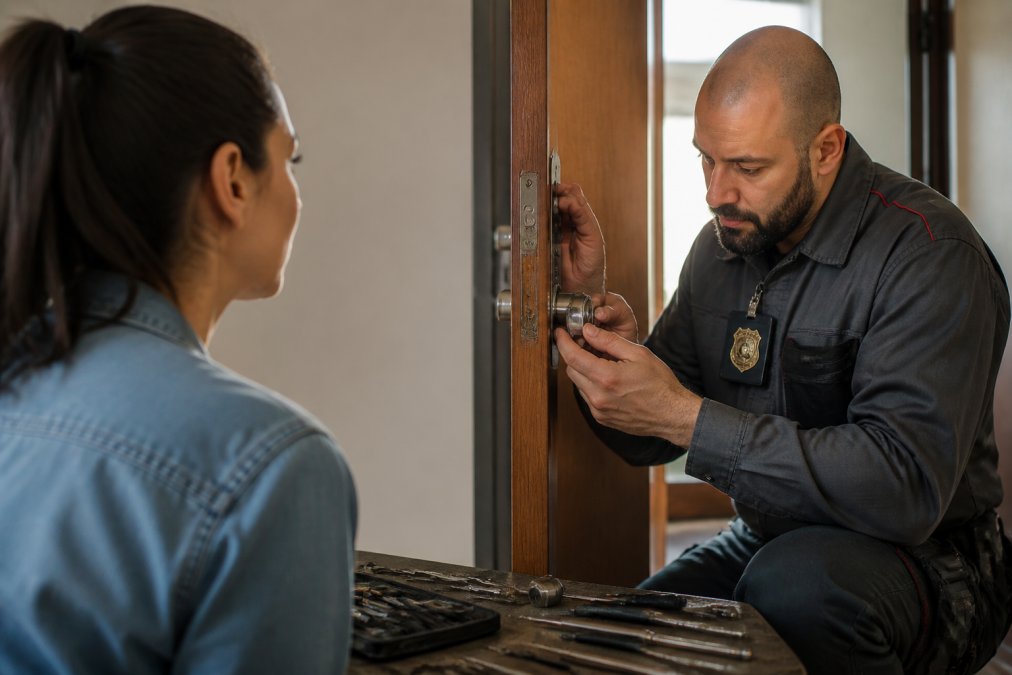
BDS Locksmith maintains full licensing, bonding, and insurance coverage for all residential work. Our team arrives on-site with transparent estimates and guarantees our workmanship. Benjamin, the owner and operator, has helped thousands of Bay Area natives get out of tough situations regarding their lockouts, providing professional, damage-free service.
Check customer reviews on independent platforms, not just the locksmith’s website. Look for consistent feedback about response times, pricing accuracy, and professionalism. Avoid locksmiths with numerous complaints about surprise fees or poor quality work.
Get multiple estimates before deciding. Comparing quotes from different locksmiths reveals market rates and helps you identify unusually low bids that might indicate inexperience or hidden fees. A reasonable estimate reflects the complexity of your job and the locksmith’s experience level.
Securing your apartment starts with a reliable mobile locksmith for apartment deadbolt installation, repair, and emergency access. Whether you’re upgrading to a high-security lock, addressing a broken mechanism, or recovering from a lockout, professional service ensures the job is done correctly and safely. BDS Locksmith provides licensed, insured residential security solutions with transparent pricing and same-day availability. Call (408) 300-4369 for a free estimate and experience the difference professional expertise makes in protecting your home.
| Situation | Best Action | Timeline |
|---|---|---|
| Locked out of apartment | Call emergency mobile locksmith | 30-60 minutes |
| Broken deadbolt | Schedule professional repair | Same day or next day |
| Moving into new apartment | Request landlord approval, hire locksmith | Within first week |
| Security upgrade desired | Get written landlord approval first | 1-2 weeks |
| Garage side door unsecured | Install deadbolt with reinforced strike plate | Same day |
Frequently Asked Questions
How much does a mobile locksmith charge to install a deadbolt in an apartment?
Mobile locksmith deadbolt installation costs depend on lock type, door condition, and whether rekeying is needed. BDS Locksmith offers free estimates and competitive pricing. High-security ANSI grade locks provide superior protection. Call (408) 300-4369 for a quote tailored to your apartment’s specific needs.
Do I need landlord permission to change my apartment deadbolt?
Landlord tenant law varies by state and lease agreement. Changing or rekeying existing locks typically requires written consent. Review your lease and contact your landlord before proceeding. A mobile locksmith can advise you on compliant options that don’t violate your lease terms.
How long does it take a mobile locksmith to install a deadbolt?
Standard deadbolt installation time depends on door condition and lock complexity. High-security locks or doors requiring reinforcement may take longer. BDS Locksmith offers same-day service with 24/7 availability, so you can schedule installation at your convenience without extended downtime.
Are mobile locksmiths available for emergency apartment lockouts?
Yes. BDS Locksmith provides 24/7 emergency lockout assistance for apartment residents. Our mobile locksmith team responds quickly to get you access to your home safely without damage to your door or lock. Licensed and insured technicians arrive on-site with the tools needed to handle residential lockouts promptly and professionally.