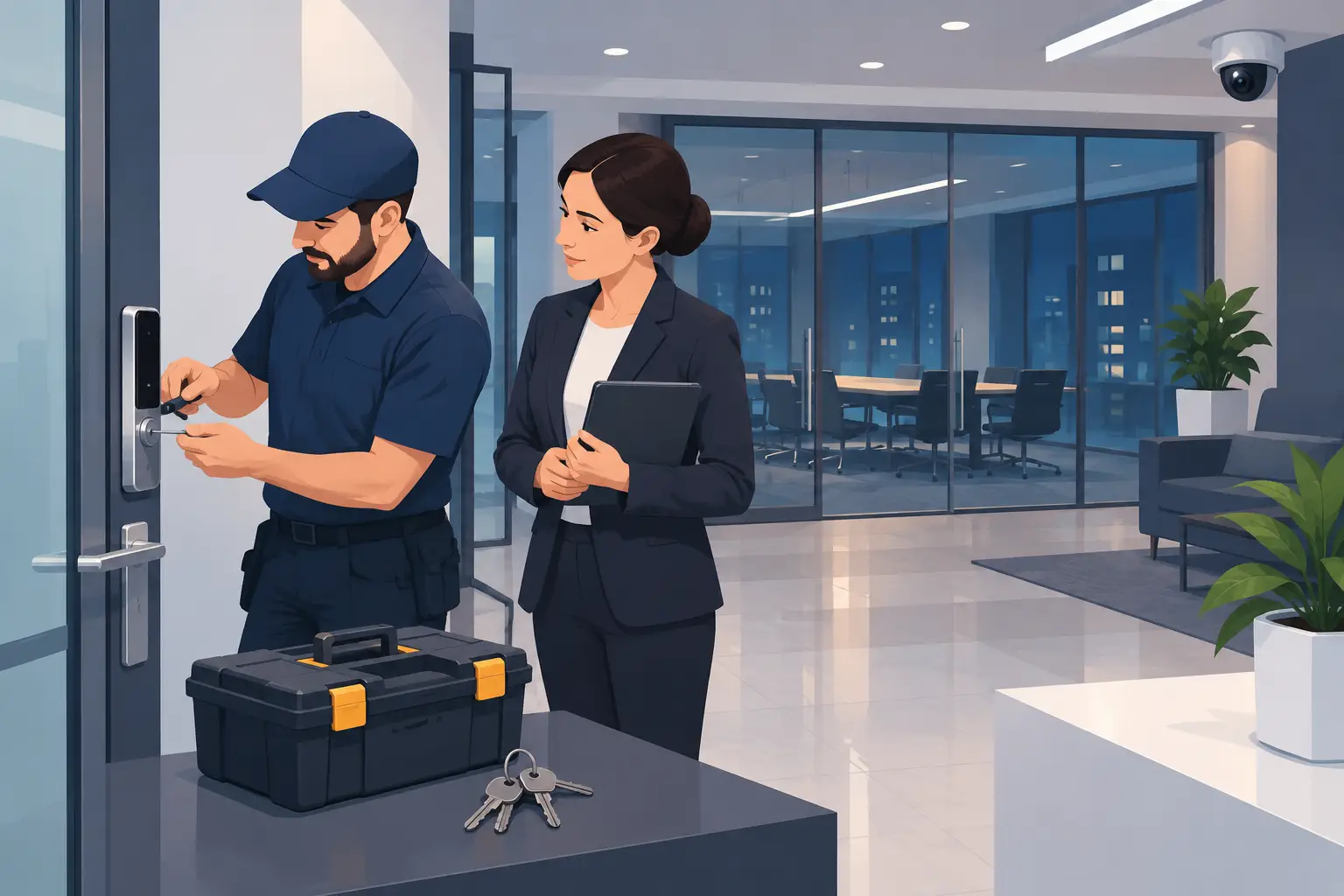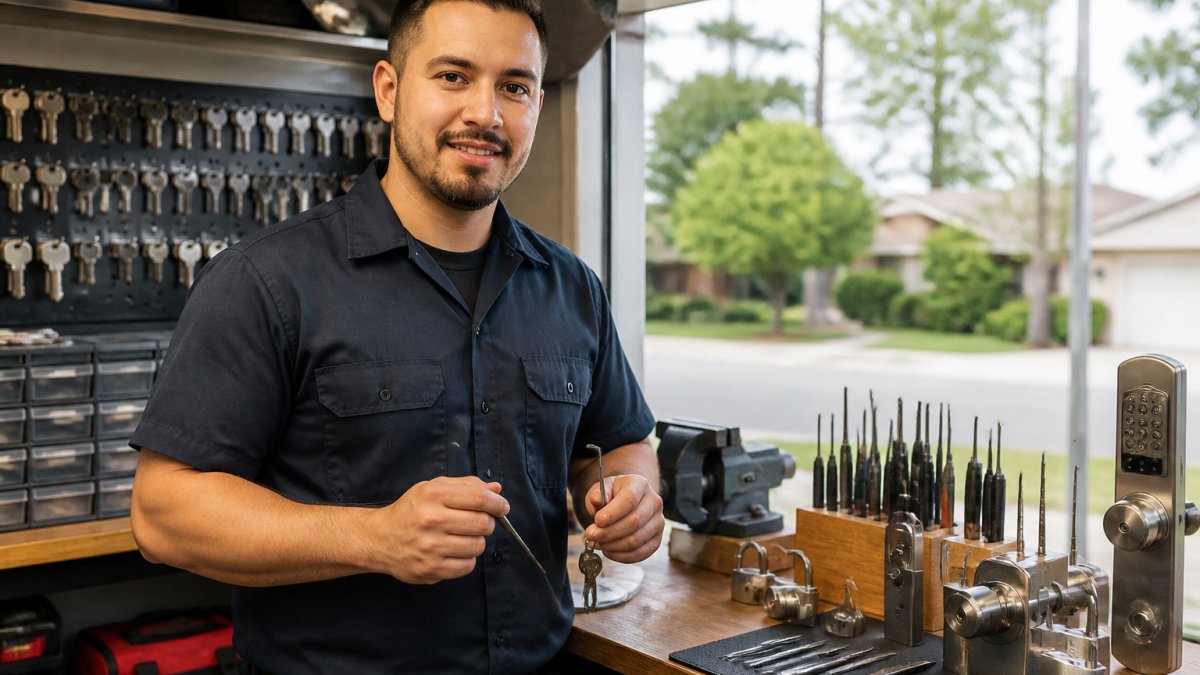
A lost employee key, a damaged back-door lock, or a former tenant who may still have access can turn an ordinary workday into a security problem. The best commercial door lock systems are not always the most expensive ones. They are the systems that fit your door, your daily traffic, your security risks, and the people responsible for access.
For a San Jose office, retail shop, warehouse, medical practice, or multi-unit property, the right choice usually combines strong hardware with a clear plan for keys, credentials, and emergency access. A commercial locksmith can assess the door on site, explain practical options, and help you avoid paying for features your business will not use.
Choosing the Best Commercial Door Lock Systems
Start with the door’s job. A front entrance used by staff and customers needs different hardware than a storage room, server closet, rear delivery door, or emergency exit. The lock should support the way people enter and leave without creating a weak point or a daily inconvenience.
For most small and midsize businesses, the decision comes down to three questions: How many people need access? How often do access permissions change? What happens if a key, fob, phone, or code is lost?
A single-owner storefront may be well served by a commercial-grade deadbolt and restricted keyway. An office with frequent staff turnover may benefit from electronic access control, where a credential can be removed without changing the physical lock. A property manager with several units may need a master key system paired with reliable rekeying procedures.
Security is only one part of the equation. The lock must also work with the door material, frame condition, fire rating, exit requirements, and existing hardware. A quality lock on a loose strike plate or misaligned door can still fail when it matters most.
Mechanical Deadbolts and Grade 1 Hardware
Commercial deadbolts remain a practical choice for private offices, stockrooms, exterior doors, and smaller businesses with limited staff. They are familiar, dependable, and do not rely on batteries, Wi-Fi, or software. When installed correctly with a reinforced strike plate and long mounting screws secured to the framing, a deadbolt can provide strong resistance against forced entry.
For exterior commercial doors, look for ANSI Grade 1 hardware whenever the application calls for higher strength and frequent use. Grade 1 locks are designed for heavy-duty commercial environments. Grade 2 hardware can suit some lower-traffic interior doors, but it may not be the best value for a busy entrance that gets used hundreds of times each week.
The trade-off is key control. If several employees have standard copies made at a hardware store, you may not know how many keys are in circulation. Restricted key systems give businesses more control because duplicate keys can only be made through authorized channels. They cost more upfront, but they can reduce uncertainty after employee turnover or a lost key.
Lever Handle Locks for Daily Traffic
Commercial lever locks are common on office suites, interior business doors, clinics, and public-facing entrances because they are easy to operate. They can also support accessibility needs better than a round knob. For doors that see constant traffic, a commercial-grade lever set is usually more appropriate than residential hardware.
The lock function matters as much as the finish. A storeroom function keeps the outside lever locked while allowing free exit from inside. An office function may allow the inside lever or button to lock the exterior side. Classroom and privacy functions serve different purposes. Selecting the wrong function can leave a room inaccessible, make it too easy to lock staff out, or interfere with normal operations.
A locksmith should also inspect the latch, strike, hinges, closers, and door alignment. Many apparent lock failures are really door alignment problems caused by wear, loose hinges, or settling. Repairing that issue early can extend the life of the lock and prevent an avoidable lockout.
Keypad and Smart Locks for Flexible Access
Electronic keypad locks and smart commercial locks are useful when businesses want to reduce the number of physical keys in circulation. Instead of issuing a key, an owner or manager can assign a PIN code, key card, fob, mobile credential, or a combination of these options.
This approach works well for offices with contractors, cleaning crews, rotating shifts, or employees who need temporary access. When someone leaves, their code or credential can be removed. That is often faster and less disruptive than rekeying after every staffing change.
However, electronic locks require a realistic maintenance plan. Battery-operated models need regular battery checks, and managers should know where emergency override keys are stored. Network-connected systems may offer access logs and remote management, but they also add setup requirements and may need professional configuration. For a single rear door, a complicated cloud-based system may be more than you need. For several locations or dozens of employees, it may be worth the investment.
Do not rely on convenience features alone. Choose commercial-rated equipment, protect the door frame and strike area, and make sure the system allows safe exit from inside at all times.
Access Control Systems for Larger Operations
For businesses with multiple doors, sensitive areas, or regular personnel changes, access control can offer much better visibility than traditional keys. A manager can issue unique credentials, set schedules, see access events, and disable a lost card or fob without replacing the entire lock.
Access control is often a strong fit for warehouses, professional offices, property management operations, medical facilities, and businesses with employee-only areas. It can also be paired with door alarms, cameras, intercoms, and automatic door operators when the building requires them.
The downside is cost and complexity. Wiring, power supplies, readers, electric strikes, magnetic locks, controllers, and backup power may all be involved. Fire and life-safety requirements must be handled correctly. A door that is part of an exit route should never be secured in a way that prevents people from leaving during an emergency.
Before installing an electronic system, identify who will manage users, how credentials will be issued, and what the backup plan is during a power outage or system failure. A system is only as useful as the staff process behind it.
Do Not Overlook Exit Devices and Door Reinforcement
Panic bars, also called exit devices, are designed to let people exit quickly by pushing the bar. They are commonly required on certain commercial exit doors, especially where occupant load and building use trigger code requirements. These devices must be installed and maintained correctly, not treated as an afterthought.
Exterior security also depends on the door and frame. A hollow metal door with a damaged frame, weak strike plate, loose hinges, or exposed hinge pins may need repairs beyond a lock replacement. For outward-swinging doors, hinge security can be especially relevant. For glass storefront doors, the lock type must be matched to the specific door design and hardware.
This is where an on-site inspection helps. The best lock cannot compensate for a door that does not latch, a frame that is separating from the wall, or an exit device that sticks under pressure.
Rekeying Versus Replacing Commercial Locks
Rekeying changes the internal pins of a compatible lock so old keys no longer work. It is often the right answer after a key is lost, an employee leaves, a tenant changes, or a business moves into a new space. It is typically less expensive than replacing every lock, provided the existing hardware is in good condition.
Replacement makes more sense when locks are worn out, damaged, mismatched, easily bypassed, or not suited to the door’s use. It may also be the better option when you want to move from basic keyed hardware to restricted keys, keypads, or access control.
If you manage several doors, ask about creating a clear key hierarchy. Employees may need one key for daily access, while managers have access to additional areas. The goal is convenience without giving every keyholder access to every room.
Questions Business Owners Commonly Ask
Should every commercial exterior door have the same lock?
Not necessarily. Matching locks can simplify key management, but each door has different demands. A high-traffic front door, rear delivery entrance, and emergency exit may require different hardware functions. What matters is that every opening is secured appropriately and allows safe, code-compliant exit.
Are smart locks secure enough for a business?
Commercial-rated smart locks can be a good choice when installed properly and managed carefully. Use unique credentials, remove former employees promptly, keep emergency access procedures in place, and do not neglect physical door reinforcement. A smart lock on a weak door is still a weak entry point.
How often should a business rekey its locks?
There is no fixed schedule for every business. Rekey promptly after lost keys, employee departures involving key access, break-ins, tenant turnover, or a change in management. Some businesses also schedule periodic reviews of who has keys and credentials.
When access changes, acting quickly is usually less expensive than dealing with an after-hours lockout, theft concern, or damaged door later. BDS Locksmith can provide on-site commercial rekeying, lock replacement, and security guidance throughout San Jose and the South Bay.
The right commercial lock system should make your business easier to run, not harder to secure. Start with the doors people use most, address any damaged or unreliable hardware, and build an access plan that still works when staff, tenants, or business hours change.