Table of Contents
- What Determines Broken Key Extraction Cost in 2026
- Understanding the Locksmith Service Call Out Fee
- Mobile Car Key Replacement Cost and How It Compares
- Broken Key Extraction Tools: What Professionals Use and Why DIY Fails
- Residential vs. Automotive Key Extraction: What Changes the Price
- What to Do When a Key Breaks in a Lock
- Insurance, Warranty, and Who Pays for Damage
- How to Find a Reliable Locksmith and Get an Accurate Quote
- Preventing a Broken Key: Simple Habits That Save Money
- Conclusion
- Frequently Asked Questions
Last Updated: September 15, 2026
What Determines Broken Key Extraction Cost in 2026
Broken key extraction cost is the total amount a locksmith charges to remove a snapped key fragment from a lock cylinder or ignition without replacing the entire mechanism. At BDS Locksmith, we’ve helped thousands of Bay Area natives get out of tough situations regarding their lockouts, and the price swings for broken key extraction come down to a handful of variables: the lock type, the time of day, and how deep the break sits inside the cylinder.
Most homeowners assume the job is a flat fee. It isn’t.
A fragment lodged in a pin tumbler lock at 2 p.m. is a different job from a wafer lock ignition at 2 a.m. The first might take ten minutes with a key extraction tool. The second can run an hour and a half and require partial disassembly. That gap is why two neighbors can pay wildly different amounts for what sounds like the same problem.
Below, we break down every factor that moves the number, so you can predict your quote before you dial.
Vehicle vs. Door: Why Automotive Extraction Costs More
Automotive extraction costs more because ignition and door cylinders sit behind trim panels, steering columns, and anti-theft housings that a residential deadbolt simply doesn’t have. A technician working on a car often removes plastic cladding, disconnects a battery terminal, and works around a transponder antenna before the fragment is even visible.
Residential door hardware, by contrast, usually exposes the cylinder face directly. A snap-off point on a cheap key blank might leave the fragment protruding enough to grip with needle-nose pliers.
The labor rate reflects that difference. Automotive locksmithing is a specialty, and the technician expertise required to avoid damaging a $600 ignition switch justifies a higher service call fee than a front-door extraction.
Emergency vs. Standard Service Fees
Emergency service fees run higher because you’re buying response time, not just labor. A standard appointment scheduled for the next business day lets a mobile locksmith batch nearby jobs and arrive during normal hours. An emergency call at midnight means one technician, one vehicle, and a drive across the county for a single customer.
That said, the base extraction work is identical. What changes is the after-hours surcharge layered on top.
- Standard hours: base rate plus a standard service call fee
- Evenings and weekends: base rate plus a moderate after-hours surcharge
- Overnight and holidays: base rate plus the highest surcharge tier
If you can safely wait until morning, you’ll almost always pay less. If your car is blocking a driveway or your home is unsecured, don’t wait, because the risk of theft or damage outweighs the savings.
Understanding the Locksmith Service Call Out Fee
A locksmith service call out fee is the flat charge for dispatching a mobile locksmith to your location, separate from the labor for the actual extraction. It covers the technician’s travel time, fuel, and the fact that a fully equipped van is sitting idle at your curb while they work.
This fee is where most phone quotes get confusing. When someone tells you “$50 on the phone,” they’re usually quoting the call-out fee alone, not the total job. That’s the single most common source of the sticker shock people describe after the fact.
Always ask for the all-in number: call-out fee plus extraction labor plus any surcharge. A professional provider will give you that total before dispatching.
If a phone quote sounds dramatically lower than every other estimate you’ve gathered, the missing money is almost always hiding in a “labor” or “difficulty” line item added on-site. Get the total in writing or by text before the van rolls.
After-Hours Surcharges and Emergency Response Time
After-hours surcharges exist because emergency response time has a real cost. A mobile locksmith who promises a 30 to 60 minute arrival window at 3 a.m. has to keep a technician on standby, and that standby time is priced into the overnight rate.
The trade-off is straightforward. You pay a premium for speed and availability during hours when most of the industry is asleep. During business hours, that same technician can serve several customers, which spreads the overhead and lowers your individual cost.
Ask two questions when you call: what’s your actual arrival window tonight, and what’s the total with the after-hours rate applied. A professional who answers both clearly is one you can trust with your locks.
Mobile Car Key Replacement Cost and How It Compares
Mobile car key replacement cost and broken key extraction cost are often confused, but they’re different jobs with different price structures. Extraction removes a broken fragment and preserves your existing key and lock. Replacement means cutting and programming a brand-new key, which involves a key blank, transponder key programming, and sometimes fob programming.
Extraction is almost always the cheaper path when the lock mechanism itself is undamaged. If the fragment came out clean and the cylinder still turns smoothly, you keep your original key and skip the programming step entirely.
Replacement becomes necessary when the extraction damages the cylinder, when the key was already worn thin, or when the transponder chip in the broken key is destroyed. Dealerships typically charge more for this because they often require a tow to the service bay. A mobile locksmith can often handle the same job on-site.
| Situation | Typical Approach | Why |
|---|---|---|
| Fragment removed, cylinder intact | Extraction only | Cheapest, keeps original key |
| Cylinder scored or jammed | Extraction plus lock cylinder replacement | Mechanism no longer reliable |
| Transponder chip destroyed | Full key replacement and programming | New chip required |
| Ignition switch damaged | Extraction plus ignition repair | Anti-theft housing affected |
Broken Key Extraction Tools: What Professionals Use and Why DIY Fails
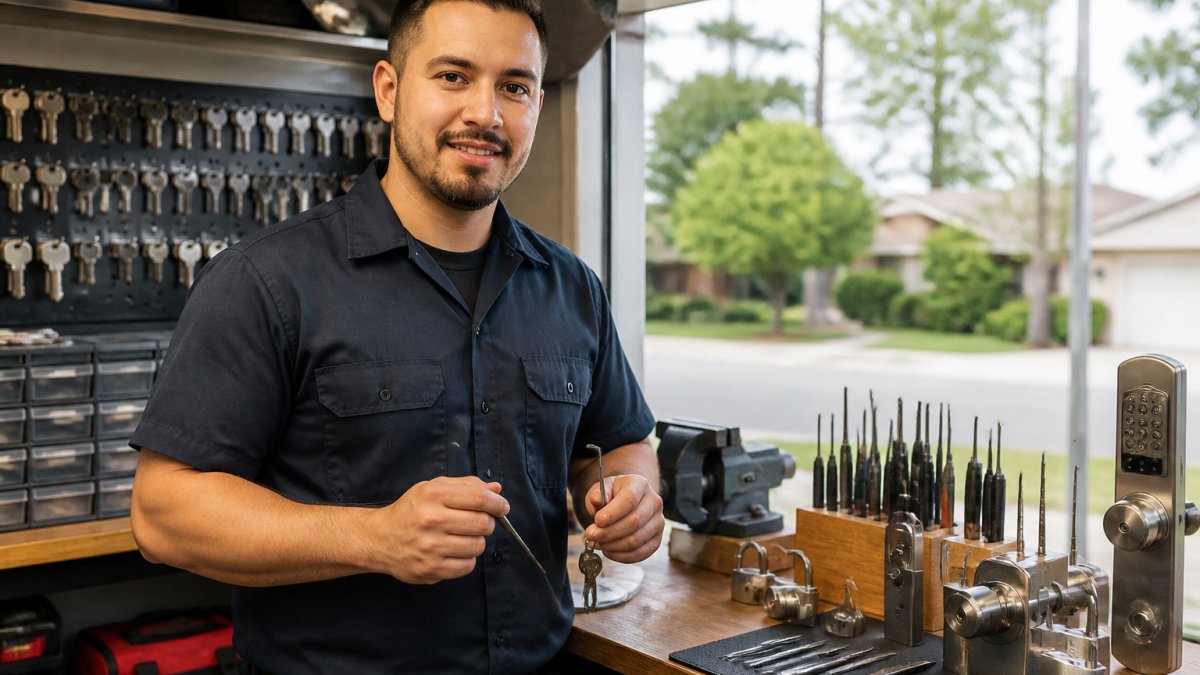
Professional broken key extraction tools are purpose-built for pulling fragments without scoring the cylinder walls, and the mechanical reason they work is the same reason household substitutes fail. A technician’s kit typically includes spiral extractors (also called screw extractors), broken key extractors with hooked or barbed tips, tension wrenches, and specialized picks sized to the keyway, SAE or metric depending on the lock.
How the Tools Actually Work
A spiral extractor threads into the fragment’s cuts and grips it from the inside, so pulling force is applied along the keyway axis rather than against the cylinder wall. A hooked extractor slides past the fragment and catches the shoulder or a cut, then pulls it back toward the opening. Both rely on the technician being able to see or feel exactly where the fragment sits relative to the pin tumblers.
Why DIY Substitutes Cause Damage
DIY attempts fail for a predictable mechanical reason: the fragment is usually wedged behind the pin tumblers, and pushing it deeper is far easier than pulling it out. A paperclip, bobby pin, or pair of tweezers applies force at the wrong angle and drives the piece further into the lock mechanism. Specific damage patterns include:
- Scored cylinder walls. A paperclip dragged along the inside of the plug gouges the soft brass, creating burrs that catch the pins and cause the lock to bind even after the fragment is removed.
- Bent or displaced pins. Pushing a fragment past the shear line can bend the driver pins or dislodge the springs above them, which turns a ten-minute extraction into a full cylinder rebuild.
- Fragments pushed past the shear line. Once the piece clears the shear line, it can drop into the pin chamber or the actuator mechanism, where no extractor can reach it. At that point the cylinder must be removed and disassembled.
- Ignition switch damage. On a vehicle, the same mistake can jam the ignition cylinder or damage the transponder antenna ring around the keyway, which is a far more expensive repair than the extraction itself.
The Cost of Getting It Wrong
A fragment pushed past the shear line in a residential deadbolt usually means a lock cylinder replacement rather than a simple extraction. On a car, the same mistake can damage the ignition switch or the anti-theft housing. The difference between a successful extraction and a damaged cylinder is often a matter of millimeters and the angle of applied force, which is why the tool matters as much as the hand holding it.
Before you touch anything, look at where the fragment sits. If any part of the broken key still protrudes from the keyway, grip it with needle-nose pliers and pull straight out, with no twisting. If it’s flush or recessed, stop and call a professional. The five minutes you save isn’t worth a new ignition.
When DIY Is Actually Safe
There is one narrow case where DIY is reasonable: the fragment protrudes enough to grip with pliers, the lock is a standard residential pin tumbler, and you have a spare key on hand. In that scenario, grip the protruding piece and pull straight out along the keyway axis. Do not twist, do not wiggle, and do not use the broken half to try to turn the lock. If it does not slide out with light, steady pressure, stop, you are now in professional territory.
Residential vs. Automotive Key Extraction: What Changes the Price
Residential and automotive extraction diverge on three fronts: access, lock complexity, and liability. A home’s front door gives a technician open access to the cylinder face. A vehicle often requires trim removal and careful handling of electronics that a homeowner never has to think about.
Lock complexity matters too. A basic pin tumbler deadbolt is forgiving. A wafer lock in a car door, or a high-security residential cylinder with restricted keyways, demands more care and specific extraction difficulty assessments.
Then there’s liability. Damaging a car’s ignition or door panel can trigger expensive repairs. That risk is priced into automotive rates, and it’s why a technician who specializes in vehicles charges more than a generalist.
The visual identification of lock types matters here as well. Knowing whether you’re looking at a pin tumbler, wafer lock, or high-security cylinder tells a locksmith what tools to bring and how long the job will take before they arrive.
What to Do When a Key Breaks in a Lock
When a key breaks in a lock, stop turning it immediately. The single biggest mistake is continuing to twist the remaining piece, which drives the fragment deeper and can bend the pins inside the cylinder.

Follow these steps:
- Stop all turning and pulling. Any further force pushes the fragment deeper.
- Remove the broken half from your hand and set it aside. You may need it to match a replacement key blank.
- Check whether any part of the fragment protrudes from the keyway.
- If it protrudes, grip it with pliers and pull straight out, with no twisting motion.
- If it’s flush or recessed, do not dig. Call a mobile locksmith.
- Secure the door or vehicle if you can’t lock it, and stay with it until help arrives.
- Tell the dispatcher the lock type and how deep the break sits.
That last step speeds up the job. A technician who knows they’re facing a recessed fragment in a wafer lock arrives with the right extraction tool already in hand.
Insurance, Warranty, and Who Pays for Damage
Insurance and warranty coverage for key extraction is narrower than most people expect, and the reason is structural: most policies are built to cover the loss of the item or the theft that follows, not the labor to remove a broken fragment. Understanding which bucket your situation falls into tells you whether filing a claim is worth the phone call.
Homeowners and Renters Insurance
A standard homeowners policy (HO-3) or renters policy (HO-4) typically covers the lockout or the theft that follows a break-in, but it rarely covers the extraction itself as a standalone claim (Renters Insurance). The reason is that extraction is a maintenance or service expense, not a covered peril. Where coverage does apply, it is usually through one of these routes:
- Home warranty plans. Many home warranty contracts list lock service or lock repair as an add-on. Check whether the plan covers the service call fee and the labor, or only the parts.
- Credit card benefits. Some premium credit cards include roadside assistance or travel protection that covers locksmith services when you are away from home. The benefit is usually capped per incident and requires you to pay upfront and file for reimbursement.
- Auto club memberships. Roadside assistance programs often include lockout service, and some extend to key extraction. The coverage is typically a flat dollar amount per incident, and you may still owe the difference.
Auto Insurance
Standard auto policies (personal auto) generally do not cover broken key extraction as a standalone claim (Auto insurance jargon buster). Comprehensive coverage may apply if the break was the result of a covered event such as a break-in or vandalism, but a key that simply snapped from wear is a maintenance issue, not a covered loss. Where auto coverage does apply, it is usually through:
- Roadside assistance add-ons. Many insurers sell a roadside assistance endorsement that includes lockout and key extraction service. The benefit is usually a flat per-incident amount.
- Mechanical breakdown coverage. Some extended warranties or mechanical breakdown plans cover ignition cylinder repair if the extraction damages the switch. Read the exclusions carefully, wear-and-tear items are often excluded.
Who Pays for Damage During Extraction
Who pays for damage is the more important question, and the answer depends on who caused it. If a technician damages your door or lock during a legitimate extraction, a licensed and insured provider carries liability coverage for that. This is why you verify licensing before you let anyone work on your property. If you attempted DIY extraction and damaged the cylinder, the repair is on you, and most policies exclude damage caused by the policyholder’s own attempted repairs.
Ask directly: are you licensed and insured, and can you show proof before you start. A professional will answer without hesitation. Anyone who dodges the question is telling you something.
Filing a claim for a small extraction bill can raise your premium more than the bill itself. Run the numbers before you call your insurer, for most residential extractions, paying out of pocket is the cheaper long-term move.
How to Find a Reliable Locksmith and Get an Accurate Quote
Finding a reliable locksmith comes down to verification and clear pricing, not the flashiest website. The industry has a well-known problem with bait-and-switch quoting, so your job is to separate providers who quote a total from those who quote a teaser.
Use this checklist before you book:
- Confirm the provider is licensed, bonded, and insured, and ask to see proof
- Request the all-in total: call-out fee, labor, and any after-hours surcharge
- Ask for the arrival window in minutes, not “soon”
- Confirm they carry liability coverage for accidental damage
- Get the quote in writing or by text before dispatch
- Check whether they offer free estimates
- Ask if they handle both automotive and residential work, or specialize in one
Renters needing a simple deadbolt installed deserve the same prompt service as a property manager with a commercial master key system.
The clearest signal of a professional locksmith is a total price quoted before arrival. Anyone who can only give you a number after they’re standing at your door is running the bait-and-switch playbook.
Preventing a Broken Key: Simple Habits That Save Money
Prevention costs nothing and saves the full extraction bill. Most broken keys fail for the same few reasons, and each one is avoidable.
Worn keys are the leading culprit. A key that’s been cut and copied repeatedly loses material at the snap-off point, the weakest section near the shoulder (pubmed.ncbi.nlm.nih.gov). Once a key starts to feel loose or requires jiggling, replace it.
- Never use a key to pry, scrape, or open packaging
- Don’t hang heavy keychains from an ignition, since the weight wears the cylinder
- Replace visibly worn or bent keys before they snap
- Lubricate lock cylinders periodically with a dry lubricant, not oil
- Keep a spare key stored separately from your daily set
- Avoid twisting a key that already feels stiff
Key duplication is cheap. Extraction is not. Spending a few dollars on a fresh key blank now is the simplest way to avoid a service call later.
Conclusion
A broken key is a nuisance, but an unclear quote turns it into a genuine problem, and the difference between a fair bill and an inflated one comes down to who you call. BDS Locksmith provides mobile, on-site service with free estimates, competitive pricing, and a team that’s licensed, bonded, and insured, so you know the total before we arrive. We handle automotive, residential, and commercial extraction, offer 24/7 emergency response, and back our work with a 100% customer satisfaction commitment. Call (408) 300-4369 and get your key out without the guesswork.
Frequently Asked Questions
Can a locksmith extract a broken key?
Yes, a professional locksmith can extract a broken key from most locks, including car ignitions and residential deadbolts. They use specialized broken key extraction tools such as extractor picks and spiral extractors to pull the fragment out without damaging the lock cylinder. In some cases, if the fragment is deep or the lock is damaged, the cylinder may need replacement. A licensed locksmith will assess the situation and explain the best approach before starting work.
How much does it cost to remove a broken key from a lock in 2026?
The broken key extraction cost in 2026 depends on several factors: whether it’s a vehicle or door lock, time of day, lock type, and how deep the fragment is lodged. Emergency calls and after-hours service add to the locksmith service call out fee. For an accurate quote, contact a local locksmith directly and describe your situation. BDS Locksmith provides free estimates and transparent pricing.
Does insurance cover the cost of broken key extraction?
Auto insurance typically does not cover broken key extraction unless you have comprehensive coverage that includes lockout or key replacement. Homeowners or renters insurance may cover extraction if it’s part of a covered loss, but standard policies often exclude routine lockouts. Check your policy details or call your provider. Some auto clubs and credit cards offer locksmith reimbursement as a benefit, so review those options before paying out of pocket.
Is it cheaper to replace the lock or extract a broken key?
Extraction is almost always cheaper than replacing the entire lock or ignition cylinder. A simple extraction preserves your existing lock and key, while replacement involves new hardware, key cutting, and potentially reprogramming. However, if the lock mechanism is damaged or the cylinder is compromised, replacement may be necessary. A locksmith can advise after inspecting the lock. For mobile car key replacement cost, extraction is usually the lower-cost path.