Last Updated: October 27, 2026
Quick Summary
Signs your car key is about to break include a worn-down blade with polished edges or a rounded tip, hairline cracks in the fob casing, and buttons that need repeated presses. A dim or flickering indicator light and reduced signal range can also warn of a failing fob battery.
- Hold the key at eye level against a light to spot cut edges that look polished rather than sharp.
- If you spot a crack, grip the key head instead of twisting the key by the fob.
- A fob that works at noon but not in the morning may have a battery issue.
- Check the battery type specified for your fob before replacing it.
- Keep your car key on a separate ring to help extend its life.
Table of Contents
- Why Car Keys Fail and What Early Warning Signs Look Like
- Physical Signs Your Car Key Is About to Break
- Signs Your Key Fob Battery Is Dying
- How to Test a Car Key Fob Before It Leaves You Stranded
- Inconsistent Button Performance and Signal Interference
- Key Works in Door but Not Ignition: What It Means
- How Long Should a Car Key Last?
- Car Key Replacement Cost: DIY vs. Professional Repair
- Prevention and Maintenance Tips to Extend Key Life
- Emergency Bypass Procedures When Your Key Fails
- Frequently Asked Questions
Why Car Keys Fail and What Early Warning Signs Look Like
A car key can show signs of wear before it breaks: a stiff turn, a button that needs two presses, or a crack in the casing. Learning to read the signs your car key is about to break can help you decide when to have it checked.
A traditional key and a key fob can show different warning signs. A traditional key may wear down, while a fob can have battery, circuit board, or casing problems.
Below are physical and electronic clues to look for and steps to consider when a key stops working.
Physical Signs Your Car Key Is About to Break
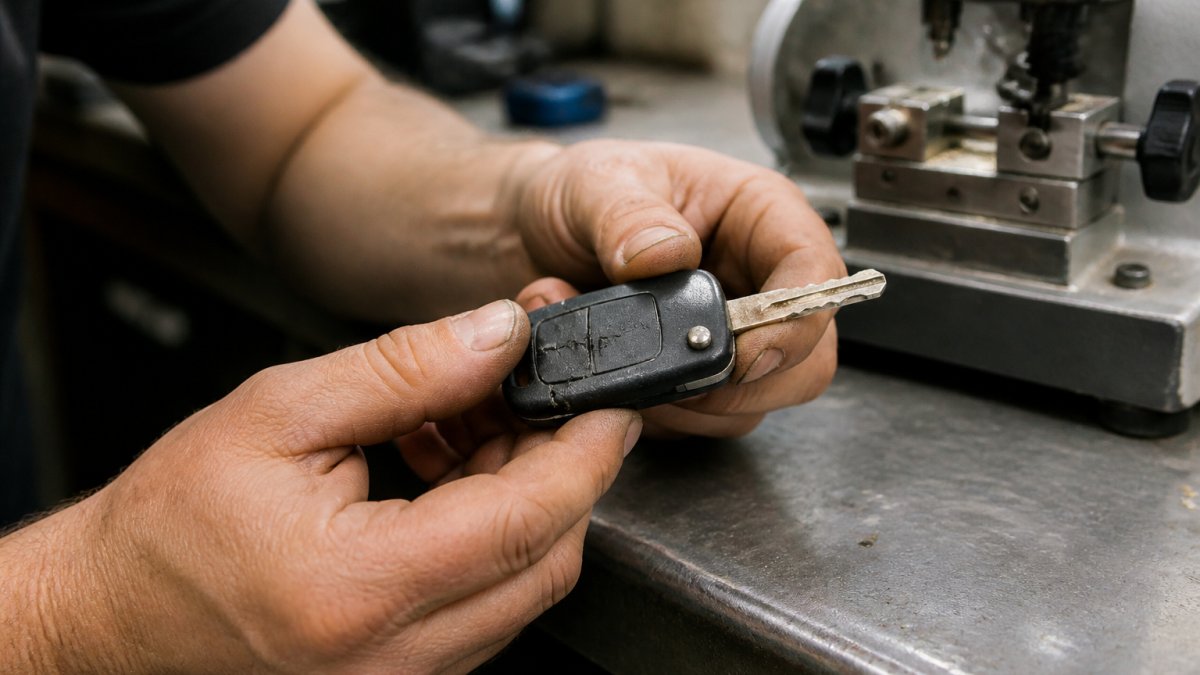
Physical signs of wear can appear on the key blade or casing. Look for worn grooves, a rounded tip, or shiny flattened edges.
Worn-Down Key Blade and Grooves
Hold the key at eye level against a light and look for cut edges that appear polished rather than sharp.
Cracked Housing and Physical Damage to the Casing
Flip the fob over and check the seams for hairline cracks in the plastic casing, a loose key shell, or a blade that wiggles inside its housing. If you spot a crack, avoid twisting the key by the fob and grip the head instead. If the key does snap, knowing how to extract a broken key from a car ignition yourself can save you a tow.
Signs Your Key Fob Battery Is Dying
Possible signs of a weak key fob battery include reduced signal range, buttons that need repeated presses, a dim or flickering indicator light, and intermittent performance.
A fob that works at noon but not in the morning may have a battery issue. Check the battery type specified for your fob before replacing it.
A few concrete patterns separate a weak battery from a failing fob:
-
Buttons need repeated presses. This can be a sign of a fob problem.
-
The indicator light dims or flickers. This can be a sign of a fob problem.
-
The fob works only when held against the car. This may indicate a fob or vehicle issue.
If replacing the battery does not fix the problem, the issue may be with the fob. At that point, onsite car key fob programming is the next step, because a replacement fob has to be paired to the vehicle’s security system before it will start the car.
Replace the fob battery according to the vehicle or fob manufacturer’s guidance.
How to Test a Car Key Fob Before It Leaves You Stranded
You can also note the distance at which the fob stops responding and compare it over time.
- Physical check: inspect blade and casing for cracks
Inconsistent Button Performance and Signal Interference
Intermittent performance can have different causes. A button that feels mushy, sinks lower than the others, or clicks inconsistently may indicate a fob problem.
Key Works in Door but Not Ignition: What It Means
A key that turns the door but not the ignition may have a key, ignition, or vehicle security issue. The symptoms alone do not establish the cause.
The immobilizer adds another layer. A vehicle security issue is one possible explanation when a key turns but the engine will not start. This is where a ignition repair guide for modern vehicles helps you tell a mechanical fault from an electronic one before you pay for the wrong fix.
How Long Should a Car Key Last?
Warning signs can differ between a traditional mechanical key and a push-to-start fob.
Traditional Mechanical Keys
A mechanical key may show wear on its blade, such as polished edges or a rounded tip. If you notice wear, consider having the key checked.
Push-to-Start and Proximity Fobs
A push-to-start fob may show signs such as reduced range, missed button presses, or a physical crack. These symptoms do not by themselves establish the cause or predict when the fob will fail.
What Shortens the Lifespan
If your key shows signs of wear or damage, consider having it checked.
Mechanical key: watch the blade and the ignition feel. Push-to-start fob: watch the battery, the range, and the button response. Same keyword, two different checklists.
Car Key Replacement Cost: DIY vs. Professional Repair
Replacement pricing can vary. Visit BDS Locksmith’s website for current pricing or a quote.
| Approach | What It Covers | Best For | Trade-Off |
|---|---|---|---|
| DIY battery swap | Coin cell replacement | Weak fob battery | Does not fix programming or blade wear |
| DIY key shell swap | New plastic casing | Cracked housing only | Blade and chip must be transferred |
| Professional key cutting | New blade from code | Worn grooves | Needs the original or a code |
| Onsite programming | Fob pairing to vehicle | New or failed fob | Requires diagnostic equipment |
| Dealership service | Full replacement | Warranty vehicles | Usually the slowest option |
For a full breakdown of replacement options, our average car key replacement cost guide walks through the variables that actually move the number.
Prevention and Maintenance Tips to Extend Key Life
Some simple habits may help you care for your key. Keep your car key on a separate ring.
- Watch for cracks in the plastic casing.
Emergency Bypass Procedures When Your Key Fails
When a key fails away from home, stay calm. Check your vehicle’s manual for guidance on what to do when the key or fob stops working.
If the key is broken in the ignition or the fob is completely unresponsive, avoid forcing it. Our guide to mobile key replacement services explains how response works and what to have ready when you call.
BDS Locksmith provides mobile locksmith services, including automotive services, and offers 24/7 emergency service, same-day availability, and free estimates. Call (408) 300-4369.
Frequently Asked Questions
What are the signs that my key fob battery is dying?
Possible signs of a key fob problem include decreased range of operation, inconsistent button performance, or keyless entry that stops responding reliably. These symptoms do not by themselves establish that the battery is dying.
How can I tell if my car key is worn out versus having a dead battery?
A key blade may show physical signs such as worn grooves or a rounded tip. A fob problem may involve symptoms such as unresponsive buttons or reduced signal range. These signs alone do not establish the cause; consult your vehicle’s manual or a qualified professional for guidance.
Should I replace a car key before it breaks?
Replacing a car key before it fails may help you avoid being without a working key. If you notice worn grooves, a cracked housing, or intermittent fob performance, consider having the key checked. BDS Locksmith offers mobile locksmith services and free estimates; call (408) 300-4369.
Can a damaged car key still start the car?
Whether a damaged car key still works depends on the key and vehicle. If you notice damage or the key is not working reliably, consult your vehicle’s manual or a qualified professional.