
Last Updated: November 7, 2026
Quick Summary
Signs of improper locksmith installation include a key that sticks or binds, a deadbolt that is hard to turn, and a door lock not aligned with the strike plate. Loose handles, missing screws, visible damage, and a door that will not latch also point to a bad install. Test each lock with the door open and closed to separate a hardware fault from an alignment problem.
- A key that sticks often means the cylinder sits off-axis or the mounting screws were over-tightened.
- If the deadbolt turns freely with the door open but grinds when closed, the problem is alignment.
- Count the faceplate and strike screws; missing fasteners are the easiest defect to confirm.
- Close the door gently from two inches away and the latch should catch without a slam.
- Photograph each symptom and request a correction in writing before final payment.
Table of Contents
- Why Improper Locksmith Installation Is Easy to Miss
- 1. Your Key Sticks, Binds, or Needs Extra Force
- 2. The Door Lock Is Not Aligned With the Strike Plate
- 3. The Deadbolt Is Hard to Turn After Installation
- 4. Loose Handles, Wobbly Hardware, and Missing Screws
- 5. Visible Damage: Rust, Scratches, and a Bent Door or Warped Frame
- 6. The Door Does Not Latch, or You Notice Difficulty Locking and Unlocking
- Step-by-Step Tests for Lock and Door Alignment
- The Locksmith Installation Checklist for Spotting Defects
- How to Verify a Locksmith Is Reputable Before You Hire Again
- Frequently Asked Questions
Why Improper Locksmith Installation Is Easy to Miss
A lock that works on day one can still be installed wrong. That’s the problem with signs of improper locksmith installation: the worst mistakes hide behind a door that opens, closes, and locks just well enough to keep you from looking closer.
Poor installations often pass the handshake test and fail the six-month test. The deadbolt turned. The key worked. Then winter came, the frame shifted, and the door stopped latching.
Here’s what most guides miss. They tell you to watch for rust and worn keys, which describes an old lock, not a badly installed one. A brand-new lock with a crooked strike plate looks perfect until you put your shoulder into it.
Below, we’ll show you exactly what to check, how to test it in five minutes, and what to do when you find a defect. The stakes are simple: a misaligned lock is a security gap, and a security gap is an invitation.
1. Your Key Sticks, Binds, or Needs Extra Force
The first sign is the one you feel every day. A correctly installed lock accepts the key smoothly and turns with light pressure. If you’re jiggling, lifting, or pushing, something is off.
A key that sticks is a symptom, not a personality trait. It usually means one of three things:
- The lock cylinder sits slightly off-axis in the door
- The mounting screws were over-tightened and pinched the mechanism
- The door and frame are out of alignment, forcing the bolt against the strike
A common mistake is spraying lubricant on it and moving on. That buys you a few weeks. It does not fix a cylinder that was forced into a poorly drilled hole.
Watch out: repeated force on a binding key can wear down the keyway and the key itself, and a key can eventually snap inside the cylinder.
2. The Door Lock Is Not Aligned With the Strike Plate
The door lock not aligned with strike plate problem is the single most common installation defect we see. The bolt extends, but it doesn’t seat cleanly into the strike opening. It scrapes, catches, or stops short.
You can spot it without tools. Open the door and look at the strike plate on the frame. Then close the door slowly and watch where the bolt lands.
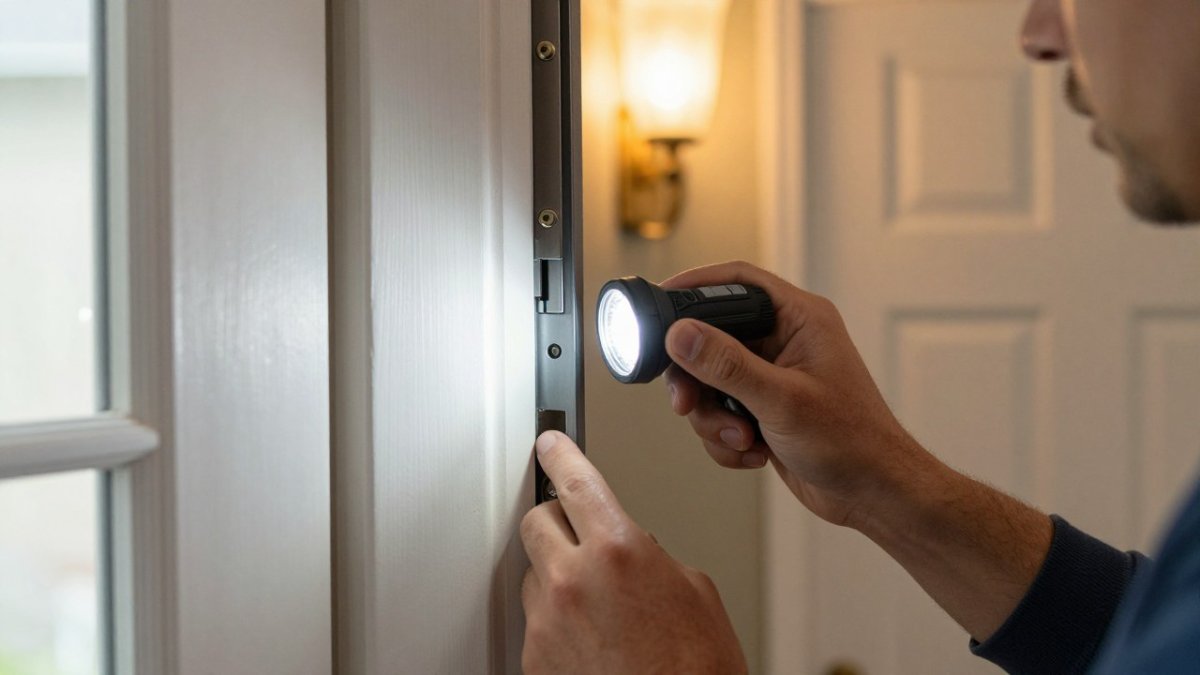
Signs of misalignment include:
- Scratches or gouges on the strike plate
- A bolt that needs a push or lift to seat
- Visible gaps around the latch area
- A door that rattles when you press on it while locked
A properly installed lock lines up on the first try, every time, with no drama.
3. The Deadbolt Is Hard to Turn After Installation
A deadbolt hard to turn after installation is a red flag the installer should have caught before leaving. A deadbolt is a simple mechanism. If it resists, the install is wrong.
Three causes cover most cases:
- The bore hole is too shallow. The bolt housing bottoms out and binds.
- The door and frame are misaligned. The bolt rubs the strike as it extends.
- The cylinder was over-tightened. The screws squeeze the housing and distort the throw.
Try this test. Open the door, then turn the deadbolt by hand. If it moves freely with the door open but grinds when closed, the problem is alignment, not the lock itself. That’s an installation issue, and it’s the installer’s to fix.
4. Loose Handles, Wobbly Hardware, and Missing Screws
Grab the handle and give it a firm wiggle. It should feel solid. Any play means the hardware wasn’t fastened correctly.
Loose handles and wobbly hardware point to short screws, stripped holes, or skipped fasteners. On a hollow metal or thin wood door, the wrong screw length is a common shortcut. The screw grabs, but it doesn’t hold.
Check for these:
- Handles that rotate slightly before engaging
- Screws that spin without tightening
- Empty screw holes in the faceplate or strike
- Mounting screws that sit proud of the surface
Missing screws are the easiest defect to confirm and the easiest to overlook. Count them. A deadbolt faceplate should have a full set, not “most of them.”
5. Visible Damage: Rust, Scratches, and a Bent Door or Warped Frame
Fresh hardware should look fresh. Rust on a lock installed last month is not normal wear. It is a sign of cheap hardware, moisture exposure, or a finish that was damaged during installation. But the more useful skill is reading where the damage sits, because location tells you what the installer did wrong. Rust concentrated around the cylinder or strike plate can point to moisture or misalignment, while recurring lock failures may reveal deeper installation problems, a distinction worth keeping in mind when considering Serrulocksmontreal.
Map the mark to the mistake:
- Scratches arcing around the cylinder face. A tool slipped while the cylinder was being seated. Cosmetic on a solid brass or stainless faceplate, but on a plated finish it exposes base metal that will pit within a season.
- Gouges on the strike plate or the frame pocket. The installer missed the strike opening on the first attempt and kept going. This is the visible fingerprint of a misaligned strike, and it usually comes with a bolt that scrapes.
- Splintered or chipped wood around the bore hole. The hole saw walked, or the bore was drilled from one side only and blew out the back. A blown-out bore leaves the cylinder housing with less material to grip, so the lock loosens over time.
- Rust or corrosion on the bolt face, faceplate, or screws. On an interior door, this points to hardware stored or installed wet. On an exterior door, it often means the installer used a finish rated for interior use, or sealed the lock poorly so water pools in the pocket.
- A faceplate that sits proud of the door edge. The mortise was cut too shallow, so the plate rides above the wood and catches on the frame every time the door closes.
- A bent door or warped frame. The serious one. If the installer forced the door to fit the lock instead of fitting the lock to the door, you now own a structural problem, not just a hardware problem. A door bent at the lock stile will not seal, will not latch reliably, and can cost more to correct than the lock itself.
A quick test for the bent-door scenario: open the door halfway and sight down the lock edge. A straight stile shows an even line. A stile that bows toward the lock side was likely pulled into place with long screws or forced during fitting.
Watch out: a scratch on a decorative faceplate is easy to dismiss, but a gouge that crosses the cylinder housing can leave a burr inside the keyway. If the key starts catching after the install, look at the cylinder face before you blame the key.
If the work left damage behind, you have options for getting it fixed or compensated. Our guide on what to do if a locksmith damages your door walks through the steps.
6. The Door Does Not Latch, or You Notice Difficulty Locking and Unlocking
A door that doesn’t latch is a security failure, full stop. The latch should catch with a light push. If you have to slam it, pull up on the handle, or lift the whole door, the installation is wrong.
Difficulty locking and unlocking usually traces back to one of these:
- Strike plate installed too high, too low, or too deep
- Latch bolt and strike opening mismatched
- Hinge screws loose, letting the door sag
- Frame shifted after installation
Test it this way. Close the door gently from a few inches away. If it doesn’t catch on its own, the latch and strike aren’t meeting where they should.
Watch out: a door that doesn’t latch is a door a credit card or a thin shim can open. That’s not a lock problem. That’s an open door with extra steps.
Step-by-Step Tests for Lock and Door Alignment
You can run a full alignment check in about five minutes with no tools. Here’s the sequence we use.
- Open the door and turn the lock by hand. It should move freely. If it binds with the door open, the lock itself is the problem.
- Close the door and turn it again. If it now binds, the issue is alignment between door and frame.
- Look at the strike plate. Check for scratches, gouges, or a bolt that lands off-center.
- Close the door gently from two inches away. The latch should catch without a slam.
- Wiggle the handle and check every screw. Any play or missing fastener is a defect.
- Press on the locked door. It should not rattle or shift.
- Check the gap around the door. An uneven gap means the frame or hinges are off.
| Test | What a Pass Looks Like | What a Fail Means |
|---|---|---|
| Key turn, door open | Smooth, light pressure | Cylinder or housing problem |
| Key turn, door closed | Same smooth turn | Door and frame misaligned |
| Strike plate inspection | No scratches, centered bolt | Strike installed wrong |
| Gentle close | Latch catches on its own | Latch and strike don’t meet |
| Handle wiggle | Zero play | Loose or missing fasteners |
| Locked door press | No rattle or shift | Bolt not fully seated |
The Locksmith Installation Checklist for Spotting Defects
Use this locksmith installation checklist before you pay the invoice. Walk the door with the installer still on site.
- Key turns smoothly with the door open and closed
- Deadbolt extends fully without force
- Bolt seats centered in the strike plate
- Strike plate sits flush, no gaps
- All faceplate and strike screws present and tight
- Handle and knob have zero play
- Door latches with a gentle push
- No scratches, rust, or splintered wood
- Door closes evenly, no sag or rub
- Installer demonstrates the lock and hands over keys
If any box goes unchecked, ask for a correction before final payment.
How to Verify a Locksmith Is Reputable Before You Hire Again
If the first installation went wrong, the next hire matters more. But before you shop for a replacement, give the original installer a fair chance to correct the work. A documented request protects you whether the installer fixes it or not.
Document the defect before you call. A neutral record does three things: it gives the installer something specific to inspect, it preserves your warranty position, and it keeps the conversation about the work rather than about blame.
- Photograph each symptom. Shoot the strike plate straight on, the bolt seated in the strike, the gap around the door, and any scratches or splintered wood. Include one wide shot of the whole door so the installer can see the context.
- Write a one-line description per photo. “Bolt scrapes top of strike when door is closed” is more useful than “lock is bad.”
- Run the open-door versus closed-door test and note the result. If the lock turns freely with the door open and binds when closed, write that down. It points the installer straight to alignment.
- Keep the invoice, the written estimate, and any warranty paperwork together. Note the installation date and the name of the technician if it appears on the invoice.
- Note the date you first observed the problem. Warranty windows are often measured from installation, not from the day you noticed.
Make the request in writing. A text or email that lists the symptoms, attaches the photos, and asks for an inspection creates a record. Ask a direct question: can the installer inspect and correct the work, and on what timeline? Keep the tone factual. You are reporting observable conditions, not accusing anyone.
Know what a reasonable correction looks like. A proper fix usually means re-setting the strike plate, adjusting the bolt throw, replacing over-tightened or missing screws, or re-drilling a misaligned bore. It rarely means replacing the entire lock unless the hardware itself is defective. If the installer proposes a full replacement at your cost, ask why the original install cannot be adjusted.
If the installer will not return, escalate in order. Start with the company owner or manager in writing. If the business is licensed, your state or local licensing board is the next stop; most boards have a complaint process for workmanship. If you paid by credit card, your card issuer’s dispute process is a separate route for work that was not performed as agreed. Our article on how to report an unlicensed locksmith in your state covers the reporting path when credentials are the issue.
Then verify the next hire properly. Ask for the license and insurance certificate before the appointment, not after. Locksmith licensing requirements vary by jurisdiction, so check the rules that apply where you live. Our guide on how to verify a locksmith license and insurance explains what documents to request.
Red flags to watch for:
- An unmarked vehicle with no business name
- No written estimate before work begins
- Cash-only demands and pressure to decide fast
- No physical business address
- Refusal to show credentials
A legitimate locksmith gives a written estimate, arrives in a marked vehicle, and stands behind the work. Bait-and-switch pricing is another common trap. A quote that triples on arrival is a scam pattern, and our guide on avoiding locksmith bait and switch explains how to spot it early.
For a full hiring process, our step-by-step guide on how to choose a locksmith for lock installation walks through eight checks, from license verification to warranty terms.
BDS Locksmith is licensed, bonded, and insured. Our owner, Benjamin, has helped thousands of Bay Area residents out of lockouts.
Frequently Asked Questions
How can you tell if a locksmith installed a lock incorrectly?
Start with how the lock feels. A properly installed lock turns smoothly with light pressure. Warning signs include a key that sticks or binds, a deadbolt that needs two hands to turn, a handle that wiggles, screws that are stripped or missing, and a latch that does not click into the strike plate. Check the door edge for fresh gouges or a strike plate that sits crooked. Any of these points to a locksmith installation problem rather than normal wear.
Should a newly installed lock turn smoothly?
Yes. A new lock cylinder and deadbolt should turn with light finger pressure, with no grinding or catching. If the deadbolt is hard to turn after installation, the cause is usually misalignment between the lock and the strike plate, an over-tightened mounting screw, or a cylinder seated at the wrong depth. Do not accept extra force as normal, because forcing a binding lock wears the keyway and can leave you locked out later.
What should you do if a new lock does not latch properly?
First, test with the door open. If the bolt extends freely but will not enter the strike plate when closed, the door lock is not aligned with the strike plate. Note the gap and whether the door sags. Then photograph the misalignment and the latch, and contact the installer with your invoice and any paperwork you received.
Can improper lock installation damage a door?
It can. A strike plate screwed in at the wrong angle, a deadbolt bored off-center, or a lock forced into a warped frame can split the door edge, strip mounting screws, and enlarge the bore hole until the hardware no longer holds. Forced entry during a rushed job can also bend the frame. Catching the signs early, before the damage spreads, is why a locksmith installation checklist matters after every job.